



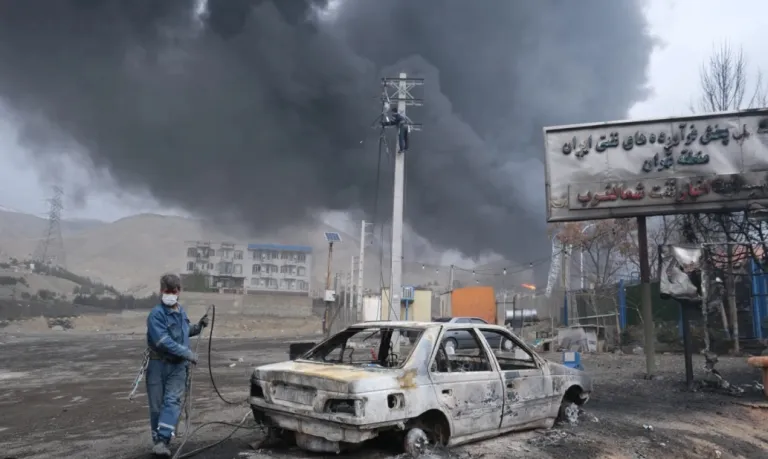
The U.S. and Israeli military attacks on Iran, along with the waves of missile strikes and bombardments targeting cities, refineries, oil depots, industrial facilities, and missile and nuclear sites, constitute not merely a military and political crisis, but also a profound and multilayered environmental and human health catastrophe. The experiences of the Gulf Wars, Iraq, Ukraine, Yemen, and Afghanistan have shown that the ecological scars of war endure far longer than the sound of explosions. They settle into the layers of air, water, soil, and the food chain, exposing future generations to disease and insecurity.
If we examine the consequences of the current war closely, we see that conflict has carried insecurity from the battlefield directly into people’s homes and onto their dining tables. Bread, water, and air—elements that should sustain life—become carriers of toxic particles, heavy metals, radionuclides, and disease-causing microorganisms. In a war-torn Iran, the interconnection of these threats is painfully tangible. The bombing of oil reservoirs and refineries has polluted the skies over Tehran, Karaj, and other cities. Toxic particles, soot, and heavy metals settle on orchards and farmlands; leaking fuel and industrial wastewater contaminate rivers and wells; and in the worst-case scenario, damage to nuclear sites could add a layer of radioactive contamination to this already broken system. As a result, the environmental repercussions of war spread across the entire geography of the country and even into neighboring states.
The first visible layer of destruction unfolds in the skies above the cities. The bombing of refineries and oil depots in Tehran, Fardis, and other Iranian cities, combined with massive fires in fuel storage facilities and petrochemical plants in Bushehr, has released enormous quantities of thick smoke, soot, fine particulate matter, sulfur compounds, nitrogen oxides, volatile organic compounds, and heavy metals into the atmosphere. The burning of hundreds of oil wells during the 1991 Gulf War demonstrated that oil fires on a wartime scale can darken the skies of an entire region for months, alter temperatures and solar radiation at ground level, and trigger toxic and acidic fallout over cities and deserts alike. Reports concerning the current war in Iran likewise indicate that attacks on energy infrastructure have released thousands of tons of pollutants and greenhouse gases into the atmosphere, further worsening the air quality in cities already suffering from severe industrial and traffic pollution. Such air contamination is directly linked to increased asthma attacks, aggravated chronic respiratory diseases, higher rates of heart attacks and strokes, and increased mortality among the elderly and people with underlying illnesses.
At a deeper and more dangerous level, contamination of water resources—both surface water and groundwater—is among the most catastrophic yet silent consequences of war. Bombing water infrastructure, treatment plants, dams, and sewage systems rapidly contaminates drinking water with raw sewage, industrial waste, fuel residues, and chemical pollutants. Studies from conflicts such as those in Yemen and Afghanistan have shown that in many cases, children die not directly from bullets or explosions, but from diseases caused by polluted water, including infectious diarrhea, hepatitis, and cholera. In the current war in Iran, damage to infrastructure and the leakage of fuel and oil from destroyed tankers, military bases, and industrial sites pose a severe threat to rivers, wells, and underground aquifers. Once drinking water in urban and rural areas becomes contaminated with petroleum compounds, heavy metals, nitrates, and pathogenic microorganisms, even populations spared from direct bombardment face the risks of acute infectious diseases and, in the long term, gastrointestinal cancers, kidney and liver dysfunction, and neurological disorders.
Soil, as the foundation of food production and plant life, may be the war’s quietest victim. Explosions, fires, and the burning of oil and gas reserves deposit massive quantities of soot, ash, heavy metals, and complex petroleum compounds onto the earth’s surface. Thin yet toxic layers of these substances disrupt the microbial structure of the soil, destroy earthworms and beneficial microscopic organisms, and reduce the soil’s natural ability to regenerate and provide nutrients. Following the 1991 Gulf War, “oil lakes” formed across parts of the region, devastating vegetation and creating nearly impermeable layers that prevented rainwater absorption and accelerated salinization and long-term soil degradation. In a country like Iran—where much of the land is already arid or semi-arid and fertile soil is scarce—the infiltration of petroleum compounds and heavy metals from bombed military industries, refineries, oil depots, and chemical factories threatens the future of agriculture and national food security.
This contamination rapidly enters the food chain. Vegetables and crops cultivated near industrial cities, refineries, and military transportation routes are directly exposed to toxic particles settling on their leaves and fruits. At the same time, plant roots absorb heavy metals and petroleum compounds that have seeped into the upper layers of the soil. Consequently, substances such as lead, cadmium, and aromatic petroleum compounds dispersed through air and soil ultimately reach humans and livestock through everyday foods such as herbs, tomatoes, cucumbers, leafy greens, grains, and animal feed. Long-term consumption of such contaminated products may result in neurological disorders, reduced IQ in children, developmental abnormalities, fertility problems, and increased cancer risks, even though consumers may notice no immediate signs of poisoning. This is the hidden and insidious face of war, revealing itself years after the fighting ends through rising rates of chronic disease.
One of the most terrifying environmental scenarios in wartime is an attack on nuclear facilities and radioactive material storage sites. Even without the detonation of a nuclear weapon, severe damage to a reactor core, spent fuel pools, or radioactive storage facilities through bombing could release substantial amounts of radionuclides into the air, water, and soil. The nuclear disasters of Hiroshima, Chernobyl, and Fukushima demonstrated that radioactive particles can travel hundreds of kilometers by wind and settle over farms, forests, cities, and water reservoirs. Radioactive contamination then enters the human body primarily through inhalation of polluted air and the consumption of contaminated food and water. Long-term studies on survivors of Hiroshima and Nagasaki, as well as populations exposed to nuclear testing, have shown that ionizing radiation significantly increases the risk of cancers such as leukemia, thyroid cancer, lung cancer, and breast cancer over decades, while also causing genetic mutations that threaten future generations. From this perspective, attacks on Iran’s missile and nuclear facilities, if accompanied by radioactive leakage, could expose not only nearby residents but vast populations across a broad geographic region to long-term contamination.
Alongside these dangers, the impact of war on marine ecosystems—especially in the Persian Gulf—must not be overlooked. Due to its shallow depth, high evaporation rate, and limited exchange of water with the open ocean, the Persian Gulf is inherently a fragile ecosystem. The sinking of oil tankers, attacks on export terminals, and crude oil spills can create enormous oil slicks that spread across the water’s surface, depriving underwater organisms of oxygen and sunlight while coating the feathers of seabirds and the gills of fish. Some of the oil gradually disperses throughout the water column, while another portion settles into seabed sediments, contaminating the marine food chain from its lowest levels—plankton and invertebrates—to larger fish and ultimately human beings. The Gulf War offered a stark example of this process, as widespread oil spills and burning oil wells inflicted severe damage on the marine and coastal ecosystems of Kuwait, Saudi Arabia, and Iran, damage from which full recovery remains uncertain even today.
From a human perspective, this situation amounts to a form of slow death. Beyond the direct casualties of bombardment and missile strikes, waves of chronic respiratory illnesses, cardiovascular diseases, cancers, developmental disorders, and genetic abnormalities emerge over the long term. These conditions are often difficult to separate statistically from other public health factors, yet their connection to war and environmental destruction is unmistakable. Children, the elderly, pregnant women, chronically ill patients, and poor marginalized communities are the most vulnerable—those who have the least influence over decisions of war, yet pay the highest price for it.
Thus, the current war in Iran, centered on attacks against oil, industrial, and nuclear infrastructure, has created a compounded crisis of security, environmental devastation, and public health emergency. Even if the war eventually ends and the sounds of fighter jets and explosions fall silent, the toxic pollutants left behind in the air, water, soil, and food chain will continue to cast a shadow over the lives of Iranians for years—perhaps decades—to come. Understanding this reality is essential not only for environmental analysts and medical professionals, but for every citizen who truly takes the right to life seriously.