



Gothic Literature and the Horror Genre in Cinema
In the mid-eighteenth century, Europe witnessed the emergence of a literary genre that gradually transcended the boundaries between fear, beauty, and mystery, becoming known as “Gothic literature.” This genre left a profound impact not only on literature but also on visual arts, architecture, and later cinema. Contrary to the common perception that associates Gothic merely with the pointed arches of churches or medieval castles, the essence of Gothic is far deeper: a confrontation with the darkness within humans, the anxiety of death, the instability of identity, and the collapse of reason. These elements are prominent not only in the works of writers such as Ann Radcliffe and Edgar Allan Poe but also in the haunting and nightmarish paintings of artists like Henry Fuseli, Hieronymus Bosch, and Edvard Munch. The horror genre (cinema of fear) is the direct heir to the Gothic legacy in literature, architecture, and painting. Characters such as Dracula, Frankenstein, werewolves, vampires, ghosts and demons, haunted houses, souls possessed by the devil, zombies, and the dead rising from their graves are all central Gothic motifs reimagined in horror cinema. Horror films owe much to ancient religious texts—especially the Bible—and Gothic literary works. Alongside literature, the terrifying paintings of artists like Henry Fuseli, Hieronymus Bosch, Edvard Munch, and Francis Bacon have served as direct sources of inspiration in shaping the visual language of the horror genre.
Eighteenth-century novels by authors such as Horace Walpole and Ann Radcliffe established the foundational elements of the horror genre by portraying mysterious settings and psychologically disturbed characters. However, it was three outstanding novels that inspired horror cinema and were repeatedly adapted: Mary Shelley’s Frankenstein (1818), Bram Stoker’s Dracula (1897), and Robert Louis Stevenson’s Dr. Jekyll and Mr. Hyde (1886). In America, too, Edgar Allan Poe’s Gothic stories inspired filmmakers such as D.W. Griffith (The Avenging Conscience, 1914), Roger Corman (The Masque of the Red Death), and Jean Epstein (The Fall of the House of Usher).
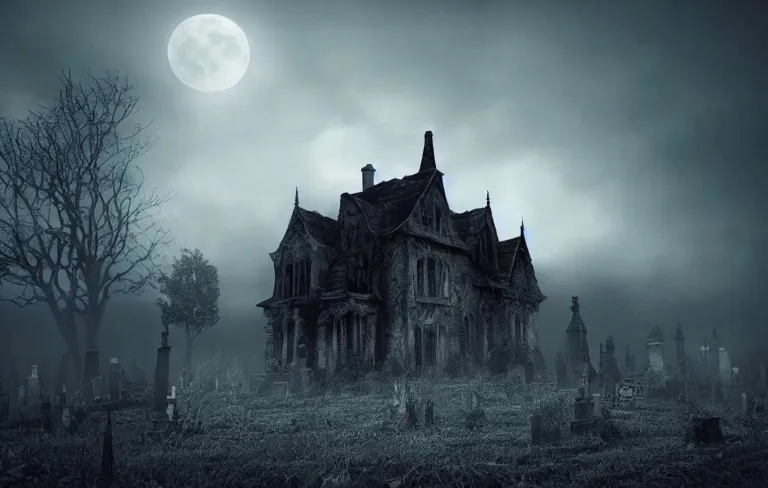
The works of Ann Radcliffe, an influential writer of the late eighteenth century, are a prime example of the expansion of Gothic language in literature. In novels such as The Mysteries of Udolpho (1794), she creates a setting that is simultaneously magnificent, terrifying, and eerie. Abandoned castles, dark corridors, mysterious sounds at night, and the frightened female protagonist wandering the boundary between reason and imagination—all are elements that, with some transformation, entered cinema in the twentieth century. Radcliffe, by combining wild and vast natural landscapes with Gothic architecture and psychological depth, created a kind of terrifying beauty whose influence can be clearly seen later in films like The Others (2001) by Alejandro Amenábar and Crimson Peak (2015) by Guillermo del Toro.
Edgar Allan Poe, the American writer, is undoubtedly one of the key inspirations for filmmakers in the horror genre. Poe’s relationship with horror cinema is fundamental, complex, and highly influential. Not only as a pioneering author of scary tales but also as the founder of a psychological and aesthetic approach to fear, Poe played a central role in shaping the language and expression of horror films. Through stories like The Tell-Tale Heart, The Pit and the Pendulum, The Masque of the Red Death, The Fall of the House of Usher, and The Black Cat, Poe extracted fear not from the external world but from the depths of the human mind. In his works, madness, obsession, anxiety, guilt, death, and psychological disintegration become elements that affect the audience’s psyche beyond physical fear. This approach laid the foundation for a particular type of horror cinema that, instead of relying on visual effects and overt violence, explores the subconscious layers of the mind, nightmares, delusions, and identity crises.
In 1928, French avant-garde filmmaker Jean Epstein made the film The Fall of the House of Usher based on Poe’s famous story; the film conveyed fear through a still, mental atmosphere using eerie lighting, theatrical mise-en-scène, and slow camera movements. American director Roger Corman also produced successful films in the 1960s based on Poe’s stories, including The Masque of the Red Death, The Pit and the Pendulum, and The House of Usher. Vincent Price’s performances in these films became a visual signature of American Gothic horror. Corman translated Poe’s literary legacy into cinematic language by employing vivid colors, surreal scenes, and psychological themes. George Romero, the father of modern zombies, also cited Poe as one of his inspirations, although his works mainly drew from contemporary social fears.
In Poe’s works, we encounter antiheroes with disturbed psyches living in houses that reflect their unconscious. These characters suffer from identity collapse or multiple personalities and fear death and being buried alive. Poe’s influence can be seen in films such as Alfred Hitchcock’s Psycho, Roman Polanski’s Repulsion and Rosemary’s Baby, as well as movies by Dario Argento and David Lynch. These filmmakers used visual elements like harsh architecture, shadowy and subjective shots, and unconventional lighting and editing to bring Poe’s psychological and terrifying language to the screen.
In The Fall of the House of Usher, the house is not an ordinary place but a living, decaying entity. Houses that absorb the memory, history, and psyche of their inhabitants and transform into terrifying living beings became a strong metaphor in Gothic literature and art, later turning into a central motif in horror cinema. Although Poe never saw cinema himself, his mental world guided the cameras of many filmmakers.
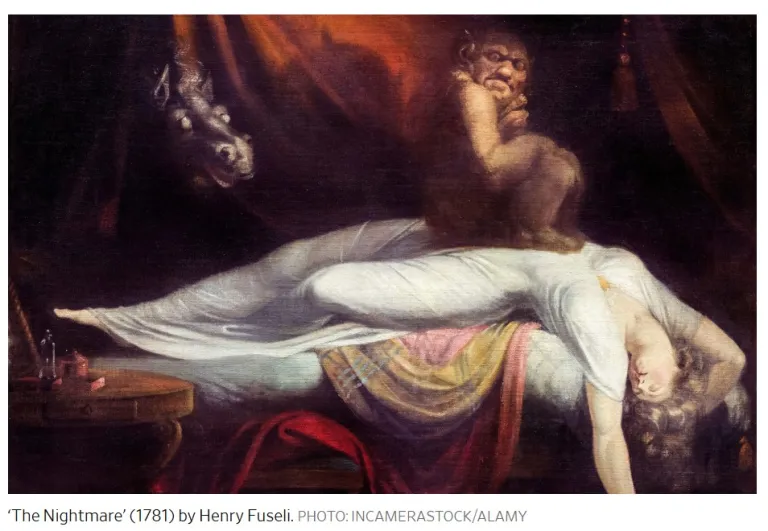
Alongside literature, the paintings of Henry Fuseli, an 18th-century Swiss artist, offered nightmarish visions of the Gothic mind. His famous painting The Nightmare (1781), depicting a motionless woman lying on a bed with a grotesque, terrifying demon perched on her chest, is an image of unconscious repression and the embodiment of nocturnal terror. This work not only had a profound impact on Gothic visual culture but is also clearly reflected in the visual language of classic horror cinema.
Another significant visual source of fear can be found in the works of Hieronymus Bosch, a 15th-century Dutch painter. His paintings, such as The Garden of Earthly Delights and The Last Judgment, portray surreal monsters, spiritual and physical torments, and infernal architectures. Although Bosch lived before the emergence of Gothic literature, his symbolic and chaotic visual world provides a rich foundation for understanding the roots of fear in European art. Surrealist horror cinema, especially the films of Dario Argento, openly draws upon these kinds of images.
One cannot overlook Edvard Munch’s painting The Scream (1893), a quintessential expression of modern existential anxiety. The figure, mouth agape against a turbulent red background, symbolizes the psychological state of a human crushed by the meaninglessness of existence. Although Munch cannot be classified as Gothic in the historical sense, his deep connection to Gothic themes—loneliness, madness, death, and the collapse of reason—is undeniable. These themes became central to many psychological horror films such as Psycho and Black Swan.
In the 20th century, artists like Francis Bacon portrayed fragmented human figures trapped in confined spaces, depicting suffering, instability, and inner disintegration of modern man. Like Munch, Bacon approached the human body and mind from a psychoanalytic perspective, but the intensity of violence and chaos in his works directly resonates with the nightmare imagery in horror cinema. The faceless, contorted faces in Bacon’s paintings resemble the kinds of monsters seen in films by David Lynch or Ari Aster.
Modern horror cinema, while utilizing contemporary technology and storytelling, still retains Gothic undertones. The fear it evokes is not from external monsters but from confronting one’s inner self, buried pasts, repressed memories, and voids of meaning. Films like Ari Aster’s Hereditary and Robert Eggers’ The Witch are testimonies to this continuity: a fear born from space, silence, history, superstition, and the characters’ mentalities and religious beliefs.
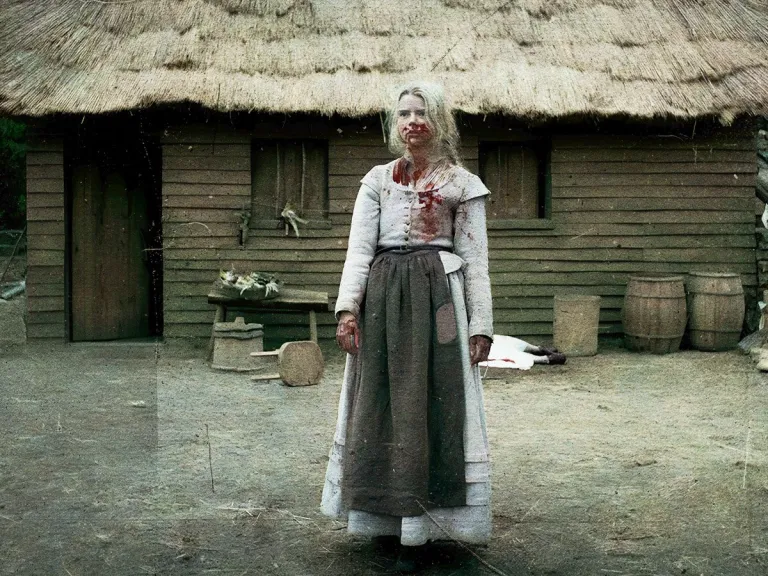
Therefore, Gothic, as an aesthetic and psychological language, has a lasting presence not only in past literature and visual arts but also in contemporary media. Horror cinema—especially in its artistic and psychoanalytic forms—is the modern embodiment of the ancient fears that still breathe within Radcliffe’s abandoned castles, Fuseli’s nightmares, Bosch’s hellscapes, Munch’s scream, and Bacon’s monsters.