



It Was Just an Accident trembles like a shard of broken mirror in the viewer’s hand—from its very first second to its final frame. It refuses to offer a clear, polished reflection; instead, it reveals fractured and shifting angles of truth. Jafar Panahi, once the gentle storyteller behind The White Balloon and The Mirror, returns with a voice steeped in doubt and fury. This film was born under surveillance cameras, beneath the threat of censorship and the shadow of despair. Each shot feels like a secret letter—finally smuggled across borders and projected on the screen at Cannes. His reappearance at the festival, after fifteen years of absence, is itself a cinematic event, expanding the meaning of the film: Panahi climbs the wall of prohibition to remind the world that no barrier is taller than the will to tell a story.
The plot begins with what seems like a minor car accident. Eghbal, an unlucky driver, seeks refuge in a nighttime garage, where Vahid, a weary mechanic, hears in the limp of his footsteps and the scent of his sweat an echo of a monster from his past—the man who once crushed his bones while he wore a blindfold. This hazy recognition marks the start of a Kafkaesque “trial”—a court without a judge, where the midnight road becomes a chamber of interrogation. In conjuring this nightmarish space, Panahi draws on the same dream logic Kafka wove into his novels: a world where guilt is unproven but punishment is already decided.
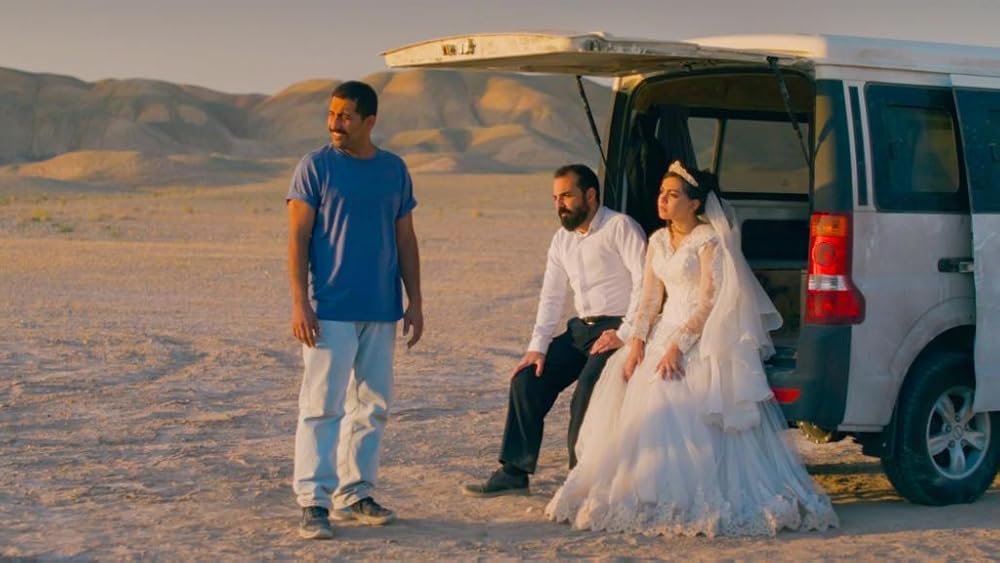
Vahid throws the man into the back of a white van and sets off. From this moment, the road from Tehran becomes a river of turbulent memory. Each bend invites a new witness, and each witness sows a new doubt in Vahid’s mind. If, in One Hundred Years of Solitude, García Márquez’s butterfly wind could overturn a city, here, the whimper of a stray dog can unravel the lives of men and women who do not yet know how their fates are entangled.
In the dark trunk, a man groans, insisting on his innocence. Eyes once sealed by violence now have the chance to reopen and reexamine reality. Panahi’s cinema, with echoes of Dostoevsky—who in The Brothers Karamazov placed the weight of guilt and redemption upon fragile souls—shows how every confession only births more uncertainty. The viewer is caught between pity and a quiet fury: if the man is innocent, then the victims stand on the brink of repeating the very violence once inflicted on them.
It Was Just an Accident attacks directly and without hesitation. This time, Panahi distances himself from cautious metaphors, aiming his critique squarely at the structures of power. Is the man in the trunk truly the original torturer? The film refuses to answer, for it questions the question itself: in a system where injustice is institutionalized, perhaps the identity of the individual is irrelevant. Perhaps a wounded society no longer needs witnesses, but solidarity. The film’s closing shot—a long, motionless image steeped in silence—lands with devastating weight. The contrast between the city’s chaos and this final stillness leaves a bruising impression. The sound that emerges in this final moment lingers in the viewer’s mind like a wound that refuses to close.
The film’s power lies in its cast, who don’t merely perform roles, but relive memories. Vahid Mobsari, with slumped shoulders and eyes that open old wounds with every blink, embodies a man on the brink of becoming what he once feared. Ebrahim Azizi, calm-voiced and misty-eyed, constantly destabilizes the viewer’s judgment; one pleading denial from him is enough to crack the surface of certainty like a spiderweb on frosted glass. And Shiva, played by Maryam Afshari, delivers a searing monologue on defiance—a voice that slices through the van’s shell, revealing how women in this land are doubly oppressed: once by the regime, again by tradition.
Shot in tight frames and yellowed streetlight, the film suffocates with a claustrophobic tension.
Each abrupt cut in the editing is like the racing heartbeat under an interrogation lamp. The distant bark of a dog in the background recalls the film’s seemingly trivial opening crash—a wound that, even after layers of vengeance, still bleeds freshly.
The ending offers no clear resolution. Instead, it plants a question that keeps you awake like a wisdom tooth throbbing in the dark: when suffering has no face, through what path can justice arrive? It Was Just an Accident is more than a tale of revenge or a political provocation—it is a long poem about a memory that refuses to fade. If justice is ever to descend, perhaps it will arrive with the softness of Márquez’s butterfly wings, or with the force of Raskolnikov’s howl in a restless body. Until then, Panahi proves that cinema can be the burning voice of wounds whose scent of blood cannot be censored from the wind.
It Was Just an Accident is not merely a film—it is a document of rage and resistance. Though it lacks the playful humor of Taxi Tehran or the formal experimentation of This Is Not a Film, it grips the viewer with moral force, raw clarity, and passionate storytelling. It begins with simplicity but digs deep into the nation’s most unhealed scars.