



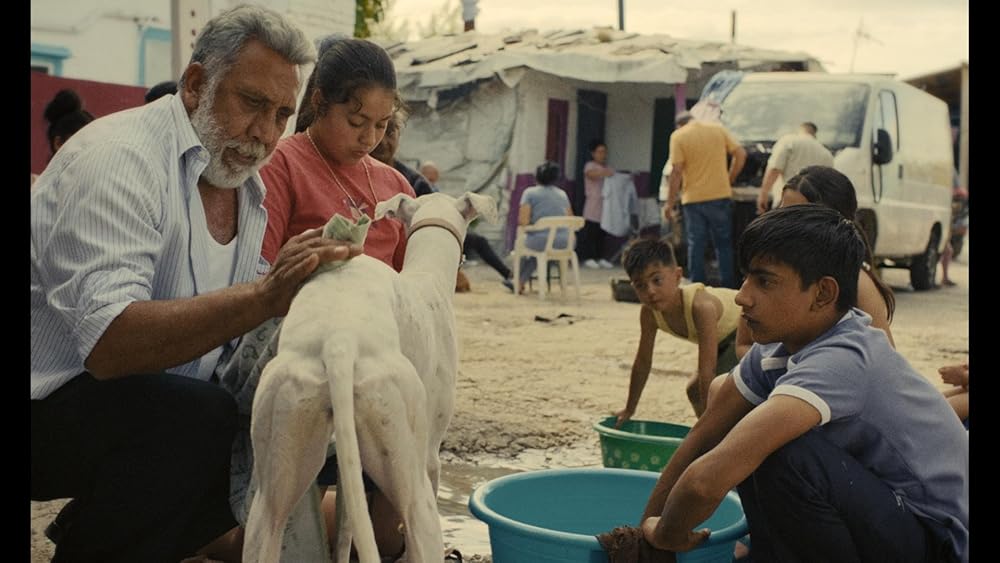
Sleepless City (Ciudad Sin Sueño), the first narrative feature from Spanish filmmaker Guillermo Galoe, premiered in the 2025 Critics’ Week at Cannes. Shot on the fringes of Madrid in La Cañada Real, Europe’s largest informal settlement, the film follows thirteen-year-old Toni and his Roma family just as bulldozers and eviction orders threaten to erase their way of life.
Galoe insists he wanted to capture “the end of a community” through a child’s eyes—an unjudging gaze that still believes in magic. With cinematographer Rui Poças at his side, he frames scrapyards, blackout nights and ramshackle houses in liquid golds and dreamy neons, many of them filtered through Toni’s own smartphone camera.
Such exquisite surface beauty quickly becomes a double-edged sword. The very first image—a white greyhound sprinting through piles of refuse at sunset—announces that we are meant to admire, even savor, what we see. Dire realities—addiction, electrical outages, fires set to trash, predatory land speculation—are rendered so painterly that their violence softens into atmosphere. Instead of provoking outrage, the images invite a wistful sigh. When Toni’s grandfather declares their collapsing shack “true happiness” and dismisses the state’s offer of a clean, modern apartment, the film’s sympathies lie plainly with the shack; the new flat is lit like a morgue. What might have been a rigorous moral dilemma—dignity versus safety—slips into a nostalgic manifesto that quietly elevates poverty itself to a site of authenticity.
Galoe’s formal conceit—Toni’s saturated phone footage—suggests inner transformation but ultimately settles into a stylistic flourish. The central quest to reclaim a sold greyhound hints at metaphors of freedom and identity, yet culminates in a picturesque set-piece where exotic birds escape their cages, leaving neither Toni nor the audience with a deeper reckoning. As the credits roll, one cannot escape the sense that the film has polished hardship into an ethereal spectacle tailored to festival tastes: “periphery realism” distilled into a collectible postcard.
Cinema can, and often should, immortalize worlds on the verge of disappearance. But when the camera turns deprivation into a sumptuous tableaux, it risks replacing critique with contemplation, protest with poetry. Sleepless City is undeniably gorgeous, frequently tender, and filled with real inhabitants who enact their own myths. It is also a film that serenades us into serenity just when we ought to feel unsettled. The title promises insomnia, yet the experience is more like a beautiful, soothing dream—one we awaken from having seen much, but having questioned very little.