



If we are to offer a proper analysis of this phenomenon, we must return to some of Melanie Klein’s earlier ideas concerning the issues discussed above. In this regard, we can draw upon Klein’s concept of phylogenetic inherited knowledge. Building on Freud’s notion of inherited cognition, Klein developed the idea of an innate predisposition to organize experiences in particular ways and extended it to pre-Oedipal experiences. She proposed that an infant’s knowledge of the mother’s breast and its desire to tear it apart (the “good breast” and the “bad breast”) are manifestations of instinctual drives. In doing so, she borrowed one of Freud’s most revolutionary ideas and extended it to the earliest stages of development and instinctual transformation: namely, that instinctual drives possess a crucial capacity to confer meaning upon human experience.
The “good mother” and the “bad mother” do not directly teach experiences; rather, their role lies in providing the conditions that determine the extent to which instinctual drive patterns are activated in response to danger. Real experiences function as triggers that bring an innate chain of psychological functions into organization and action. For example, one could say that a mother hen does not teach her chicks the specific characteristics of predatory animals, nor does she experimentally train them in adaptive fight-or-flight responses when encountering a predator. Instead, maternal behavior facilitates the chick’s biological development, which already includes instinctive patterns enabling it to distinguish predators from non-predators and to respond appropriately to each. Similarly, a good mother can significantly influence a child’s ability to correctly distinguish between the good intentions and harmful intentions of others.
At birth, the infant organizes its perception according to its innate preconceptions and its inherited modes of structuring experience. The infant is bound by its expectations and is incapable of learning from experience in a fully open manner, because new experiences are interpreted only through the lens of those expectations. A similar pattern can be observed in severely paranoid adult patients, who interpret every new relationship through expectations of danger and threat. It is here that the role of the “bad mother” in establishing the conditions under which instinctual patterns of danger response become dominant emerges more clearly. The meanings the infant assigns to—or denies in—its experiences become consistent with its own self-sustaining paranoid system. Because the infant’s earliest reality is almost entirely fantasy-based, it projects its internal world onto external objects.
When the mother is frustrating and inadequate, and fails to provide a suitable environment for distinguishing between good and bad objects, the child may encounter severe difficulties in future relationships. Such individuals may consistently perceive others and the surrounding world as unsafe. In certain cases, this tendency can develop to the point of producing a deeply paranoid and authoritarian personality, even that of a dictator.
Such a paranoid dictator, driven by a pervasive sense of insecurity, constantly seeks means of self-protection. Because he must always have an enemy—or, in the absence of a real one, invent one through his paranoid fantasies—he requires repressive instruments through which he can defend his position of power against perceived threats.
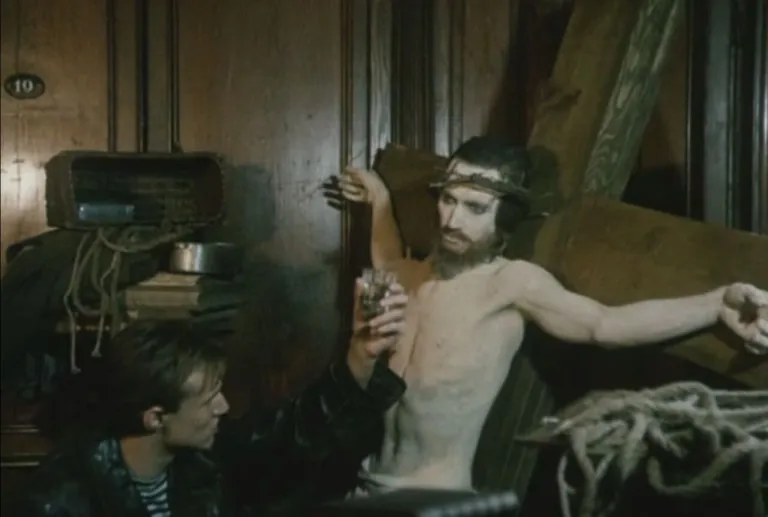
At this point, we can turn to the film Chekist(1992), directed by Aleksandr Rogozhkin, to analyze these instruments of repression. In the early years of his rule following the Bolshevik Revolution, Lenin established an institution known as the Cheka, which functioned as a secret police force and a body of extrajudicial repression. Its mission was to eliminate all critics and opponents of the regime. Those whom it regarded as parasitic threats to the socialist state—including intellectuals, aristocrats, Jews, religious believers, and others—were arrested and executed in groups without trial or judicial process.
In reality, the Cheka was the first major apparatus of repression before the establishment of the KGB. Operating openly and actively, it launched a campaign of mass violence against all perceived opponents of the Communist Party. In the film, Srubov, the leader of one local Cheka unit, oversees what is essentially a human slaughterhouse. Men and women from every social background are stripped naked and lined up before wooden doors. They are then executed with close-range gunshots to the back of the head. Their bodies are hoisted upward by ropes, loaded onto trucks, and transported to mass graves.
As the film progresses, we witness the gradual psychological disintegration of the execution squad. In order to endure and suppress their human emotions, many turn to psychoactive substances, attempting to withstand the atrocities they commit—atrocities carried out with the cold efficiency of an industrial slaughterhouse.
With the exception of a small number of individuals exhibiting psychopathic personality structures (and, arguably, severe forms of pathological narcissism), no civilized human being can easily tolerate the deliberate killing of another person. Human civilization itself began when certain members of primitive tribes started to challenge traditional tribal authority and establish relations and trade with neighboring groups. This development created a new reality: human beings increasingly depended upon others—even strangers from outside their own tribe—for survival.
Gradually, commerce and cooperation replaced constant warfare. People came to recognize that their survival depended upon valuing and respecting others. This shift made urban settlements and the coexistence of diverse individuals with differing beliefs—intellectual pluralism—possible. Over time, killing fellow human beings became a taboo, reinforced by increasingly sophisticated social norms and laws. The reason was ultimately practical: large-scale social cooperation provided a more effective guarantee of survival than perpetual conflict.
Even religion and morality emerged within this broader context. Ethical systems became important because they helped regulate behavior and prevent individuals from violating one another’s rights, thereby increasing the stability of social life. Consequently, the psychological structure of most human beings is not capable of repeatedly tolerating the systematic killing of fellow humans.
Yet repressive regimes require large numbers of personnel. Inevitably, people with different personality structures—but united by a common ideological commitment—are recruited into these systems. In order to compel the majority of these individuals to participate in the persecution and killing of political opponents, such regimes often rely on various methods of psychological numbing and desensitization. One mechanism frequently portrayed in historical and artistic representations is the use of psychoactive substances among members of repressive forces. Such substances may help individuals temporarily endure acts that would otherwise generate overwhelming moral conflict, psychological distress, or emotional breakdown.
Nevertheless, even psychoactive substances cannot indefinitely shield individuals from the psychological consequences of sustained participation in violence. Many eventually succumb to severe emotional deterioration, psychological collapse, or forms of mental instability resulting from prolonged exposure to brutality and mass killing.