



Cinema has always functioned both as a mirror reflecting reality and as a tool for shaping cultural perception. This dual role is particularly evident in the differences between mainstream Hollywood productions and independent or art-house cinema. The representation of cultural diversity in these two spheres differs not only aesthetically but also ideologically. Mainstream cinema—especially blockbuster productions—often relies on simplification and repetition, employing narrative shortcuts that reduce indigenous and non-Western cultures to stereotypes or portray them in demonized terms. In contrast, independent and art cinema tends toward complexity, ambiguity, and a rejection of simplistic moral binaries.
Hollywood’s global dominance has ensured that its representations of the “Other” exert a disproportionate influence on audiences worldwide. From Cold War-era films to post-9/11 action movies, Hollywood has repeatedly portrayed foreign nations—particularly non-white peoples—as potential threats to Western society. Such representations frequently rely on visual and cultural markers such as skin color, language, accent, clothing, and alternative lifestyles to signify alterity. This approach corresponds closely to what postcolonial studies identify as othering: a process through which non-Western cultures are depicted as invasive, irrational, dangerous, or inherently prone to terrorism, thereby reinforcing the centrality and normative status of the West.
These representations are not accidental. Rather, they emerge from industrial and economic imperatives, including the need for clearly identifiable enemies, the desire to appeal to broad audiences, and, at times, collaboration with state institutions. Such relationships can shape narratives in ways that serve particular national interests and perpetuate simplistic or distorted images of other cultures.
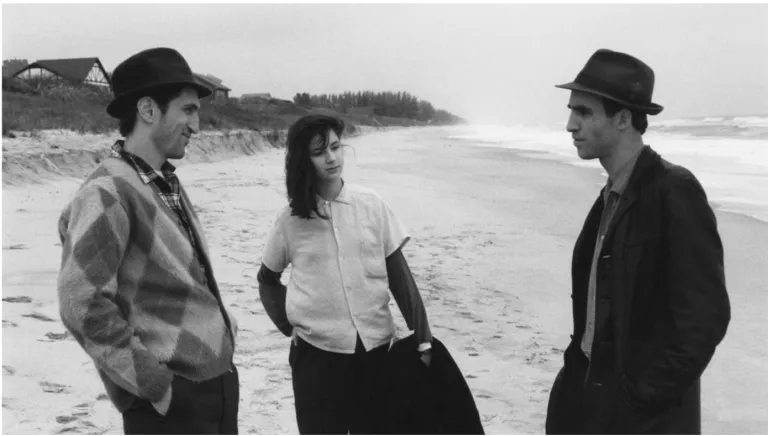
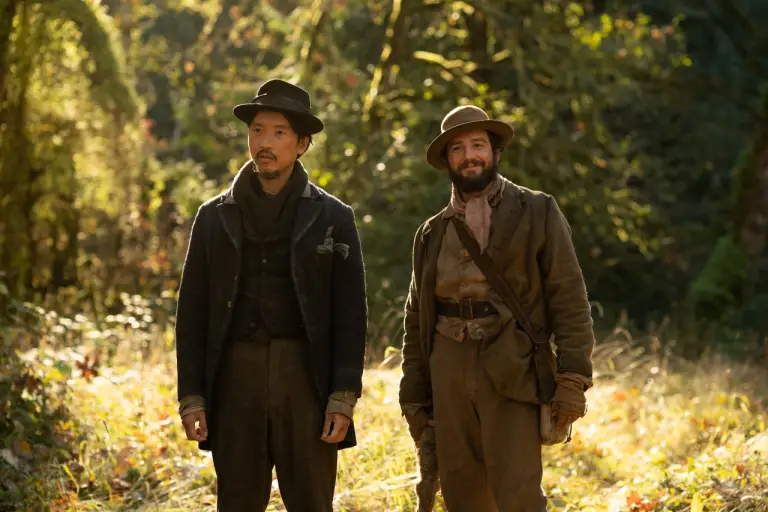
By contrast, filmmakers working outside the Hollywood system—whether in the United States, Japan, India, or Iran—often adopt fundamentally different approaches to cultural representation. The films of Abbas Kiarostami, such as Taste of Cherry, avoid simplistic judgments and stereotypes, focusing instead on everyday life and philosophical reflection. Likewise, Satyajit Ray’s Apu Trilogy presents a profoundly human portrait of India that stands in stark contrast to both colonial stereotypes and the commercial conventions of Hollywood and Bollywood (the Indian adaptation of the Hollywood model). Similarly, the films of Akira Kurosawa and Kenji Mizoguchi complicate cultural narratives by portraying characters who resist easy categorization into notions of good and evil. In the United States, independent filmmakers such as Jim Jarmusch and Kelly Reichardt challenge dominant Hollywood structures through minimalist narratives and a focus on marginalized lives.
What distinguishes independent art cinema from mainstream cinema is not merely its subject matter but also its style and method of presentation. The use of non-professional actors, location shooting, understated and often non-dramatic narratives, open endings, and long takes encourages active audience participation. This formal openness reflects a broader openness to cultural complexity. Here, culture is not treated as a collection of fixed characteristics but rather as a lived, fluid, and multilayered experience.
The work of independent filmmakers such as John Cassavetes, Jim Jarmusch, and Kelly Reichardt seeks to provide more authentic and humane representations by concentrating on the details of everyday life: the rhythms of labor, family relationships, and human resilience. This approach belongs to a cinematic tradition in which meaning emerges through observation rather than being imposed by narrative design.
Yet participation in the international film landscape presents unique challenges, particularly for non-Western filmmakers. Although art cinema is often positioned as an alternative to Hollywood and its stereotypes, it is itself influenced by specific narrative and visual conventions and by particular audience expectations. One recurring tendency is the alignment of films with the tastes of international film festivals and Western audiences. This can result in a disproportionate focus on themes such as human rights violations, sexual, political, and religious taboos, and social crises.
The international prominence of filmmakers such as Mohammad Rasoulof and Jafar Panahi has undoubtedly contributed to the global recognition of Iranian cinema. At the same time, however, it has helped shape a distinct “festival aesthetic.” Within this framework, some filmmakers may feel compelled to emphasize themes that are especially attractive to Western audiences, including gender inequality, religious discrimination, political repression, and unconventional sexual relationships. There is no doubt that these issues are important and deserve cinematic attention. Yet their repeated presentation within a particular aesthetic framework can produce a one-dimensional, exoticized, and stereotypical image of non-Western societies tailored to Western expectations.
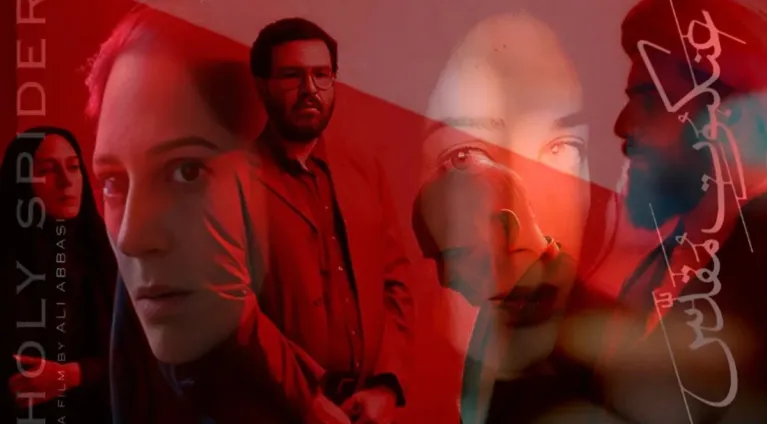
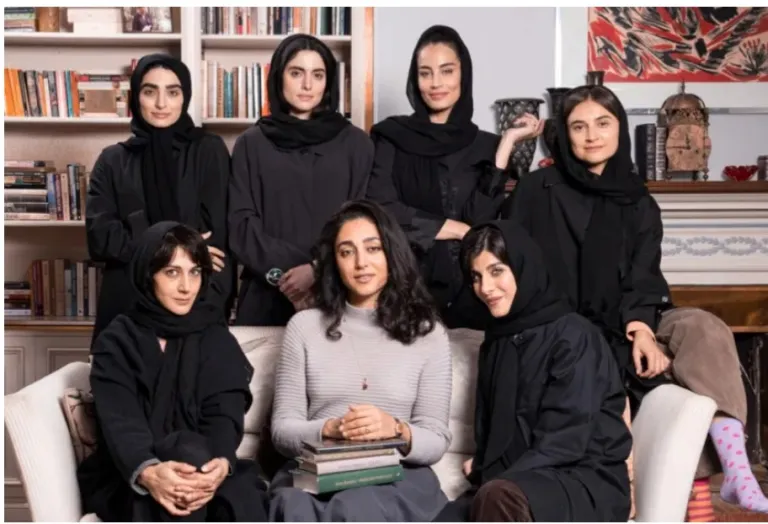
When the darkest and most troubling aspects of a society become the dominant focus of representation, there is a risk that reductive patterns of interpretation will be reproduced—albeit in a subtler form. Films such as Reading Lolita in Tehran, Dog Sweat, Shayda, The Seed of the Sacred Fig, and Holy Spider can be understood within this broader context.
This raises important questions concerning agency and representation. Are such choices expressions of internal critique, responses to external demand, or some combination of both? Addressing issues such as patriarchal structures may constitute a necessary and valuable critical intervention. However, when these themes become the only dominant narratives, they restrict more diverse understandings of a society.
In my view, it is important to maintain critical distance from both tendencies: from Hollywood’s exaggerations and simplifications, and from the festival-oriented tendencies toward pessimism and self-exoticization found in certain art-house films. Representations of marginalized lives should neither reduce individuals to suffering nor transform them into spectacles. Rather, they should embrace complexity—acknowledging hardship without reducing people to it, and recognizing dignity without romanticizing it.
The central challenge, therefore, is not merely to critique existing modes of representation but to create alternatives. Whether mainstream or marginal, cinema always emerges within structures of power, capital, and distribution. The filmmaker’s task—particularly in underrepresented contexts—is to navigate these structures without allowing them to define the narrative itself. This involves a continuous negotiation between artistic integrity, audience expectations, and ethical responsibility in representation: a negotiation that ultimately determines what appears on screen, how it appears, and for whom.
The distinction between mainstream cinema and independent art cinema extends far beyond matters of taste or form; it is rooted in mechanisms of power and meaning production. The Italian Marxist theorist Antonio Gramsci argued that cultural domination is achieved not primarily through direct coercion but through the manufacture of consent and the naturalization of dominant values. Applied to cinema, this suggests that Hollywood does not merely produce entertainment—it also produces a form of “accepted reality.”
Within this reality, simplistic distinctions emerge between “us” and “them,” where the “Other” is frequently represented as a threat, an enemy, or a backward subject. Through constant repetition in commercially successful films, these representations gradually become embedded in audience consciousness and come to appear as self-evident truths about the world.
In this context, stereotypes are no longer merely devices of narrative simplification; they become components of a hegemonic process. They erase historical, political, and cultural complexity, replacing it with easily consumable and predictable images. This helps explain why many mainstream films portray non-Western countries—particularly those in the Middle East and Latin America—as unstable, dangerous, or in need of military intervention. Such representations implicitly reinforce the superiority of Western order and present it as a universal norm.
Stuart Hall emphasized that representation is not a passive reflection of reality but an active process of meaning production. What we see in cinema is not simply an image of the world but the result of selections, omissions, and codes that construct meaning. From this perspective, when Hollywood repeatedly presents a particular culture in similar ways, it is creating a system of meaning that confines that culture within a narrow interpretive framework.
Hall also highlighted the processes of encoding and decoding—the ways media messages are produced and interpreted by audiences. While audiences are capable of generating alternative readings, media structures possess significant power in limiting the range of possible interpretations. Consequently, when dominant representations of a culture are overwhelmingly negative or stereotypical, opportunities for alternative understandings become increasingly constrained.
At this point, the distinction between independent art cinema and mainstream cinema becomes clearer. Filmmakers such as Abbas Kiarostami, Carlos Reygadas, Nuri Bilge Ceylan, Lav Diaz, and Apichatpong Weerasethakul resist dominant systems of meaning by rejecting simplistic narratives. Rather than reproducing stereotypes, they foreground lived experience, ambiguity, and complexity. In their films, the “Other” is not an abstract category but a human being with a history, emotions, and internal contradictions.
Such representations may be understood as forms of counter-hegemony—attempts to challenge established meanings and create space for more diverse interpretations.
Nevertheless, as noted earlier, independent art cinema is not entirely outside these structures of power. Hall’s theory of representation remains relevant here because it demonstrates that even apparently critical representations derive meaning from existing discourses. When a film from Iran, Morocco, or another non-Western country focuses exclusively on the darker or more troubled aspects of society, it may simultaneously function as an internal critique and reinforce the very image Western audiences expect to see.
This is where critiques of the so-called “festival aesthetic” become particularly significant. Filmmakers often face a dilemma: on one hand, a desire to represent social realities and criticize existing structures; on the other, pressure to conform to the expectations of international film markets. This situation can be understood as a form of hegemonic negotiation, in which meaning is neither entirely imposed nor completely free but produced through the interaction of multiple forces.
Focusing on the everyday lives of marginalized individuals without reducing them to symbols of suffering or turning them into spectacles constitutes an intervention in the politics of representation itself. By emphasizing complexity and humanity, such an approach expands the field of meaning and creates opportunities for alternative interpretations. In other words, this kind of cinema not only challenges dominant narratives but also opens space for redefining reality itself.
Consequently, any analysis of cultural representation in cinema that ignores the concepts of hegemony and meaning production remains incomplete. Mainstream cinema, through repetition and stereotyping, contributes to the stabilization of dominant symbolic orders. Independent art cinema, despite its critical potential, remains vulnerable to absorption into those very same structures.