



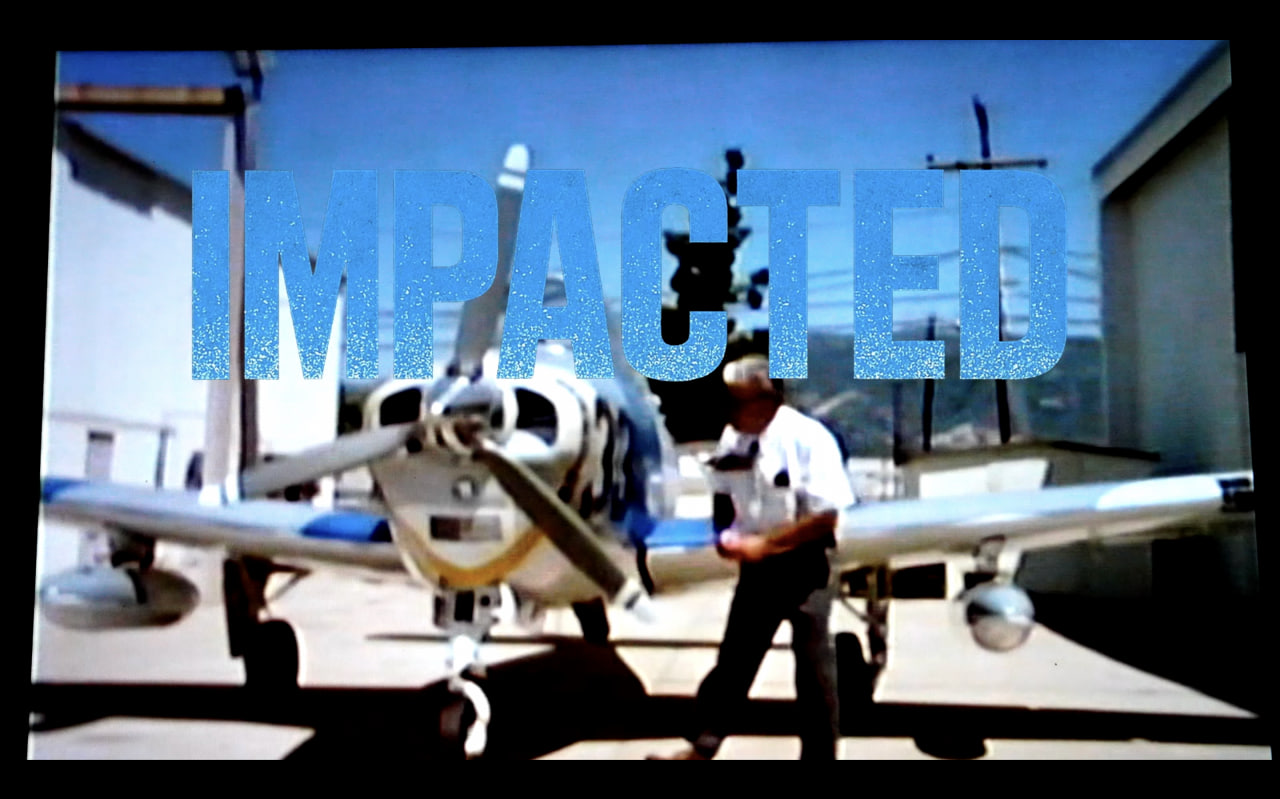
John Myrick’s Impacted builds its comedy around a familiar cultural promise: somewhere inside an obscure film lies an extraordinary revelation, provided someone sufficiently serious introduces it. Winner of Best Film in the Santa Barbara Filmmakers category at the Santa Barbara International ShortFest’s Fall edition, the short turns that promise into an affectionate portrait of public-access television. A polished presenter, a supposedly recovered reel, an alarming Soviet mystery, and a septic-service commercial occupy the same broadcasting universe. The pleasure comes from watching these elements coexist, each presented with a confidence wildly disproportionate to what appears on screen.
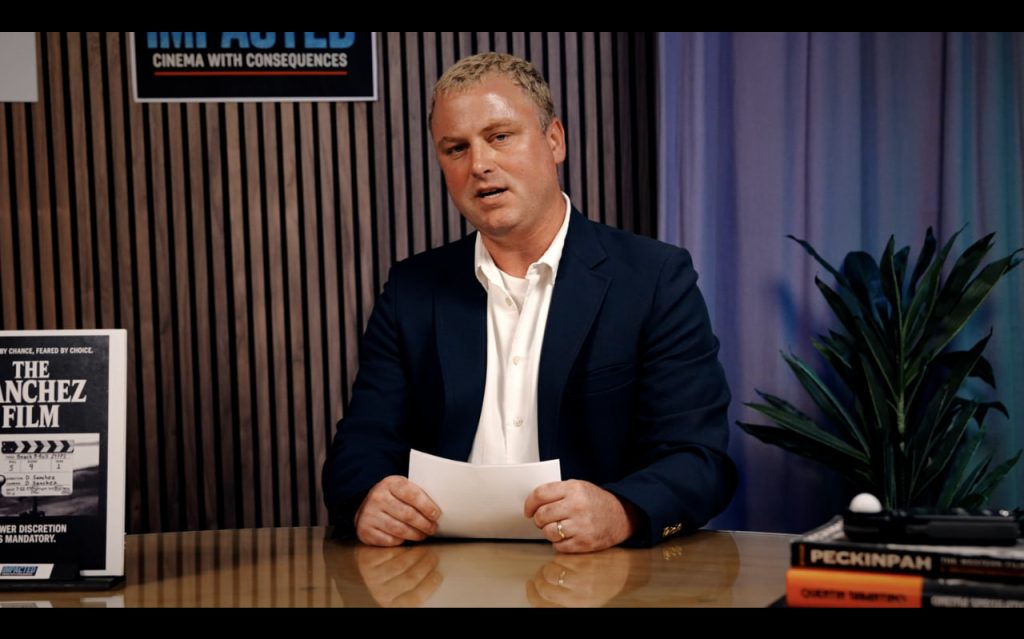
The framing device is essential. Impacted arrives through an old television set and the branding of TV Montecito, establishing a viewing experience already filtered through another medium. Its fictional program, subtitled “Cinema with Consequences,” offers a grand claim before any evidence appears. Host Skip Barlow sits behind a reflective desk, surrounded by books, plants, colored curtains, and neatly arranged signs. Myrick understands that authority has a visual grammar: a jacket, a serious expression, a stack of film books, and a framed poster can make even an improbable proposition look institutionally endorsed.
Peter Madison’s performance gives this environment its human center. His visible restraint is particularly effective: small changes of expression, attentive looks toward the camera, and measured handling of his papers sustain the host’s investment in his own program. The comedy develops through the distance between his professional bearing and the unruly material placed before him. Barlow appears to believe that dignity can be maintained through presentation alone. As the broadcast moves between film appreciation, alarming footage, and commercial promotion, that belief becomes increasingly difficult to preserve, yet his persistence keeps the character sympathetic.
The object of this attention is The Sanchez Film, presented as footage connected to a sinister Soviet space project. Its introduction adopts the machinery of historical authentication: dates, a rolling explanatory text, warnings, and references to restoration. The declaration that viewer discretion is mandatory neatly exposes the excess of this apparatus.
Photographs of a vodka bottle and “Sovietsky Cheese,” arranged beside measuring rulers, extend the joke. Ordinary objects become evidence through labeling and display; the visual procedures of investigation manufacture importance before anything has been established.
Once the recovered footage begins, Myrick gives the coastal landscape room to register. Empty shoreline, waves, trees, and a narrow passage through foliage supply an unexpectedly persuasive atmosphere of isolation. The monochrome imagery and simulated wear encourage us to read these views as traces of an earlier time. Clapperboards remain conspicuously visible, however, reminding us that someone was producing images even within this supposedly mysterious record. Before the extraordinary can arrive, a camera operator must find a view, identify a take, and keep recording.
The miniature spacecraft gives the film its most direct visual punch line. Resting among beach rocks, decorated with Soviet insignia and lettering, it brings the immense rhetoric of geopolitical danger down to an obviously manageable scale. The spectator can recognize both the object and the imaginative effort required to turn it into a threat. The rat creature emerging from the rocks works similarly. Myrick allows the material modesty of the effects to remain legible, inviting us to participate in the fiction while enjoying the means by which it has been assembled.
This balance becomes sharper when the footage shifts into unstable, apparently endangered camerawork. The image pitches toward sand, an awkward bottle appears near the camera operator’s leg, and the frame swings upward toward the palms.
The camera’s loss of composure supplies the event with urgency, even as the props resist a fully convincing illusion. Here the short finds a productive tension between horror and practical improvisation. A small object, an abrupt change of angle, and a partial view can suggest a catastrophe. The sequence makes the viewer aware of cinematic manipulation without entirely canceling the experience it creates.
The Pump and Dump advertisement broadens the satire beyond filmmaking. A pickup truck, exuberant branding, and a technician handling an oversized silver hose replace the studio’s careful arrangement of cultural prestige. The commercial’s bodily humor is deliberately blunt, but its position inside the broadcast gives it a larger function. Film appreciation must share airtime with the businesses that support the program. The cut between these worlds makes the economic conditions of cultural presentation visible. Art arrives accompanied by phone numbers and promotional slogans. The broadcaster’s lofty ambitions remain tied to a much less elevated marketplace.
Myrick develops this world through details that could easily have been treated as disposable background. Promotional cards, station logos, an intern behind a large computer, and the promise of another program about neighborhood raccoons suggest an institution continuing beyond the current episode. The later pairing of a promotional card reading “Ken Burns A Documentary” with septic-service material is especially apt. Prestige and practicality become adjacent objects on the same desk. Even the fictional production credit advertising a vacancy in sound extends the portrait of an operation making do. These small additions give Impacted a social texture beyond its monster-film premise.
The film is less adventurous in its overall dramatic development. Its organizing contrast becomes clear early, and the extended introduction, explanatory crawl, and returns to the studio sometimes restate an established joke. Viewers who quickly recognize the parody may want a stronger escalation or a more consequential shift in Barlow’s predicament. Nevertheless, the specificity of the invented station keeps the repetition from becoming anonymous. This is an identifiable little media world, populated by people whose commitment exceeds the resources available to them.
That commitment is what finally makes Impacted appealing. Its humor allows vanity, awkwardness, and vulgarity to remain visible while preserving an affection for the act of putting on a show. The Santa Barbara setting contributes more than scenery: local television, coastal images, and small-business sponsorship connect the film’s imagination to a particular community. Its recognition in the Santa Barbara Filmmakers category feels appropriate to that sensibility. Beneath the Soviet rocket and the solemn film presentation lies a modest creative enterprise determined to make something worth watching. Myrick finds comedy in its difficulties and pleasure in its survival.
© 2026. Phoenix Review