



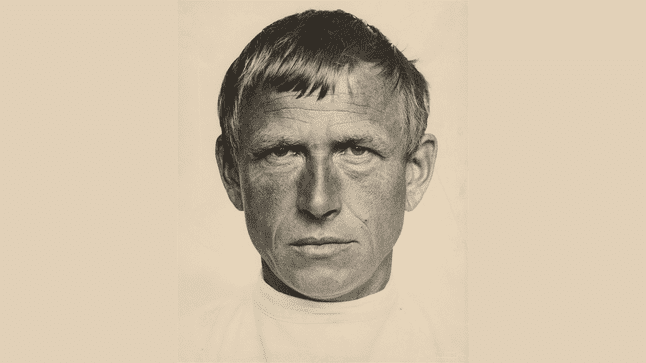
Otto Dix, the weary soldier from the front lines who had fought as an artilleryman in the trenches of war, directed his gaze not toward the glory of battle, but to its devastating consequences: lifeless corpses, soldiers on the brink of death, war survivors shattered by psychological wounds, lands turned into ruins under the relentless fire of artillery and bullets, and graves that welcomed the countless victims of war. However, at the time, as he later admitted, he did not reflect much on these horrors. It wasn’t until he returned home that the nightmares surfaced from the depths of darkness. And, suffering from this unavoidable torment, he took up his pen to depict these nightmares—without any veil, without any compromise—because wounds of this nature cannot be hidden.


Ten years after the start of the war, Dix published the “War” series, which included fifty images (for example, the two images above). These works not only do not glorify World War I, but also refuse to heroize the soldiers, instead merely depicting horrific scenes that only an eyewitness could portray with such candor and clarity.

Dix sought to create a style of modern painting that directed the viewer’s attention to the contemporary world and the realities of society. He chose his subjects not from legendary heroes, but from the most ordinary and marginalized people, those who were considered deviants or outcasts. Dix created them in a way that encapsulated the complex tensions and struggles of the art movement of his time. This characteristic is clearly visible in his magnificent painting of Anita Berber, a controversial dancer from the cabarets of the Weimar era. Like many of Dix’s works, this piece challenges the viewer on various levels: aesthetic, moral, philosophical, and even gender-related. Anita Berber died at the age of 29, just before the rise of the Nazis. Had she lived, she would undoubtedly have been sent to a concentration camp as a symbol of “degenerate art.”

When the Nazis rose to power in the early 1930s and the people of Germany were searching for something to fill the spiritual void, Dix undoubtedly realized that the shadow of another war was spreading across the horizon. In 1934, Dix created a painting titled “The Victory of Death” (image above), a work filled with dark symbols and imagery that invites deep reflection. At the center of this image stands a crowned skeleton, holding a large scythe, symbolizing death, as if time itself is always lurking, waiting for us. This terrifying figure is surrounded by various human beings; an armed soldier standing guard, while another is bent over in despair or mourning. In one corner of the image, a half-naked woman rests in the arms of a man, her face, amidst the chaos around her, bearing a meaningful silence. A small baby at the bottom of the image, unaware of death and misery, reaches for the flowers along the path, creating a stark contrast with the horrifying presence of the crowned skeleton. The background presents a desolate, silent landscape that reinforces the mood of death and the relentless passage of time. The intricate details of the painting, the interplay of light and shadow, all come together to create a haunting portrayal of life’s transience and its inherent instability.

One of Dix’s masterpieces is the portrait of Sylvia von Harden (image above), a journalist and symbol of the modern woman. In 1959, Dix wrote a note in which he explained the process of creating this portrait. He had met von Harden on the street and, with great enthusiasm, said, “I must paint you! Truly, I must! … You represent an entire era!” Von Harden replied, “So you want to paint my soulless eyes, my ornamental ears, my long nose, my thin lips, my long hands, my short legs, and my big feet—things that only frighten people and make no one happy?” Dix responded, “You’ve brilliantly described yourself, and all of these traits will contribute to a portrait that represents an era, one in which the psychological state of a woman is portrayed, not her physical beauty…”
This portrait was recreated in the opening and closing scenes of the film Cabaret (1972), directed by Bob Fosse, which takes place in Berlin during the Weimar Republic.