



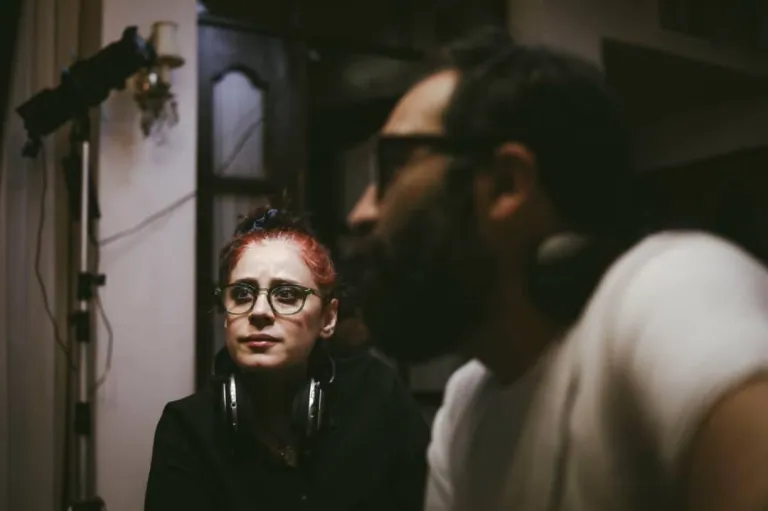
Women, Life, Freedom: The Irreversible Path is a collection of interviews with Iranian women in cinema who, following the “Women, Life, Freedom” movement, faced bans from working due to their support for protesters and acts such as removing compulsory veils.
I first saw Maryam Moghaddam on the Berlin FilmFestival red carpet for Jafar Panahi’s film Parde and was struck by her simple yet captivating style, her warm smile, and the spark in her eyes. Her performance in Probability of Acid Rain, directed by her husband Behtash Sanaeiha, amazed me, and in White Cow Ode, I realized that Iranian audiences were not just witnessing a top-tier actor, but a serious, determined, and incredibly brave filmmaker. In White Cow Ode (2019), she plays Mina, a central character who removes her veil to enter her beloved’s bedroom—a scene that led to the film being banned and a legal case against the couple. They continued their fearless work with the independent film My Favorite Cake, where the main female character, played by Lily Farhadpour, lives freely without a veil, dances, drinks wine, and openly invites a man into her life—a courageous film in post-revolution Iran.
In White Cow Ode, you remove your veil in 2019. Now, three years after the murder of Mahsa Amini and the “Women, Life, Freedom” movement, this act seems prophetic. What went through your mind when you performed that scene?
Maryam Moghaddam: Behtash and I had always wanted to make films without forced veiling, to avoid the forty-year habit of showing women in cinema always covered, never socializing with men, never dancing or singing, unrealistically. That dream wasn’t fully possible in that film, but in our next film, we fought for it. During Mina’s scene of love, we couldn’t hold back anymore; she removed her headscarf before entering. We told ourselves we had to take this step, face forty years of fear and falsehood. We were happy—and aware of the consequences. The film was banned, and the Intelligence Ministry sued us, partly because of that scene.
In 2022, you made My Favorite Cake, with the female character appearing freely without a veil, challenging many red lines. Was this film inspired by Mahsa’s revolution or a natural continuation of your filmmaking path?
Moghaddam: My Favorite Cake was written two years before the movement. We had already decided to make it without veiling. Much of the story is set in the home of the main character, Mahin, and we wanted to reflect real life, not lie to the audience. Truth is worth the risk, and we were ready to take it. Women in Iran have long fought for basic human rights, and cinema has always lagged behind. Filming without a veil was a natural next step after our previous work. Pre-production began three months before Mahsa’s death, and shooting started two weeks before the movement. The first screening was at the Berlin Festival in 2024, and the film reached Iranian audiences in 2025.
You made this film underground, without permits, despite facing legal cases. Where does such courage come from, especially when many Iranian filmmakers still work under the regime?
Moghaddam: Our greatest inspiration is the women and youth of our country. They fight for their rights despite lacking basic human freedoms. Witnessing injustice, environmental destruction, theft of our resources, and forced emigration makes personal comfort meaningless. How can one prioritize comfort or personal gain? Life doesn’t allow idleness; we must reclaim what is ours.
You and your husband are banned from working and leaving the country. What is the status of your legal case?
Moghaddam: Over the past five to six years, we have been interrogated multiple times due to My Favorite Cake and White Cow Ode. We’ve been banned from leaving the country for two and a half years and have a suspended 26-month prison sentence. Recently, our appeal was rejected, and we’ve submitted a new request to the Supreme Court.
How has the “Women, Life, Freedom” movement impacted ordinary lives and artists in Iran?
Moghaddam: It has made people braver and more free, reminding us how to live courageously again. Society paid a heavy price, but hope has grown. Artists often lag behind, yet many have rejected censorship, especially young filmmakers moving toward independent cinema.
Why did many female filmmakers not join this civic action despite its importance?
Moghaddam: Opportunism, lack of solidarity, disregard for the country, and fear of losing status or money explain some choices. But each person makes their own choice—stand with the people or prioritize personal gain.