



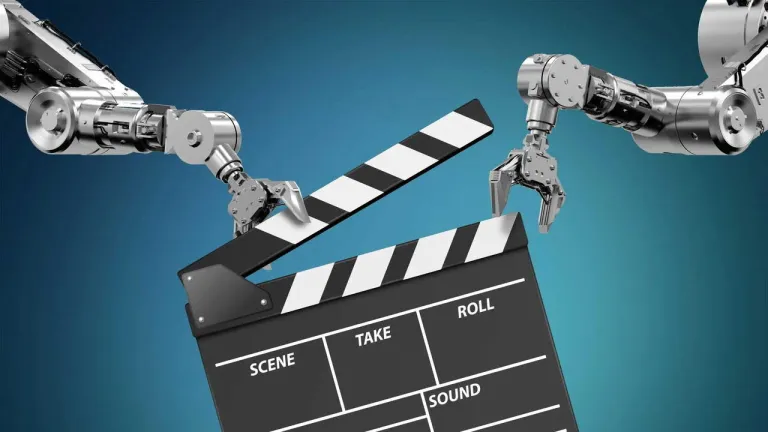
News of Martin Scorsese‘s collaboration with an artificial intelligence company to develop storyboards has once again brought the increasingly urgent debate over the relationship between technology and art to the forefront. Long regarded as one of cinema’s foremost defenders of classical filmmaking, the acclaimed American director has spoken enthusiastically about a tool capable of translating his ideas into images with unprecedented speed. Yet those remarks alone were enough to trigger a wave of criticism from illustrators, concept artists, and professionals across the creative industries. The controversy extends far beyond Scorsese himself. With the rapid emergence of AI systems capable of generating images, video, and text, creative professionals are confronting a fundamental question: Is artificial intelligence destined to become an artist’s assistant—or its replacement?
Cinema has always been more dependent on technology than perhaps any other art form. From synchronized sound and color to digital visual effects, lightweight cameras, 3D filmmaking, and virtual production, every technological breakthrough has initially met resistance before eventually becoming an integral part of filmmaking. Artificial intelligence, however, differs in one crucial respect. Previous innovations transformed the tools of production; AI now reaches directly into the creative process itself.
How Artificial Intelligence Entered Filmmaking
Contrary to popular perception, AI’s role in cinema extends far beyond creating surreal images or short videos. Today, it is present at virtually every stage of production. During script development, AI can assist with brainstorming, analyze narrative structures, and even generate preliminary drafts of screenplays. In pre-production, filmmakers increasingly rely on it for storyboards, concept art, costume design, and scene visualization. During production, AI-powered tools help adjust lighting, remove unwanted elements from footage, restore dialogue, and optimize production scheduling.
Its applications become even broader in post-production, where AI is now used for intelligent editing, color grading, visual effects, voice restoration, and digitally de-aging or aging actors. For many industry observers, artificial intelligence is no longer an experimental technology—it is becoming an integral part of filmmaking’s future.
Opportunity One: Lower Production Costs
Perhaps AI’s greatest immediate advantage is its ability to reduce costs. Filmmaking has always been an expensive endeavor, preventing many independent filmmakers from realizing ambitious ideas. Today, a young director can generate concept art, visual prototypes, or even teaser sequences within hours using AI—tasks that once required substantial budgets and specialized teams. This has the potential to democratize filmmaking. The gap between independent creators and major studios may narrow, allowing new voices and emerging talent greater access to the industry.
Opportunity Two: Accelerating Creativity
This efficiency is one of the primary reasons Scorsese has expressed interest in the technology. Directors often spend countless hours explaining visual ideas or working with artists to communicate exactly what they imagine. AI can reduce that process to minutes. A filmmaker can simply describe an idea and immediately receive imagery approximating the envisioned scene. These images are not intended as finished works but as a common visual language for the production team, allowing more time to be devoted to artistic decisions rather than technical logistics.
Opportunity Three: Expanding the Boundaries of Imagination
Cinema’s history repeatedly demonstrates that creative breakthroughs often become possible only after the necessary technology emerges. Artificial intelligence enables filmmakers to create worlds, creatures, and environments that were previously prohibitively expensive—or simply impossible—to realize. Directors can rapidly generate multiple variations of a scene, compare them, and select the strongest approach. For science fiction, fantasy, and animation in particular, AI may unlock cinematic universes that previously existed only in the imagination of writers.
Opportunity Four: Preserving Cinema’s Heritage
One of AI’s less-discussed contributions lies in film restoration. Modern algorithms can enhance the quality of aging films, remove noise and damage, reconstruct colors, and restore deteriorated images with remarkable precision. This capability carries enormous cultural significance. Thousands of historically important films stored in archives around the world are gradually deteriorating. Artificial intelligence offers powerful new tools for preserving these works for future generations.
Where the Risks Begin
Despite its many advantages, AI raises profound concerns. For many artists, the issue is not simply saving time or reducing costs but the future of creative professions themselves. If a studio can generate dozens of concept illustrations within minutes, demand for concept artists and illustrators will inevitably decline. Similar concerns have been raised by screenwriters, editors, voice actors, and even performers. Critics warn that without clear safeguards, AI could fundamentally reshape employment across the cultural industries.
The Question of Intellectual Property
Perhaps the most contentious issue surrounding AI concerns how these systems are trained. Many artists argue that their work has been incorporated into training datasets without permission or compensation. From their perspective, generating new images based on millions of existing artworks amounts to exploiting creative labor without fair remuneration. Technology companies counter that AI models do not store individual works but instead learn statistical visual patterns. Courts in numerous countries have yet to resolve this dispute. The outcomes of these legal battles may ultimately determine how AI develops within the creative industries.
Can Human Creativity Be Replaced?
One of the central questions is whether artificial intelligence can truly be creative. Many scholars and artists argue that it cannot. AI can generate novel combinations based on existing data, but it possesses neither lived experience, emotional memory, intuition, nor an individual worldview. Much of art’s enduring value derives precisely from its ability to express a uniquely human experience of life. Audiences do not seek beautiful images alone—they seek meaning, emotion, and genuine human connection. For this reason, many analysts believe AI is far more likely to become a creative collaborator than a replacement for artists.
The Risk of Homogenization
Another concern is the growing similarity among AI-generated works. Because these systems are trained on existing datasets, they may gradually reinforce recurring aesthetic and narrative patterns. The result could be a form of creative standardization—a flood of works that resemble one another visually or structurally. Yet many of cinema’s greatest achievements emerged precisely because filmmakers broke prevailing conventions and introduced radically original ways of seeing the world.
The Need for Regulation
Just as the internet and social media eventually required new legal frameworks, artificial intelligence cannot develop responsibly without clear ethical and regulatory standards. The film industry needs policies that simultaneously protect artists’ rights and encourage innovation. Transparency regarding training data, fair compensation for creators whose work contributes to AI models, and legal accountability for AI-generated content are among the issues that require urgent attention. Without such safeguards, the divide between technology companies and the artistic community will continue to deepen.
Cinema’s Future: Collaboration or Confrontation?
History suggests that new technologies rarely eliminate older ones outright. Instead, they transform how those tools are used. Digital cameras did not destroy cinema, nor did computer-generated imagery replace live-action filmmaking altogether. Artificial intelligence is likely to follow a similar path. What ultimately matters is how the technology is employed. Used as a creative assistant, AI can expand artistic possibilities. Used merely as a mechanism for cutting costs and reducing human labor, it will inevitably provoke greater resistance.
Scorsese’s partnership with an AI company perfectly embodies this tension. On one hand, a master filmmaker embraces a new tool capable of accelerating creative work. On the other, artists worry about the future of their professions. Cinema now stands at a critical crossroads, suspended between excitement over technological innovation and anxiety about its consequences. Its future will not be determined either by the unconditional embrace of artificial intelligence or by its outright rejection. Rather, it will depend on achieving a balance between technological advancement and human creativity—a balance that allows filmmakers to benefit from unprecedented new tools while preserving the irreplaceable value of human imagination.
Conclusion: Cinema in an Age of Human–Machine Collaboration
Perhaps the most important realization is that the debate is no longer about whether artificial intelligence will enter filmmaking—it already has, and its development is accelerating rapidly. The real question is how filmmakers, artists, technology companies, and policymakers choose to shape this transformation.
History has shown that new technologies almost always encounter skepticism before eventually becoming integrated into creative practice. Yet AI is not merely another technical innovation. It reaches directly into the domains of imagination, storytelling, and artistic creation, making the ethical questions surrounding it especially urgent.
The concerns expressed by illustrators, writers, and other creative professionals regarding intellectual property and job security are genuine and deserve serious attention. At the same time, ignoring AI’s remarkable capabilities would mean overlooking opportunities to make filmmaking faster, more accessible, and in many cases more creatively ambitious.
The future of cinema is unlikely to belong exclusively to artificial intelligence—or exclusively to human beings. It will belong to filmmakers who understand how to use AI as a tool in service of imagination and storytelling: a technology that does not replace human creativity but, at its best, extends its reach.
© 2026. Phoenix Review