



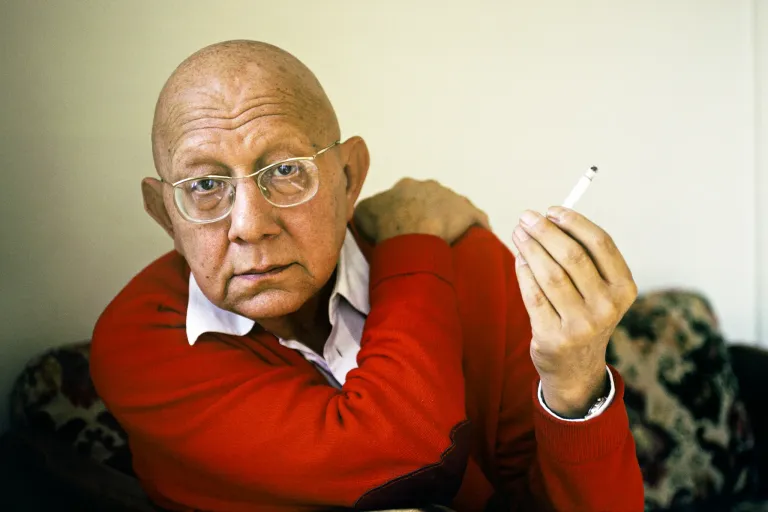
At a time when Iranian society is struggling under a multitude of economic, political, cultural, and social crises, perhaps the most important question is not “Who should save society?” but rather “Who is responsible for society?” This is precisely where the thought of Cornelius Castoriadis becomes significant. Unlike many twentieth-century thinkers, he placed his faith neither in a historical savior, nor in a political hero, nor in the inevitability of history, nor in the promises of any particular class. In his view, society can become free only when its members become autonomous.
For Castoriadis, autonomy is not simply individual independence or freedom of choice. Autonomy means the capacity to continually question the values, laws, traditions, and institutions that shape our lives. No value is sacred, no law is eternal, and no institution should be beyond criticism. An autonomous society is one that understands that it is itself the creator of its institutions and can therefore transform them.
For this reason, education, or paideia, for Castoriadis is not merely the transmission of knowledge, the memorization of information, or the training of a workforce. Education is the process of creating autonomous human beings—people capable of thinking, choosing, assuming responsibility, and participating in determining their collective destiny. He argues that education means becoming aware of the fact that the fate of the city-state depends upon the thought, conduct, and decisions of each and every citizen. A citizen is not someone who merely pays taxes or casts a vote; a citizen is someone who considers themselves responsible for the future of society.
If we take this definition as our standard, the important question is: to what extent is Iran’s educational system today cultivating autonomous human beings? Do schools, universities, and even the media produce people capable of questioning, or are they primarily concerned with producing obedient, memory-driven individuals who simply repeat what they have been taught? A large part of formal education still defines success in terms of accumulating memorized information, obtaining credentials, and passing examinations rather than cultivating critical thinking, dialogue, and participation. The result is a citizenry that often waits for others to make decisions about public affairs.
Castoriadis regards such a condition as a denial of autonomy. A society that entrusts everything to the state, a leader, intellectuals, a political party, or even history itself is not an autonomous society. Following the same logic, he criticizes both deterministic Marxism and any form of thought that postpones freedom to some imaginary future. The solution lies neither in the “historical unfolding of reason” nor in the “historic mission of the proletariat.” The responsibility for change rests on the shoulders of every individual within society.
Iranian society, too, has long been caught between two contradictory expectations: on the one hand, expecting the government to solve all its problems, and on the other, waiting for a political savior, a famous public figure, or some historic event to bring about change. This culture of waiting gradually erodes the sense of public responsibility. When everyone looks to someone else, no one considers themselves responsible. Castoriadis rejects precisely this logic. From his perspective, freedom begins when a person accepts that they are themselves both part of the problem and part of the solution.
One of the most important concepts in his thought is the distinction between three spheres of social life: oikos, or the private sphere; agora, or the public space of dialogue; and ecclesia, or the sphere of political decision-making. The first condition of an autonomous society is that the public sphere must genuinely be public—that is, that the ecclesia must be removed from the exclusive control of a particular group and citizens must be given the opportunity to participate in making public decisions. For Castoriadis, democracy is not merely a ballot box; democracy means that citizens can discuss and make decisions about laws, institutions, and the fate of their society.
In Iranian society today, perhaps what is felt most acutely is the weakness of intermediary institutions and the shrinking of the space for public dialogue. At the same time, although social media have expanded the possibilities for speaking, they have not necessarily produced rational and responsible dialogue. A society that shouts more than it talks has not yet come close to autonomy. Autonomy is not merely the right to speak; it is also the responsibility to listen, to argue, and to accept the possibility that one may be wrong.
From Castoriadis’s perspective, philosophy is only philosophy when it possesses autonomous thought. A philosophy that fears questioning or regards some truth as beyond criticism is no longer philosophy. The same can be said of universities, the media, art, and even journalism.
Wherever questioning gives way to repetition, autonomy is weakened and society moves toward heteronomy: a condition in which people regard the rules governing their lives as having been created by others and see themselves merely as their executors.
Unlike many idealists, Castoriadis was not interested in constructing a perfect and unattainable society. He did not promise a utopia. For him, an autonomous society is not a perfect society but one that continually retains the capacity to reform itself. It is a society that understands that no social order represents the end of history and that no institution should be deprived of the possibility of being reconsidered.
Perhaps Castoriadis’s most important lesson for Iran today is that political, cultural, and social development depends, before anything else, on a transformation in the kind of citizenship people practice. Without cultivating autonomous human beings, no institutional reform will be sustainable. If education cannot produce responsible, questioning, and participatory individuals, it will become nothing more than a factory for producing diplomas.
Today, more than ever, Iranian society needs paideia: not an education that merely teaches professional skills, but one that cultivates civic responsibility, critical thinking, a culture of dialogue, and the courage to think independently. For Castoriadis, the future of no society is shaped by history, ideology, or elites alone; it is shaped by citizens who have dared to think for themselves, choose for themselves, and accept responsibility for their shared destiny. This is the deeper meaning of autonomy: a form of freedom that is neither given as a gift nor inherited, but created and recreated every day through the conscious participation of citizens.
© 2026. Phoenix Review