



For several years, my home was only five hundred meters away from the building known as the “Dancing House” in the melancholic city of Prague. A building that, from a distance, appears to be two structures side by side—like a man and a woman dancing in each other’s arms. Prague, the capital of the Czech Republic, or as they themselves insist, “Czechia,” is an old city filled with buildings a hundred, two hundred, four hundred years old, and even older—structures from the Middle Ages that have been restored but still retain their historical façades. Even during World War II, the city suffered far less damage than its neighbors, as it had been occupied by the Nazis and effectively considered part of Germany during the war.
The heart of the city, where the historical district lies, is adorned with uniformly old buildings in Gothic architecture—magnificent, authentic, and untouched. In fact, one of Prague’s great attractions is simply witnessing this ancient architecture and the pristine authenticity of its structures. Except for the few buildings constructed during the Communist era—which are recognizable from miles away: cubic blocks of grey concrete and frosted windows.
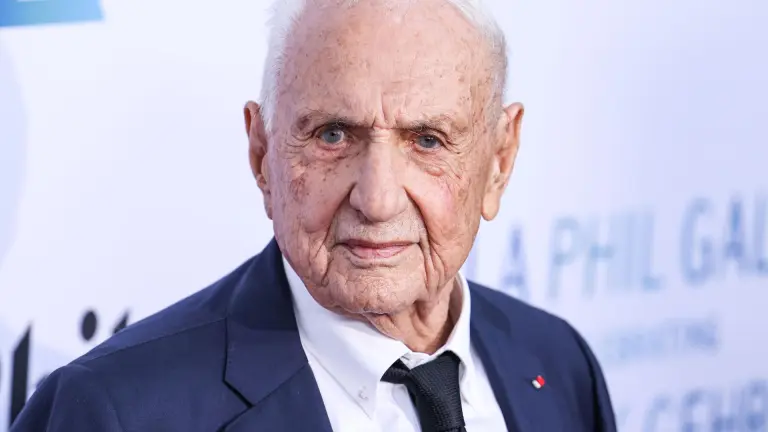
But right in one of the major central streets, stretching alongside the Vltava River and lined with important historical monuments, stands a structure completed in 1996, designed by the renowned Canadian-American architect Frank Gehry. Today, on 5 December 2025, upon reading the news of his passing, I was instantly transported back to the Prague Dancing House. I used to pass by it almost weekly, and I vividly remember stopping for nearly an hour the first time I saw it—standing across the intersection, by the bridge over the Vltava, simply staring at it. A building not particularly loved in Prague; many Czechs dislike it, and perhaps for that reason, the cultural ambitions behind its construction never fully materialized.
Václav Havel, leader of the Velvet Revolution of former Czechoslovakia and the first president of the Czech Republic, is well-known to Iranian readers through Persian translations of his works. Born into an aristocratic and wealthy Prague family, he lost all family property to the state during the Communist regime and even spent part of his youth working in manual labor and construction. After the Velvet Revolution succeeded, Havel managed to reclaim his family’s properties—most of which he dedicated to the cultural and artistic life of his country.
The land on which the Dancing House stands had once hosted a historical building similar in age and style to the rest of Old Prague, but it was destroyed in a 1945 Allied bombing. After the Velvet Revolution in 1991, in hopes of creating a landmark that would symbolize his country’s newfound freedom from Communist oppression, Havel entrusted the creation of a new building to Frank Gehry. A Dutch bank financed the design and construction, and Gehry—together with Croatian-Czech architect Vlado Milunić—designed the Dancing House.
The structure consists of two contrasting parts: a larger, static tower and a smaller, dynamic one that forms the building’s entrance—a rounded structure supported by curved pillars. The façade is covered with dozens of windows encased in protruding frames, and the building’s overall wavelike lines create the illusion of two people dancing. It was intended to become a cultural and artistic center, though this vision never materialized. The most notable space ended up being a luxury restaurant on the top floor—later turned into a café—where tourists could enjoy a spectacular view of Old Prague, Charles Bridge, the Astronomical Clock Square, the hilltop castle, and Prague’s little Eiffel Tower. Whether by day or night, the view was breathtaking.
The building is asymmetrical inside as well; no two units are alike. A nine-story structure with two underground floors, it includes offices, a hotel, and apartments that could belong to either “Ginger” or “Fred”—the building’s alternate name, inspired by the legendary dancers Ginger Rogers and Fred Astaire. Interpretations vary: some see it as yin and yang, a union of feminine fluidity and masculine strength.
Whatever one calls it, the Prague Dancing House remains a prime example of the work of one of the world’s most important architects of the past century—displaying all the signature elements of Frank Gehry’s style: deconstruction, asymmetry, fluidity, movement, and the approach of treating architecture as a sculptural or even choreographic art form. Gehry was an architect who merged freedom of form, bold experimentation with new materials, and dynamic use of cutting-edge technologies with genius, imagination, and innovation. At the age of 96, on December 5th, 2025, he finally joined eternity.
The Dancing House—just one of dozens of his brilliant structures worldwide—has now stood for over thirty years as one of Prague’s iconic landmarks. Whether or not the locals adore it, to me it has always been a building that, free from all human suffering and sorrow, dances and laughs in pure freedom—a structure that proudly flaunts its defiance before the world.
© 2020-2026. Phoenix Review