



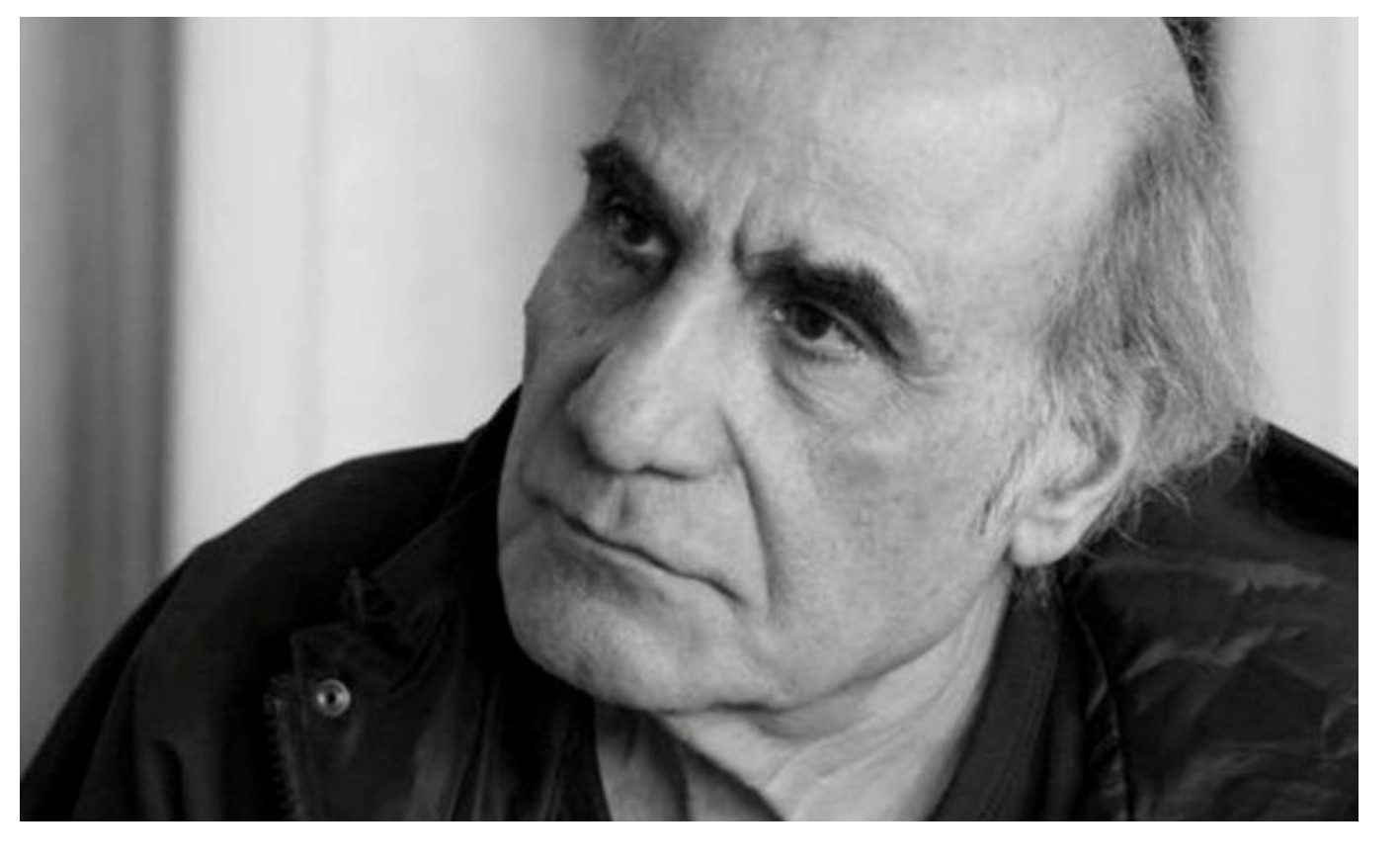
Amir Naderi is a distinct and unique figure in Iranian cinema. He is a prominent and influential filmmaker in the Iranian New Wave, whose works are built with an emphasis on human will, harsh and dynamic realism, and a distinctive visual aesthetic. He is an auteur whose films, despite varying in context and setting, carry his unique personal themes and style. However, his realistic style changed significantly after the revolution and following his migration to the United States, becoming more minimalist and abstract.
Naderi in cinema is a runner and a restless spirit; someone who, like his characters, cannot stay in one place and is always moving, running, and searching. A filmmaker who rose from poverty and, in a cinematic system where people are easily eliminated and crushed, created his personal, human, and violent cinema without financial or media backing. His cinema can be described as a cinema of liberation within constraints.
Naderi comes from the working class and from the streets and sun-scorched lands of southern Iran, and his cinema is rooted in that land, though his films are not confined to it and traverse diverse geographies and locations. Naderi’s characters are often solitary, restless, constantly on the move, struggling to survive, and entangled in poverty. With The Harmonium and Waiting, he brought children into the sphere of power and desire; with Tangsir, he created a local and rebellious hero; in The Trench, he depicted a wounded body within tight and suffocating frames; and in The Runner, Water, Wind, Dust, Manhattan by Numbers, and his other films, he explored formalist and minimalist experimentation, without abandoning his recurring themes of loneliness, resistance, and the struggle for survival. In his films, homes are ruined, and families are absent, fractured, or on the verge of collapse.
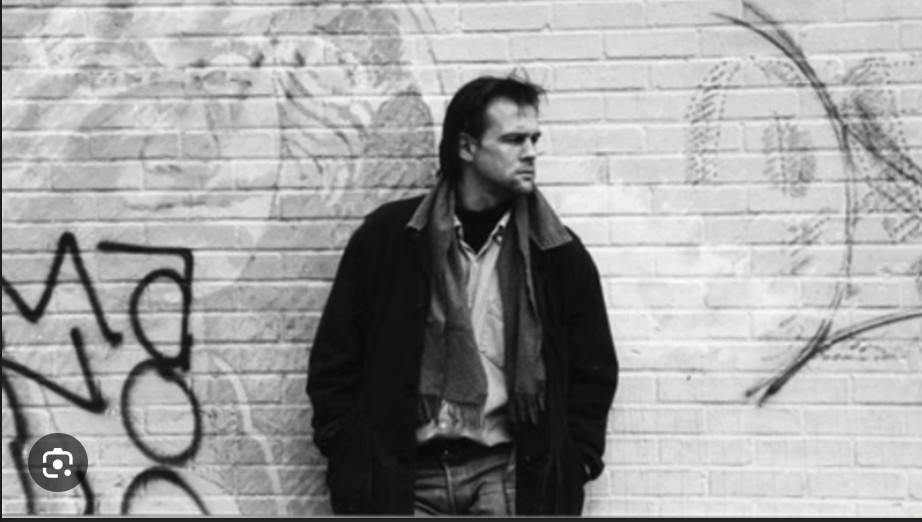
Naderi began his cinema career as a film photographer, and this experience deeply influenced his visual perspective. He is a filmmaker who sees the image as an independent force, not merely a narrative tool. His visual style is influenced by urban documentary photography and realism, along with tendencies toward formalism and absurd imagery. He creates his films with special care and sensitivity. For him, form, framing, silence, and rhythm are more important than story and narrative. Compared to filmmakers who rely on pre-designed mise-en-scènes and frames, he, like Impressionist painters, depends more on chance, moments, and natural light. His images are tense and restless, with extraordinary energy flowing within his frames. The camera in Naderi’s works has its own identity, often moving, searching, and exploring the environment; an approach influenced by European art cinema, particularly Italian neorealism and the French New Wave. His visual compositions express loneliness, the conflict of the individual with the environment, and spiritual emptiness. He is keen on capturing unmediated reality and portraying it in all its rawness. Naderi’s cinema, ranging from the narrow, smoke-filled streets and alleys of southern Tehran to the fevered streets of Abadan, from Iran’s dry and burning plains to the soulless pavements of New York, consistently narrates the struggle of a lone individual against a ruthless, oppressive, and indifferent world.
Thematically, Naderi’s films revolve around several core themes: the loneliness and helplessness of isolated characters, the struggle for survival, travel, running, and searching, which serve as metaphors for escaping existing conditions and constraints. His solitary characters are often striving to survive and live under harsh and unjust conditions. His heroes, whether Ali Khoshdast in Tangsir, Zarmamad in The Trench, Amir in The Runner, or George Murphy in Manhattan by Numbers, are all searching for ways to survive and resist fate. These restless and outcast characters are always in motion, trying to escape their current circumstances. Naderi himself is not unlike his characters: an outsider, always on the move, a cosmopolitan without attachment to any homeland, with a strong drive to survive and create art despite existing obstacles and oppressive systems. In most of Naderi’s films, the heroes confront restrictive social structures, poverty, and destiny. Travel, running, and searching are recurring motifs in his films, symbolizing human efforts to escape existing constraints. Children in Naderi’s films, such as The Harmonium, Waiting, The Runner, and Water, Wind, Dust, are not merely subjects of childish stories but carriers of a moral and existential worldview. In The Runner, an orphaned, solitary, homeless child struggles with iron will to escape poverty and his miserable life.
According to auteur theory criteria—having an individual signature and stylistic and thematic consistency—Amir Naderi is considered an auteur, although his cinema has taken different forms throughout historical periods. Naderi’s cinema can generally be divided into three historical and stylistic periods. These three periods differ not only in geography and time but also in style, theme, and cinematic language, reflecting the evolution and changing vision of Naderi toward cinema and humanity.
The first period of Naderi’s cinema is the New Wave and street film genre, including films like Goodbye Friend, Tangsir, The Trench, and Elegy. These are films about solitary, wounded, rebellious characters who revolt against inevitable conditions and fate. In this period, Naderi’s cinema combines social realism, street wandering, and the flight of solitary characters through spaces filled with a sense of loss and rebellion—a kind of abstraction and depiction of the street and everyday life that formed Naderi’s unique visual and narrative signature.
In Naderi’s films from this period, we encounter a harsh world, fragmented relationships, and a suffocating social environment. Goodbye Friend and Tangsir are clear examples of street narratives focusing on ill-fated, cursed characters trapped in inescapable destinies; men struggling on the margins of the city amid poverty, crime, loneliness, and helplessness, with tragic and bitter outcomes. These thematic features link Naderi’s cinema of this period to French and American noir. Moreover, the expressionistic representation of the city in these films, and Naderi’s effort to create a suffocating, threatening, and deadly atmosphere, reflects his influence from noir cinema. The narrative similarity of Goodbye Friend to Rififi, the brilliant noir film by Jules Dassin, is undeniable.
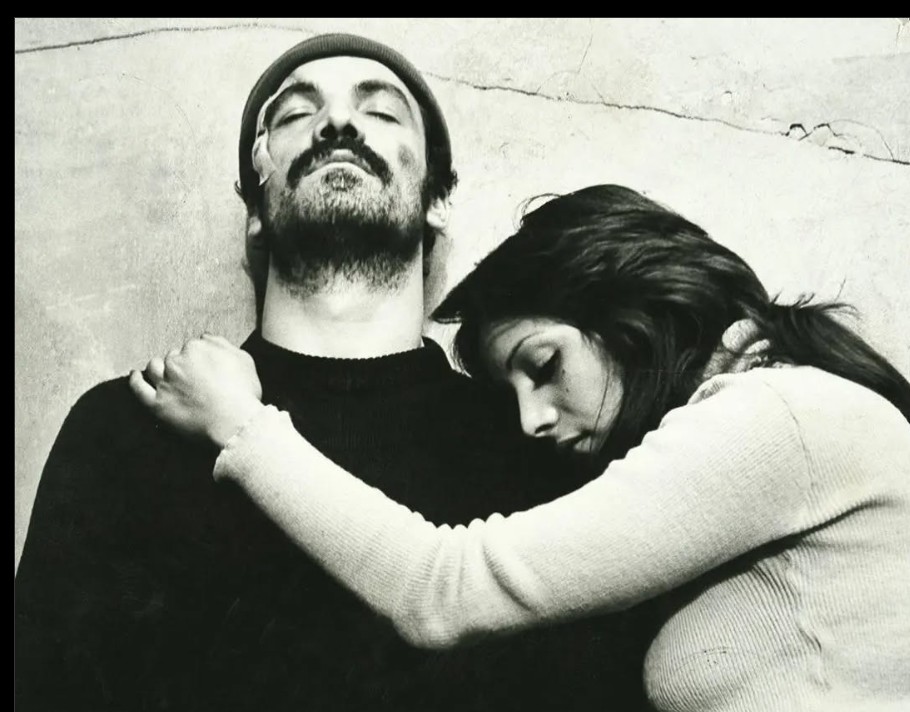
Tangna is a bitter, violent, and realistic film that uniquely depicts the helplessness and vulnerability of its main character within the urban landscape of 1970s Tehran. In Tangna, Ali Khoshdast (brilliantly played by Saeed Rad), a rebellious young gambler, accidentally kills one of several aggressive players with a knife during a billiard game dispute in self-defense, and flees the crime scene. Wounded deeply, Ali seeks refuge at his fiancée’s house, while the victim’s brothers hunt him through the narrow alleys of Tehran, seeking revenge. With a linear narrative and a harsh, tension-filled realist style, the film reflects the social and psychological state of a wandering youth in 1970s Iran. Tangna carries a strongly existentialist undertone: the flight from a predestined fate, lost trust, absolute loneliness in a ruthless city, and the tragic outcome are clearly influenced by existentialist noir cinema but are crafted with a local tone and aesthetic.
The suffocating social atmosphere, distrust among people, and lack of hope for escaping the cycle of violence harmonize perfectly with Naderi’s neorealist style. Ali Khoshdast is more a victim of circumstances than a criminal; he does not seek heroism but merely survival. Yet the urban geography, traditional vendettas, and social cruelty push him to a dead end. Tangna effectively conveys the feelings of siege, pursuit, and suffocation through tight framing, compressed mise-en-scène, natural lighting, and dynamic editing. Compared to Naderi’s later works, Tangna stands as an example of urban narrative cinema focused on violence, fate, and individual struggle against a dark and grim destiny.
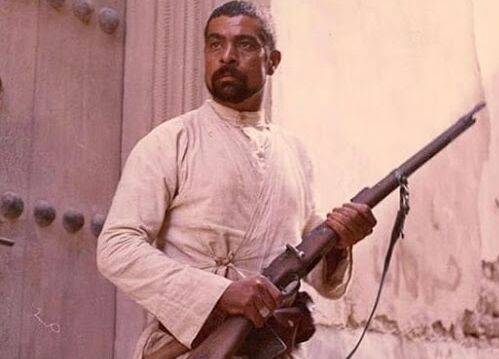
In Tangsir, adapted from Sadegh Chubak’s novel of the same name, Naderi portrays a serious and epic tone, crafting a heroic and mythic image of a poor southern farmer named Zarmamad—a calm and hardworking rural man who, in the absence of law and justice, reaches the limit of endurance and rebels against oppression. Motivated by revenge, he targets the city’s influential yet hypocritical and corrupt figures who have stolen his money. Zarmamad systematically defeats each of them before fleeing and ultimately heading toward the sea. Tangsir combines social realism with a Western cinematic aesthetic, emphasizing honor, revenge, and violence—where the man, his weapon, and his dignity form the central triangle of action.
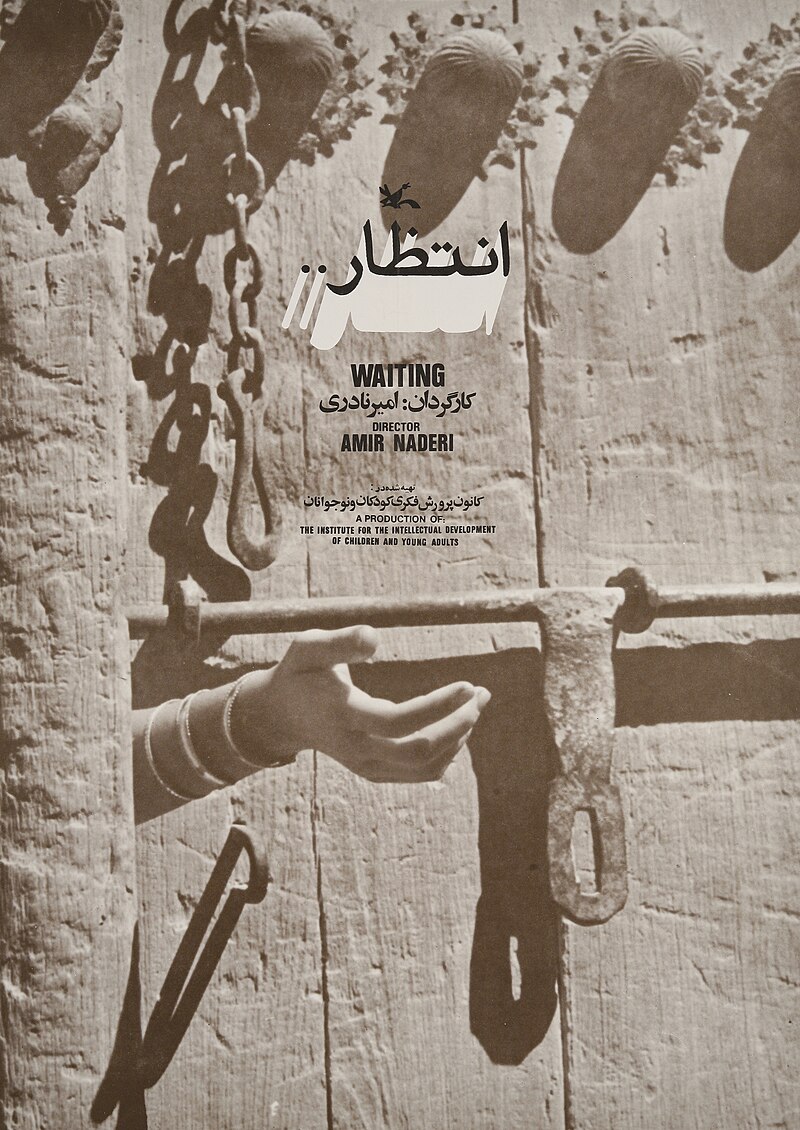
During the same years, Naderi created the short films Harmonica and Entezar at the Institute for the Intellectual Development of Children and Young Adults, marking a turning point in his career. Naderi’s cinematic language and visual approach are fundamentally shaped in these films, a language that would reach maturity years later in The Runner. Their significance lies in Naderi’s departure from the contemporary norm: unlike many of his peers, he depicts children not as symbols of innocence or passive observers, but as active social agents, complex subjects engaged with power dynamics and desire. Harmonica explores class division and power relations within the child’s world—a child subjected to symbolic exploitation for a chance to play a harmonica. Entezar is a metaphorical narrative of the repressed erotic and fantasy desires of a child on the verge of adolescence, creating tension and sexual energy through objects, heat, sweat, repeated visual motifs, and narrative delay, without entering explicit sexual space. The boy carries a bowl of ice to an elderly couple every day under the scorching southern sun, handing it to a young woman whose face he never sees. In the final encounter with the old woman’s hand, his entire childlike fantasy collapses. With symbolic, metaphorical, poetic language and minimalist form, Entezar connects Naderi to the contemplative, minimalist visual cinema of his second filmmaking period. Naderi told Majid Fakherian that making Entezar marked his artistic maturation.
In these films (Entezar and Harmonica), Naderi clearly oscillates between two cinematic tendencies: socially realistic narrative cinema and formal experimentation focused on sensation, movement, and abstraction. This tension forms the core of his cinema. From the start, Naderi constructs films where children are not objects of adult gaze but centers of philosophical, human, and political experience.
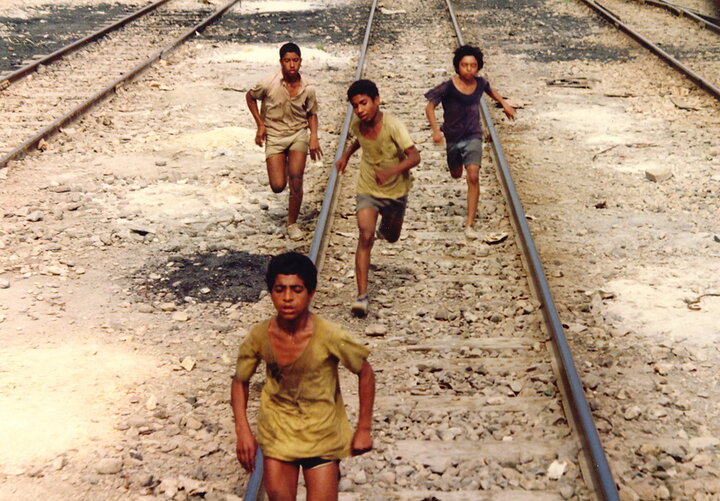
Naderi’s second filmmaking period, after the Islamic Revolution, marks a major shift in style and approach, initiating his formalist and minimalist experiments in narrative and style. Key characteristics include leaner plots, narrative minimalism, reduced dialogue, emphasis on visual storytelling, movement, exploration, and the characters’ endless crises—traits later seen in his émigré films. In films like The Runner and Water, Wind, Dust, traditional narrative recedes in favor of form and visual emphasis. With these films, Naderi achieves a new maturity in his cinematic language. Like Entezar and Harmonica, these films center on children, portraying them unlike conventional, instructional cinema of the time: alone, courageous, and fearless. In The Runner, Amir runs barefoot, gasping for survival and freedom. Filmed in the southern hot, desert environment, inspired by Italian neorealism and emphasizing movement, silence, natural elements, and visual minimalism, Naderi creates a poetic, passionate world contrasting with the heat and harshness of the south.
In The Runner, movement serves as a poetic and symbolic element, conveying exploration, escape from life’s limitations, and hope for change. The protagonist’s running becomes a visual language expressing inner emotions. Naderi not only departs from classical narrative but approaches abstraction, entering a more introspective and universal cinematic world.
In Water, Wind, Dust, the narrative becomes even more non-linear and abstract. Set in the desert with a single child and a few animals, the dialogue-free film blurs the line between experimental and documentary cinema. The child engages with the fundamental elements of survival—water, wind, dust—in a harsh yet beautiful natural setting. The simplicity and abstract form provide a contemplative experience of existence. Throughout this shift, Naderi continually seeks a stronger, more effective means of conveying the spirit of the times.
Naderi’s third filmmaking period begins after his migration to the United States, maintaining the same humanistic worldview but focusing on homeless, marginalized characters fighting for purpose. In Manhattan by Numbers, protagonist George Murphy, an unemployed journalist, navigates New York City’s hidden layers of poverty, crime, and injustice, akin to Ali Khoshdast in Tehran. Here, the cinematic language becomes more global and abstract, with emptier, colder frames.
Despite the change in geography and the minimalist narrative style after moving to the U.S., Naderi’s thematic concerns remain constant: the solitude of contemporary humans, struggles with social structures, identity crises, and urban pressures persist. Manhattan by Numbers portrays human loneliness and despair amid economic and urban alienation. After losing his job, George Murphy cannot pay his rent, and his landlord threatens eviction. He has 24 hours to settle the debt or face sleeping on the streets. Desperate, he searches for an old friend who might lend him money, but fails. His quest transforms into an inner and social journey through a merciless city in crisis. The film begins with a dramatic, tense situation but progresses toward anti-narrative and minimalist expression. Through this film, Naderi demonstrates his continued focus on the lives of those crushed by economic pressure, modern urban constraints, and invisible yet destructive power structures.

For Naderi, migration, while bringing formal and expressive freedom, also separated him, to some extent, from the cultural, geographical, and existential soil that nourished the characters and spaces of his earlier works. Films like Tangna, Tangsir, and The Runner possess not only technical mastery but also an organic connection to the lower classes of society, giving them emotional depth, warmth, and dramatic tension—qualities less evident in his works from the migration period. In America, despite his commendable formal boldness—precise framing, calculated visual rhythm, and narrative ruptures—Naderi could not replicate the success of the films he had made in Iran. He could no longer, as before, create rich, detailed worlds that felt both familiar and fresh to his audience. Perhaps, had he stayed in Iran, amidst the social, political, and class crises of the post-revolution years, he could have offered even deeper narratives of loneliness, poverty, resilience, and restlessness of the contemporary Iranian human being, expressed through his unique cinematic language. Migration thrust him into a world compatible with his cinematic style but less aligned with the spirit of his characters, who drew life from a different soil and culture. This challenge is common among older generations of Iranian filmmakers in exile, many of whom were unable to produce films abroad that matched the power of their pre-migration works.
There is a fundamental difference between a filmmaker like Naderi and immigrant directors such as Fritz Lang, Billy Wilder, or Miloš Forman: when they arrived in Hollywood, they shared linguistic and cultural roots with American society, enabling them to understand, depict, and critique it effectively. Naderi, in contrast, due to cultural and linguistic distance, functioned more as an external observer than an active cultural participant. Unlike most Iranian diaspora films in the West, none of Naderi’s American works directly address Iran or Iranian immigrants; rather, they attempt to create a form of American realism from a formalist perspective. Unfortunately, Naderi was unable to deeply grasp the characters, social fabrics, or psychological layers of American society. As a result, while his films from this period are visually striking, they often remain superficial, cold, and abstract in dramatic and social terms. These works neither pulsate like his Iranian films nor resonate as powerfully as the films of classic émigré directors. In migration, Naderi was neither an exile-narrator nor a societal interpreter; instead, he created a “cinema without a homeland,” with characters formed in a cultural vacuum—turning migration, contrary to popular belief, into not an expansion of expression, but a rupture in the organic connection between him and his human subjects.
Yet what makes Naderi a singular figure in Iranian cinema is not only his films but his cinematic persona, which profoundly overlaps with his characters. Like Amir and Zarmamad, he is a rejected, brave, and resilient individual—a filmmaker who carved his path through diligence and inner passion. Naderi’s cinema is one of resistance and rebellion: resistance against constraints, and rebellion against fate and rigid, oppressive structures.