



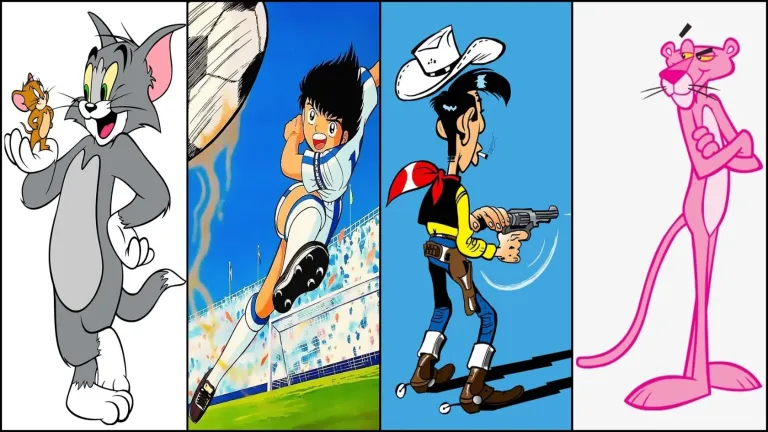
Many years ago, it was the grandmothers’ tales that gathered children around the house and entertained them. It was the children’s imagination that created mental and imaginary images of the story characters, surrounding them with an aura of emotion and affection. Storytelling, in this warm and intimate form, helped develop and stimulate the children’s imagination and mental growth, and perhaps remained a lasting memory, breathing life into both their imaginary and real worlds well into old age.
In the following years, however, books could not replace these traditional storytelling sessions. Oral culture in our society did not have a strong connection with books and writing, and the lack of a reading culture did little to improve the situation. It was only with the advent of the communication era and the development of modern communication technologies that media—especially television—captivated everyone. Children returned home once again, but this time, instead of gathering around their grandmother, they sat around the “magic box” of the television. Cartoons, the embodiment of a cold media, even depicted the mental and imaginary images of story characters for them.
The colorful and attractive images of television fascinated children (and even adults), causing them to turn away from the streets and alleys and fix their eyes on the small television screen. Their hands-on, active experience in play gradually gave way to imagination and abstract experiences, creating a kind of media passivity. In the world of images and media, “children’s programming” gained such a powerful position that it became a major part of adult entertainment as well. The development of computer technologies, graphic arts, and cultural industries further improved the quality of children’s programs.
Animation, in particular, gained a special place. The word “animation” comes from the verb to animate, meaning “to give life.” Animators, in essence, give life to drawings, celluloid sheets, and puppets, making them move. Animated images were first shown in dark halls in the basements of Paris or using the multi-mirror technique on a white screen, but on October 27, 1892, Émile Reynaud moved his animated images in the Musée Grévin hall in Paris and called it the Théâtre Optique. Animation was created ten years before the invention of cinema by the Lumière brothers and is considered the “mother of cinema.” This performative genre was later developed by McCay and reached its peak with Walt Disney, who introduced sound into animation.
In effect, animation and cartoons came to occupy a significant part of children’s visual world. Today, children’s programming in our country is divided into three categories: cartoon series, puppet shows, and live-action programs. In recent years, however, the volume of cartoons has decreased compared to previous decades, while live-action programs and television competitions have become more prominent.
Although modern advances in visual technology and graphics have provided greater possibilities for producing children’s animation, today’s children feel less attachment to cartoons than in the past. It can be confidently said that all of us, children of two decades ago—the so-called “third generation”—love the cartoons of our childhood more than contemporary programs and characters. Cartoons such as Brave Boy, Migrants, The Dr. Ernst Family, Hannah, the Farm Girl, Homeless, Sinbad, Pinocchio, The Pink Panther, Robin Hood, Gulliver, and Gorilla Angoori form a significant part of our childhood memories, each contributing to our experience from psychological and sociological perspectives, and have become the nostalgic icons of our generation.
Modern cartoons, however, primarily emphasize technological aspects and rely heavily on tech-driven fantasy rather than structured storytelling or plot elements. This makes them less relatable to children’s real world, and instead of fostering empathy or moral-behavioral influence, they focus more on stimulating imagination and nurturing a supernatural mindset. Consequently, they contribute less to actual “learning.” In other words, contemporary cartoons are designed more for emotional engagement and entertainment than for cognitive or identity development.
Entertainment has always been an inherent part of children’s programs and involves a kind of reproduction of play tools. However, when it becomes the sole goal of a television program, its impact gradually diminishes and fails to promote active engagement in children’s experiences. One key factor in the lasting impact of older cartoons is character development, which relies on modeling various types of personalities. The heroes of past children’s worlds were recognized more for their individual skills and self-motivated abilities than for supernatural powers, making them more believable. Their concerns and desires were also closer to the real lives of children than the fantastical, overly imaginary characters of today. These characters became cartoonic archetypes that captivated children’s ideal worlds.
The combination of these factors ultimately led to children accepting and internalizing these cartoon characters. In the postmodern world of today, however, it seems even cartoon archetypes have fallen, and imaginary heroes are no longer alive. The author believes that the cartoons of their childhood, unlike today’s productions, focused more on content and storytelling elements than on technical forms and techniques, significantly aiding children in understanding the world and human experience.