



The themes of my work have always been influenced by the realities that trouble me: the condition of women, racism, migration and the harsh lives of migrants, and the struggle for Palestinian freedom.
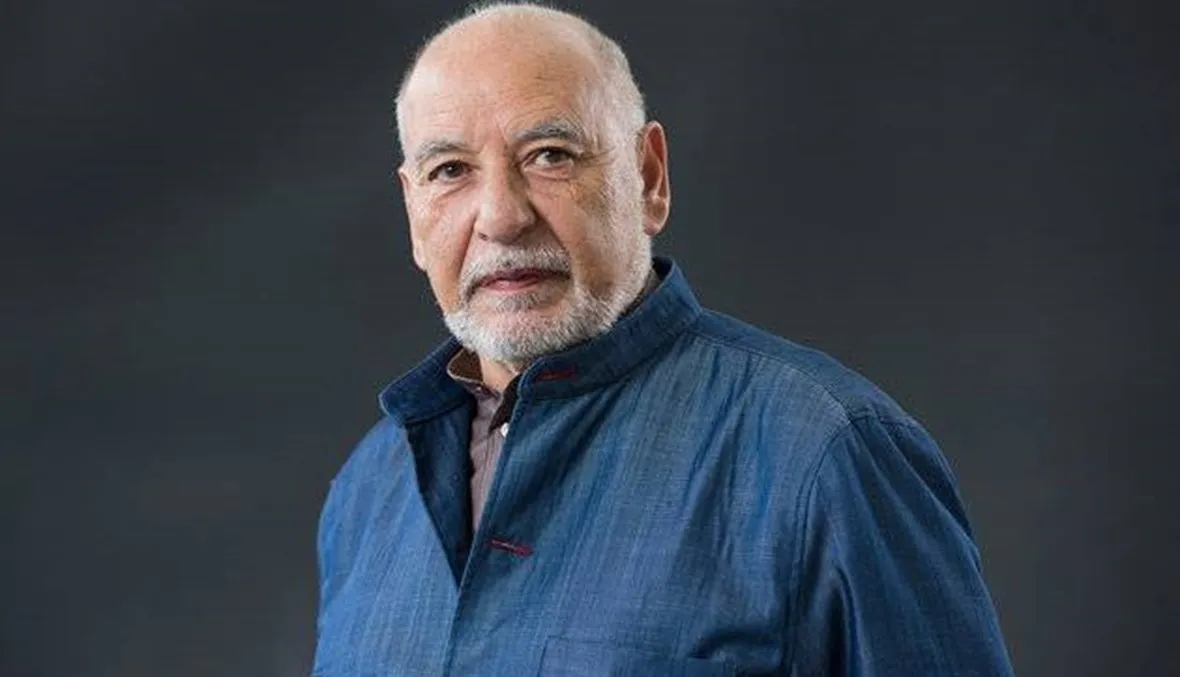
Tahar Ben Jelloun, the Moroccan writer, has been living in France for many years and writes in French. His works often explore themes such as racism, gender inequality, government repression, and life under suffocating regimes. This Blinding Absence of Light, The Sand Child, and Sacred Night are among his most acclaimed novels. Sacred Night won the Prix Goncourt in 1987.
How much did your childhood in Fez and your education at Mohammed V University in Rabat inspire your writing?
Childhood is a great source of inspiration for any writer, whether creatively or as the origin of narratives. We are deeply tied to that stage of life. Fez is an exceptional city for me—a city dating back to the 9th century, the cradle of Arab and Islamic civilization, and a heritage-rich center of Moroccan culture. Tangier, by contrast, is a city open to Europe and the world, modern, full of myths and stories that have greatly influenced my storytelling. Cities, in general, play a major role in my work.
You began your literary activity in the mid-1960s by writing for the avant-garde magazine Souffles.
After leaving a military disciplinary camp in January 1968, I published my first poems – written secretly – in a newly launched magazine called Souffles, founded by poet Abdellatif Laâbi. That was a key experience that paved the way for my writing. It was a progressive journal that unfortunately faced opposition from the authorities at the time.
How did emigrating to France, driven by Morocco’s restrictive political climate, affect your writing style? What challenges did you face as a writer in a new country?
I decided to leave Morocco when the Ministry of Interior announced that Islamic thought would replace philosophy classes from the beginning of the new school year in September. I was a philosophy teacher, and I wasn’t prepared for such a change. I left the country and completed my thesis in philosophy in Paris. At the same time, I found publishers who published my first works (novels and poetry). It was a kind of exile for me, even though I tried to return once a year to visit my parents, I always feared my passport would be confiscated. Still, I couldn’t imagine not seeing my family. To make ends meet, I worked various small and odd jobs.
Your novel Sacred Night won the Prix Goncourt in 1987, making you the first North African writer to receive this prestigious award. What did this recognition mean to you?
The Prix Goncourt had significant symbolic value. It was the first time the prize was awarded to a Francophone writer who wasn’t French. I obtained French citizenship in 1991. The award also meant a lot to Morocco, which proudly celebrated a distinguished citizen. For me personally, it was meaningful, especially because the novel was translated into 47 languages and led to dozens of trips around the world.
Did winning the prize change your style or outlook?
Nothing changed in my writing. I remained just as rigorous and precise.
Many of your novels, like The Sand Child and The Fruits of Hardship, deal with themes such as racism, gender inequality, and government oppression. Why are these subjects important to you?
My themes have always been shaped by the realities that trouble me – women’s conditions, racism, migration, the difficult lives of migrants, the fight for Palestinian freedom, and so on. As Aragon once said, “I do not write just to pass the time.” I write because I believe literature must have a purpose, and I am a citizen who cares about the world’s progress and transformations. My nonfiction books – on racism, Islam, terrorism, philosophy, or trees – are as important as my novels dealing with marital conflicts (Marital Bliss, Happy Marriage, Corruption in Casablanca, etc.).
Arabic is your first language, but you write in French. What are the challenges and advantages of being bilingual and writing in a language that isn’t your mother tongue?
Bilingualism is my preferred way of communicating. I speak both languages with pleasure. I write in French, but Arabic is still close to me. It subtly influences the way I write in French. I feel enriched and satisfied by having two languages, two cultures, and two civilizations.
Many of your works, including This Blinding Absence of Light, are shaped by your personal experiences.
Most novelists draw inspiration from their own lives and societies. Philip Roth constantly wrote about his life experiences. So did Kafka. But beyond that, they had the genius to create other worlds. They weren’t merely reproducing their lives. We nurture our imaginations, aiming to craft new narratives that captivate readers, even if they’re rooted in our personal histories. In This Blinding Absence of Light, which is a narrative written in the form of a novel, I shared my experiences truthfully and in detail. That book is a different case.
How familiar are you with Iranian literature, culture, or cinema?
I admire Iranian cinema, especially the films shown in Europe. I don’t claim to know everything about Iranian cinema, but I’ve always been drawn to it – it’s original, intelligent, and important.
Do you believe literature can influence social change?
No book alone can change a nation or a society. However, a multitude of books, diverse films, plays, and theater productions – art in general – are essential for transforming a society and how it sees itself. That’s exactly why authoritarian regimes like those in Iran or Syria are unsettled by art. In Morocco, none of my books have been censored. All of them have been translated into Arabic (and illegally copied in Syria and Lebanon).
Which writers or thinkers have most inspired your work?
Those who influenced me the most were filmmakers – Fritz Lang, Luis Buñuel, Orson Welles, Hitchcock, Marcel Carné, Ozu, and others. After the filmmakers, writers like Jean Genet and Céline, and French Resistance poets like Éluard and Aragon also inspired me. But my deepest inspirations come from life, friendship, and love.
If you could have coffee with any writer, thinker, or poet, who would it be?
I’d love to have coffee with Socrates or Spinoza. I have so many questions to ask them!
Looking back on your prolific career, what lasting impact would you like to leave on the literary world?
I have no illusions. Writers, unlike musicians or movie stars, are often forgotten after death. I think one or two of my books will endure – thanks to being taught in schools.