



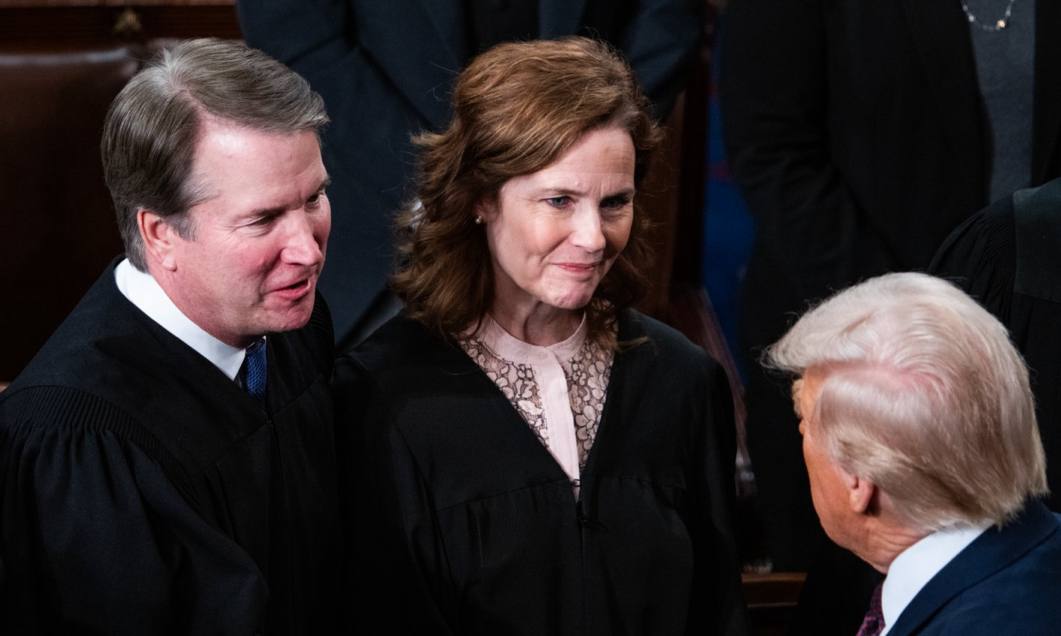
In June 2025, the U.S. Supreme Court issued a significant ruling in Trump v. CASA, a decision that addresses the constitutional limits of judicial remedies. At issue was whether a federal district court may issue a nationwide injunction—an order that halts the enforcement of a federal policy across the entire country—when adjudicating a case involving specific plaintiffs. In a 6–3 decision, the Court ruled that such injunctions generally exceed the permissible scope of judicial power unless they are strictly tailored to the parties before the court.
While the specific subject matter of the executive order involved birthright citizenship, the Supreme Court did not rule on the constitutional validity of that policy. Instead, it focused on a more procedural and institutional question: To what extent can federal courts block executive actions beyond the immediate context of a given case?
The majority opinion, authored by Justice Amy Coney Barrett, concluded that courts are not authorized to issue universal relief unless such a remedy is necessary to fully redress the injury of the plaintiffs involved. The Court emphasized that the Constitution grants the judiciary the power to resolve “cases” and “controversies”—which implies a specific, party-centered function. Nationwide injunctions, according to the majority, risk transforming judges into policymakers by extending the impact of their decisions beyond what is required to resolve a particular dispute.
This reasoning is rooted in a formalist understanding of law, which emphasizes fidelity to procedural limits, textual constraints, and the separation of powers. From this perspective, a judge’s role is to apply law to specific facts involving identified litigants—not to determine national policy. Legal authority is understood to be legitimate insofar as it is procedurally bounded and institutionally defined. As such, the majority warned that the expansion of nationwide injunctions undermines legal predictability and distorts the judiciary’s proper constitutional function.
By contrast, the dissenting justices offered a different jurisprudential outlook. They raised concerns about whether limiting injunctions to named plaintiffs could diminish the courts’ ability to prevent broader unlawful governmental action. Their position aligns with a substantive or purposive theory of adjudication, wherein courts are seen not only as interpreters of law but also as institutional safeguards of constitutional principles. From this perspective, when an executive action is alleged to violate constitutional rights in a systemic way, broader judicial relief may be necessary to prevent fragmentation and ensure consistent protection of rights.
The philosophical divergence between the majority and dissent is thus not merely technical. It reflects two distinct conceptions of judicial function:
• The formalist model views the court as an adjudicative body constrained by institutional boundaries and focused narrowly on disputes between identified parties. It treats legal authority as derivative of process and form.
• The substantive model sees the judiciary as possessing a duty to protect constitutional norms, sometimes requiring remedies that go beyond immediate parties, especially when rights or institutional structures may be at risk.
The Court’s ruling in Trump v. CASA restricts the use of a particular judicial remedy—not judicial review itself. District courts may still declare a policy unconstitutional and provide relief to plaintiffs. However, the decision makes clear that such relief should generally be plaintiff-specific unless a broader remedy is strictly necessary for full redress. The ruling also suggests that other procedural mechanisms, such as class actions, remain available for plaintiffs who wish to pursue systemic relief, though those come with their own procedural requirements and limitations.
In sum, Trump v. CASA does not determine the substance of executive power or immigration law, but rather sets a precedent regarding how far a judge’s ruling may extend beyond the parties in a case. The implications of the decision will likely influence the procedural landscape of federal litigation, particularly in areas where executive actions face legal challenges.
From a philosophical perspective, the decision brings renewed attention to the boundaries of judicial authority, the tension between judicial restraint and institutional responsibility, and the ongoing effort to define the judiciary’s role in a constitutional democracy.