



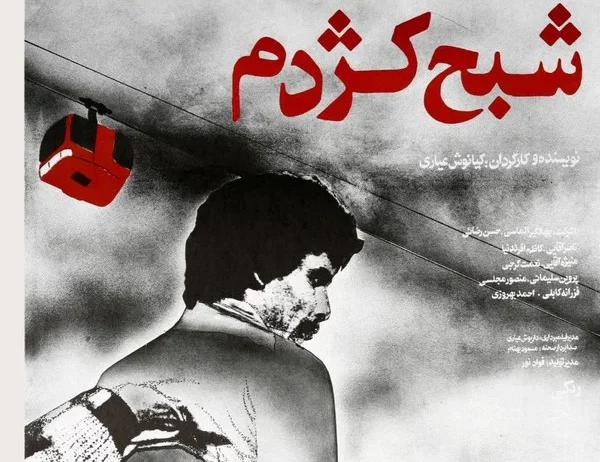
In its less-than-century-long history, Iranian cinema has produced a number of distinguished filmmakers, yet the world has come to associate it above all with two names: Abbas Kiarostami and Asghar Farhadi. The distance between the heights reached by these two filmmakers is by no means small. How is it possible that, in the two decades separating them—from the early 1990s to 2011, and the exceptional success of A Separation—despite the emergence of several notable names (Makhmalbaf, Panahi, and Majidi, for instance), no Iranian filmmaker managed to attain a comparable position in world cinema? This is where Kianoush Ayari becomes particularly relevant. During this period, he made several of his finest films, yet even as a leading figure in one of the longest-standing traditions in Iranian cinema—realism, represented by such formidable filmmakers as Golestan, Mehrjui, Kiarostami, Taghvai, Shahid Saless, and Farhadi—he remained largely outside the attention of festivals and the international film world. It is difficult to believe that someone who, from the mid-1980s until very recently, had set the standard for this dominant tendency in Iranian cinema should have received so little recognition. Revisiting a strange film like The Scorpion’s Tail forty years after its release offers an example of what distinguishes Ayari, while simultaneously making the question more pressing: why, exactly?
Ayari routinely reaches such a degree of unobtrusiveness in his direction that his work can sometimes be mistaken for incompetence. He does not seem concerned that anyone might criticize him for not knowing how to make films at all. On the contrary, with a kind of stubbornness and sheer obstinacy, he appears even more determined to pursue this tendency toward perfection, which he regards as the very essence of simplicity. I have experienced some of the consequences of this characteristic in the limited screenings of his still-banned film Canapé (2016). It is as though the subtleties of his “perfect” execution cannot be perceived with the naked eye. On the surface, this unaccented staging of sequences is not unlike that of conventional television series. Only by reflecting on the film’s deeper structure can one uncover the conscious force beneath it: if we invoke the familiar maxim that cinema is “details,” Ayari employs these details so imperceptibly that they naturally escape notice at first glance. From this perspective, The Scorpion’s Tail can also be regarded as a forerunner of a highly significant tendency in Iranian mainstream cinema. It is no coincidence that this filmmaker from Ahvaz, despite achieving some success in “free” cinema—including several awards at Super 8 amateur film festivals and gaining recognition that enabled him to enter the professional film industry—joined the ranks of Tehran-based professional filmmakers so late. It is as though he was waiting for complete preparation and a particular opportunity to make his first film. (The exemplary image of Mahmoud in The Scorpion’s Tail.)
The fact is that Ayari has fundamentally sought—and continues to seek—to confront the established exemplary images of decadent Filmfarsi cinema and transcend its restrictive conventions. His stubborn refusal to accept familiar formulas can be traced all the way to the present day. In The Scorpion’s Tail, his barbs at historical costume films—through the considerable time he devotes to establishing Hassan’s character in his first appearance—and at melodrama, both infused with touches of humor, as well as his creation of a reversal of the excitement of Filmfarsi in the breathless sequences of the robbery, the chase, and the ending, are all memorable from this perspective. It is worth noting in this regard that although he is highly formalist in his mise-en-scène, polished and memorable visual composition has little place in his work. In this very film, he draws both direct and indirect influences from a filmmaker renowned for his craftsmanship, such as Alfred Hitchcock—the image of Hitchcock on the wall of Mahmoud’s house, and of course the single coin left behind by Mahmoud’s screenplay, which effectively allows the pursuers to track him down, as though it had come straight out of the Master’s films—but ultimately refuses to make a Hitchcockian film. Suspense is repeatedly displaced by a realist approach. He is not averse to classical hero-making, but his hero possesses no miraculous tools with which to become heroic, nor does he pursue revenge, the slogans of the times, or self-aggrandizement. His découpage and camera movement retain traces of classicism, yet once again he follows his own path. He avoids showmanship, but reserves one or two sequences in each film for the concept of execution itself to take command.
Between the opening credits and the ending of The Scorpion’s Tail, we encounter two sequences that, in terms of filmmaking craft, rank among the exceptional achievements in the history of Iranian cinema. Yet these sequences have the least to do with directorial sleight of hand. Instead, they function as parentheses around a film about a filmmaker whose thirst to direct a great and artistic film has driven him to desperation. Mahmoud (Jahangir Almasi), who, in the sequences where he watches The Treasure of the Sierra Madre on the cinema screen, seems to dissolve into his beloved cinema, finds himself, after being thwarted by the master of capital, with no option but to erase the boundary between reality and the world of his screenplay. He is not driven to this out of irrationality or a lack of understanding; quite the opposite, he rises up against an uncooperative world through the sheer force of his creativity. Disillusioned with his fiancée, his job, and his life, the only path left to him is this suicide, yet at the place he least expects it, he fails on both fronts: cinema overtakes reality, and the cable car—which was supposed to be the site of the climax of his failed screenplay—carries the actor in his film, Hassan Katakhor (Hassan Rezaei), toward destruction. It is here that the logic of the camera’s self-display emerges in the two aforementioned sequences.
On the other hand, the suicides of the filmmaker and the character seem to coincide. Really, how could someone transform that common fantasy—that one might somehow enact, without recourse to capital and the market, and without the need for cameras, filming equipment, or actors, directly in life itself—the fantasy of making a film independently, into an independent narrative film? Ironically, in a scene that offers an example of the character’s exhilaration and his indifference to social conventions, we see him fleeing the scene of a crime immediately after the scandal he has caused during a quarrel with his fiancée in a jewelry store. His brother’s car (Nasser Aghaei) seems to dance in accordance with his own indescribable exhilaration, descending the steps of the street.
In The Scorpion’s Tail, verbal violence escalates into physical violence, and the two brothers attack each other like primitive creatures inside the cable car. Mahmoud, who possesses enough self-respect to walk away from the game rather than beg when confronted with the condescending, mercenary attitude of the Filmfarsi producer in the opening sequence, now even rejects his brother’s helping hand. (Earlier, we have seen him try to deceive that same brother during a game of chess, only for his nephew to expose him and put an end to the whole affair.) While Mahmoud is innocent and unlucky in his gamble with everything he possesses, the young filmmaker’s alertness in experimenting with untested territories pays off: his insistence on working with synchronous sound—a practice that Ayari repeatedly and persistently helped establish in private-sector Iranian cinema[1], at a time when it was still far from widespread; twice within the same year, in The Scorpion’s Tail and Beyond the Fire—the astonishing performance of Hassan Rezaei, a supporting actor in Filmfarsi productions, in the first role of his career that required him to memorize dialogue; the risky construction of the final sequence; the casting of Jahangir Almasi in the lead role; the element of personal memory (the filmmaker’s own recollection of 1968 and the fact that he had seen Hassan Rezaei on the set of a film in Ahvaz reinforce this reading); the repeated references to the cinematic heritage from which he learned—above all the immortal The Treasure of the Sierra Madre and the resemblance between its ending and Mahmoud’s screenplay and Ayari’s own film; the ironic reference to realist acting, which could have resulted in a contradiction but is handled as a gentle joke; the fleeting reference to Mahmoud’s profession and livelihood, which fortunately contains none of the rhetoric or pleading for sympathy over the fate of an artist unable to make a living from his art; the intelligence of even minor characters in the dialogue—the kebab-head cook immediately understands from a single remark that Mahmoud has been playing a trick on him and merely pretending to be an artist; the proportion between upward- and downward-tilted shots throughout the film, clearly connected to the fate that has driven Mahmoud into a corner and pushed him toward such a mad decision, a deliberate choice that lends the film a classical and “cinematic” grandeur; the allegorical function of the cable car, which does not carry Mahmoud upward but instead hurls him back onto the hard ground of reality, taking both cinema and his loved ones away from him at once (in Ayari’s best films, allegory always plays a fundamental role: it neither damages the connection between the film and viewers unfamiliar with its theoretical context nor appears artificially imposed); the classical and expressive framing in the sequences set in Mahmoud’s house; and perhaps above all, the insistence on the real-world circumstances of the events and the absolute commitment to realist execution.
© 2026. Phoenix Review