



The Experience of Love in Farhadi’s Cinema
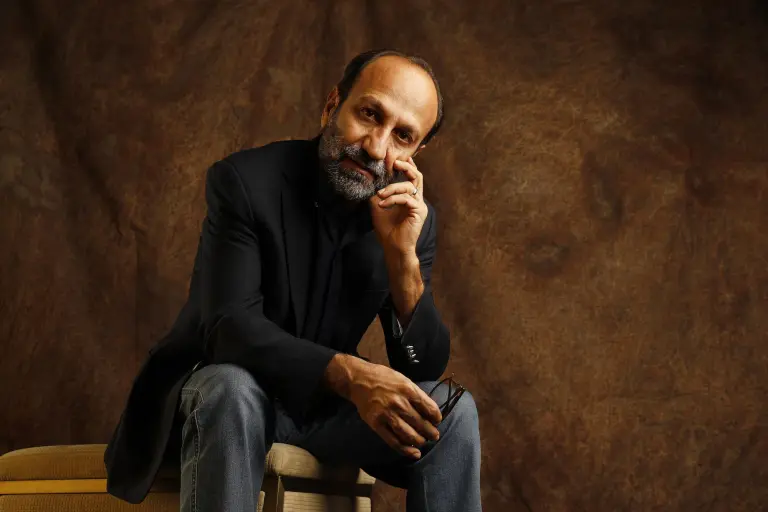
Asghar Farhadi has recently begun filming his tenth feature, Parallel Stories, in Paris. Although the plot remains undisclosed, this offers an opportunity to revisit how the concept of love is represented in his cinema. Farhadi’s films are not “romances” in the conventional sense, yet they are far from being anti-love. Rather, his works examine the fragility, failures, and moral complexities of emotional relationships in contemporary life.
Farhadi’s cinema is deeply interested in the psychology of relationships under strain — marriages fraying at the seams, affections dimming under the pressures of modern existence, and the painful dissonance between moral conviction and emotional need. In Beautiful City, love emerges as an impossible passion between a man and a married woman. In Fireworks Wednesday, Farhadi probes the roots of infidelity not as moral corruption but as the byproduct of emotional neglect. His films often reveal that betrayal, misunderstanding, and separation are not the opposites of love, but its distorted reflections when trust and empathy collapse.
The now-famous line from About Elly — “A bitter ending is better than an endless bitterness” — captures the essence of Farhadi’s philosophy. Love, for him, cannot survive without honesty and respect. When those are lost, separation becomes an ethical act, not a failure. Similarly, in A Separation, Nader’s acceptance of Simin’s wish to leave is not coldness, but a recognition that love cannot exist without mutual will and understanding.
In The Past, The Salesman, and his earlier Dance in the Dust, Farhadi traces the erosion of affection under social, economic, and moral pressures. Love in his world is constantly tested by circumstance — by class, by tradition, by pride. His characters do not fall in love; they fall out of it, and what remains is the ache of its absence. Farhadi’s lovers are not romantic idealists like Mehrjui’s Hamoon; they are ordinary men and women trapped in ethical and emotional labyrinths, struggling to balance feeling with reason.
Farhadi’s cinema is, in this sense, a sociology of love’s failure. He portrays the middle class not as villains or victims, but as human beings negotiating moral choices in a rapidly changing society. His lens captures not only the erosion of romantic love but also the persistence of other forms — the tenderness of a son for his aging father in A Separation, or the compassion between strangers bound by guilt and responsibility.
If there is one recurring truth in his work, it is that love in the modern world is not dead, but wounded — suffocated by lies, mistrust, and the noise of daily survival. Farhadi’s cinema mourns this loss. Like Nietzsche’s “God is dead,” his unspoken message that “love is dead” is not a denial but a lament — an elegy for intimacy in an age of disconnection.
In the end, Farhadi’s films are not about the impossibility of love, but about its fragility. His characters seek connection but collide with the moral and social walls that divide them. His cinema, more than anything, is a chronicle of that collision — a mirror held up to the wounds of the heart, where love, though fading, still insists on being remembered.