


The creativity of an artist can never be ruled by any tyrant.
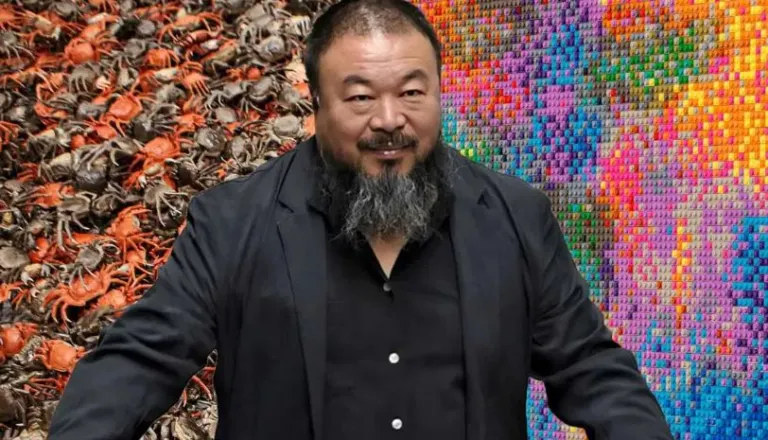
Ai Weiwei is a contemporary artist and democracy activist from China, known for his thought-provoking works that challenge social norms and highlight human rights issues. With over three decades of professional activity, Ai Weiwei has used various media, including literature, installation art, sculpture, and film, to express his opposition to political repression. His father, a poet and cultural advisor to Mao Zedong, was exiled along with his family to a forced labor camp in Heilongjiang in 1958, at the onset of China’s Anti-Rightist Campaign. Ai Weiwei’s outspoken criticism of the Chinese government has made him a prominent figure in global struggles for freedom of expression. Through his art, he continues to inspire audiences worldwide to engage in dialogue about democracy and justice.
Your personal experience of being detained for 81 days and dealing with ongoing censorship – how has it influenced your approach to art and activism, especially in works like your Alcatraz exhibition, where you presented portraits of 176 prisoners of conscience, including several political prisoners from Iran, to raise awareness about the dire conditions faced by those persecuted for their beliefs and speech?
While it is often assumed that specific major events shape human behavior, I believe it is our own decisions that truly bring us to where we are. In a society dominated by censorship, if we do not challenge the imposed restrictions on free expression, our existence can easily be overlooked or deemed insignificant. To me, freedom of speech is vital to affirming our human dignity. Of course, not everyone makes this choice, nor is everyone willing to face the consequences. Regarding the Alcatraz project, when given the opportunity to express my thoughts, I must ask: what beliefs should I support and stand behind? As both a human being and an artist, I place freedom of expression at the core of my values.

How do you view the impact of cultural exchange between artists from different nations on social movements and political change?
When we examine interactions among different cultures, political systems, and religious ideologies, we discover a “shared value” that unites humanity: the rights of the individual and the fundamental nature of being human. Embracing this common ground as a belief can, in fact, serve as a source of inspiration and guidance for our actions.
In your documentaryHuman Flow, you explored the profound relationship between freedom and creativity among refugees. How can the artistic process serve as a tool for restoring autonomy and identity for those facing the challenges of displacement?
Refugees often make tremendous sacrifices in their struggle to survive or to secure a future for their children. Even as they endure hardship and move beyond it, they frequently forfeit fundamental freedoms, such as freedom of expression, imagination, and the creative space that is intrinsic to human existence. Once these freedoms are lost, they may not return for generations. This loss represents a vital human deficiency, potentially more damaging than the depletion of natural resources in the realm of environmental conservation.

How has the rise of digital platforms and social media transformed the landscape of activism, particularly in the realm of art?
Today’s technological advancements have made access to information and collective participation in sharing and expressing ideas much easier. Freedom of thought must never be restricted, because freedom of expression is a fundamental pillar of human rights.
Your recent project,Ai Weiwei: The Late AI, involves using artificial intelligence to pose philosophical questions. How do you view the evolution of technology in the field of art over time, and what potential do you think AI holds for artistic expression and social commentary?
I fundamentally believe that the evolution or advancement of technology cannot lead to the evolution or advancement of art. Art resides in the deepest and most instinctual parts of human existence. Technology, in its current development, may expand the scope of artistic expression, but it cannot penetrate the deeper essence of art: the essence of humanity – including its vulnerabilities and the inevitability of death –both of which lie beyond the reach and influence of technology.
Amid the chaos of political and social injustice, what message would you like to convey to those who feel their rights have been violated?
As a human being, the purpose of artistic expression, whether as an artist or writer, is to reveal a realm that lies beyond the reach of power and systems of control. The creative domain of a writer or artist can never be subdued by any authoritarian force.

In your view, what is the artist’s responsibility in today’s turbulent world? Should art exist solely in service of aesthetic expression, or does it also bear the duty to inspire critical thinking and challenge the status quo?
In this world, there is no such thing as aesthetic expression in isolation. All its forms are deeply intertwined with philosophical and ethical ideas, and there is no alternative that can separate them from these connections.
Have any literary works or specific writers influenced your approach to art and activism?
My education was not formal, so the insights I can offer in this regard are quite limited.

How familiar are you with Iranian culture and literature?
I’m not very familiar with Iran, but I hold great respect for the country, its deep history, and its rich cultural heritage and identity. I’m eager to learn more about Iran.
Thank you for this conversation.