



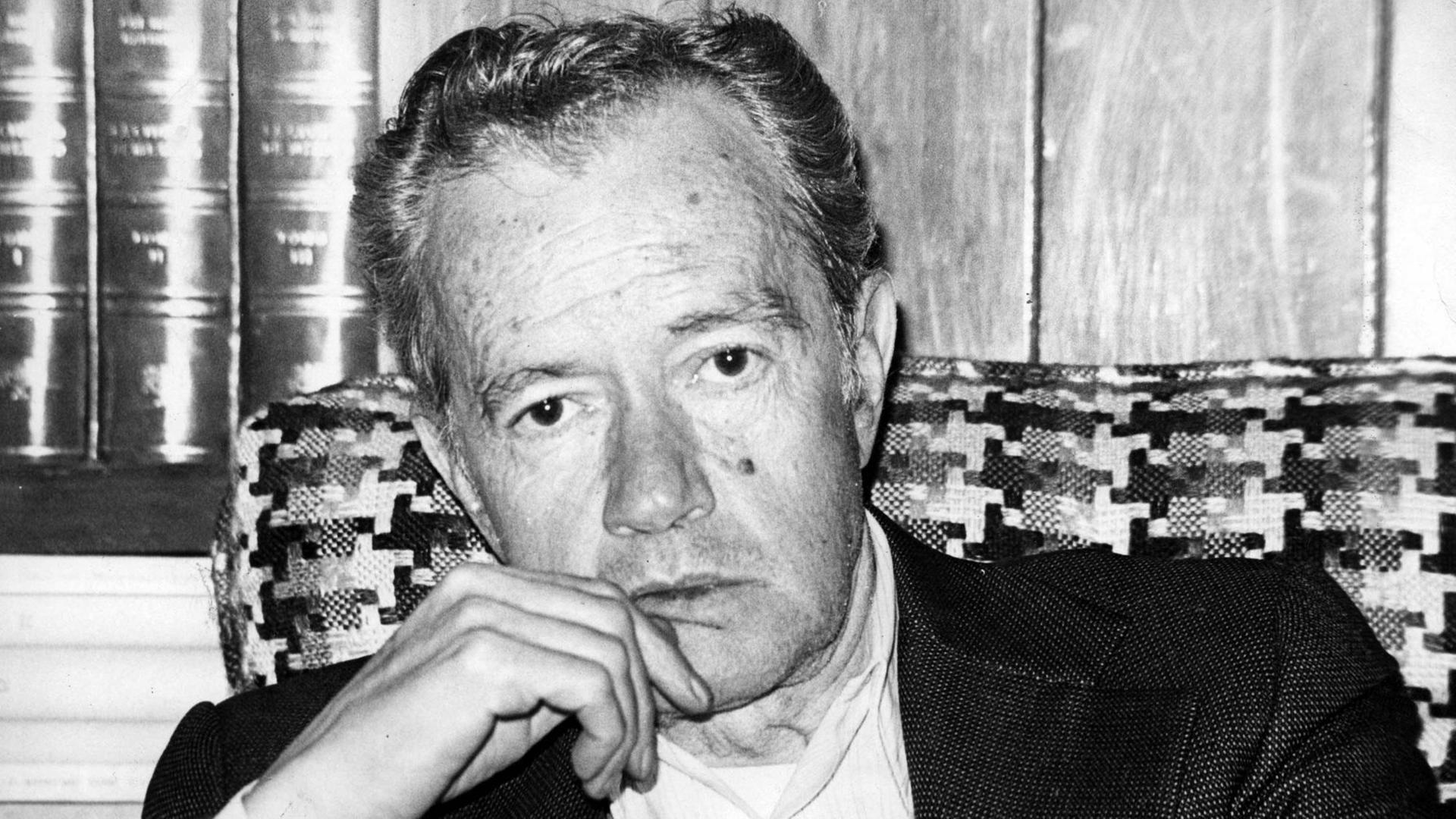
In this installment of our series revisiting literary masterpieces, we turn to the short novel Pedro Páramo by Juan Rulfo. Some literary critics consider Pedro Páramo the most important Mexican novel to date, and others even regard it as the most significant modern novel in Latin American literature. Beyond such praise, one can ultimately agree with Susan Sontag in asserting that Pedro Páramo is undoubtedly one of the most important novels of the twentieth century.
Juan Rulfo was a very spare writer. Officially, aside from his incomplete works and leftover drafts, only two books remain: the short story collection El Llano en llamas (The Burning Plain) and the novel Pedro Páramo, written two years apart. Perhaps because of this sparse output, Rulfo is not considered a full-time professional writer.
The story’s timeline spans an extensive and, on the surface, potentially tedious period. It begins with Pedro Páramo’s youth and his abandonment of his lover Susana, continues through the death of his father Lucas Páramo and Pedro’s rise to power, then to the death of Pedro’s son Miguel Páramo, the seizure of land and lives in Comala, the establishment of a quasi-feudal structure by Pedro, the arrival of revolutionaries, Susana’s return, her death, Pedro’s eventual murder, and finally the return of his last surviving son, Juan Preciado, to Comala in search of his father. If Rulfo had narrated all these events linearly, the result would have been a long and tedious quasi-biographical novel. Yet the English edition of Pedro Páramo is only 120 pages, and the Persian translation is about 180 pages in a pocket edition. This remarkable brevity is due to Rulfo’s brilliant narrative form, which he initially intended to publish under the title Susurros (Whispers). The novel opens with the memorable line:
“I came to Comala because they told me my father lived there, and his name was Pedro Páramo. I heard this from my mother, and I promised her that after she died I would go to him. To show that I keep my promise, I held her hands; she was at the brink of death, and I was compelled to give her any promise she wished.”
Thus, the story is narrated in the first person by Juan Preciado, who is in Comala at the time of narration. He has been told by his mother that Comala is a lush, lively town full of people, rain, and moisture. Yet when he arrives, he finds a dry, deserted wasteland. The first person he encounters is Abundio Martínez and his donkeys—though he doesn’t realize that Abundio is long dead. Abundio first informs Juan that Pedro Páramo has been dead for a long time, then reveals that he himself is one of Pedro’s sons, guiding Juan toward Comala while warning him that the town resembles hell.
Juan Preciado then wanders the ghost town, meeting Doña Eduviges at her inn. During their strange conversation, she reveals that she can hear the voices of the dead, including Juan’s mother, who died seven days earlier. Eduviges recounts Miguel Páramo’s death, and the reader gradually realizes that Eduviges herself is a ghost. Juan, like Dante in the Divine Comedy, walks through Comala encountering various spirits, each revealing pieces of the story. The narrative also shifts to a third-person perspective, recounting Pedro Páramo’s youth and other events. Through this technique—fragmented storytelling, collage, and perspective shifts—Rulfo achieves remarkable conciseness. However, this also makes the novel challenging for readers unfamiliar with modern, non-linear narratives. The reader may initially assume Juan Preciado is the main character, yet he dies mid-novel and descends into the earth, explaining: “The whispers killed me.” These whispers, the voices of spirits telling their stories, demand that Juan pray for their souls to find release from Comala’s purgatory.
Rulfo’s choice of narrative form serves not only conciseness but also a deep integration of form and content. Through this “voicing,” Rulfo grants the marginalized and erased from history their voices. The novel is filled with whispers of spirits who suffered under the feudal lord Pedro Páramo—those whose lands were seized, who were raped, or executed. A clever formal touch is that the first character Juan Preciado meets is Abundio Martínez, while the last story told through the third-person narrator concerns Juan himself—the one who ultimately kills Pedro Páramo.
For analytical clarity, we can highlight five central figures, though this risks oversimplifying Rulfo’s intricately woven narrative.
Pedro Páramo: The novel’s eponymous character, Pedro starts as a reckless, passionate youth, distrusted by everyone, especially his father. Two events shape his transformation: the abandonment of his lover Susana and his father Lucas Páramo’s death. Seeking revenge against those responsible, Pedro begins oppressing others: marrying Juan Preciado’s mother for political gain, seizing land, committing murder and rape, and imposing a quasi-feudal system on Comala. His actions are motivated by the desire to shape Comala into a city Susana would love. Susana returns, but mentally shattered by the voices of the dead, she dies shortly after, leaving Pedro depressed and eventually killed by one of his own sons.
Susana San Juan: Pedro’s youthful lover who flees Comala early in the novel. Mysterious and tragic, Susana becomes mad upon her return, haunted by the guilt and sins of the living and dead alike. A victim of patriarchal control first by her father and then by Pedro, she is treated as an object, stripped of agency, and ultimately succumbs to madness and death—like Juan Preciado, driven insane by whispers. She functions as a spectral, ethereal feminine presence.
Father Rentería: The priest of Comala, himself mired in doubt and the moral corruption of his flock. When Miguel Páramo dies, Father Rentería refuses to pray for his soul, only relenting when Pedro Páramo bribes him, symbolizing the monetization of faith. He ultimately joins the revolutionaries, carrying arms—a counterpoint to Pedro Páramo’s quasi-feudal power and the institutional Church’s moral weakness.
Juan Preciado: The first-person narrator, a lost and innocent seeker. Unlike Comala’s inhabitants, he searches for identity and fulfillment of his promise to his mother. His quest for identity leads him to eternal limbo in Comala, embodying the death of innocence. His journey echoes William Faulkner’s observation: “The past is never dead. It is not even past.” In analyses, Susana represents psychological death, Father Rentería moral death, Pedro Páramo socio-political death, and Juan Preciado the death of innocence.
The people of Comala: The collective inhabitants are trapped in Comala’s purgatory due to shared complicity, passivity, and compliance. By tolerating Pedro Páramo’s tyranny and monetized religious rituals, they contribute to a collective sin that condemns them even after death. They whisper to the living, demanding prayers and thereby perpetuating a cycle of influence and destruction.
In conclusion, Pedro Páramo is a tragedy of human decline, capturing people ensnared in cycles of political and religious domination. Through complicity or passivity, they commit a collective sin that binds their souls in Comala’s purgatory, eternally awaiting redemption while implicating the living through whispers emerging from the depths of history.