



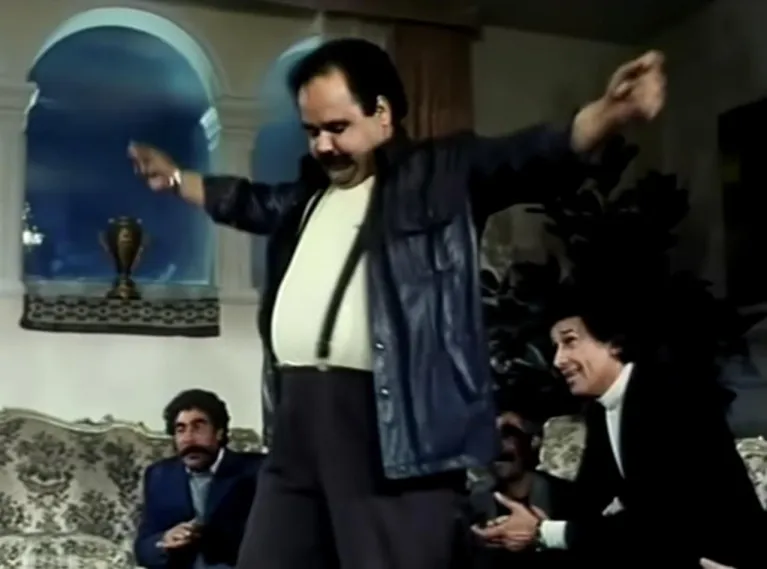
Dance in cinema, contrary to popular belief, is not merely a series of rhythmic movements intended to generate joy or laughter. Dance can be part of the language of cinema. It can reveal a character’s state of mind, expose their inner conflicts, recreate the social atmosphere of a particular era, or even signal an impending tragedy at the very moment when the audience expects joy. This is why, throughout film history, dance has sometimes served not as a decorative element but as an integral part of narrative and characterization.
In Iranian cinema, however, the history of dance is more complicated. Before the Revolution, dance was an established feature of commercial cinema, appearing in many films alongside singing, music, and traditional variety performances. Later, with changes in cultural norms and the restrictions imposed after the Revolution, the depiction of dance became a sensitive issue. These restrictions meant that, particularly in the post-revolutionary years, dance was sometimes portrayed indirectly, briefly, covertly, or metaphorically. Darius Mehrjui’s The Tenants, for instance, was one of the films that brought a scene of men dancing prominently into the frame of post-revolutionary Iranian cinema.
But the question today is not simply whether dance appears on screen. The more important question is why it appears in a film in the first place. Is it part of the narrative? Does it introduce a character? Does it recreate the atmosphere of a particular historical period? Is it intended to set a moment of happiness against the bitterness of what lies ahead? Or is it merely there to add a little color and spectacle to the film, eliciting a few seconds of laughter or excitement from the audience? It seems that part of contemporary Iranian comedy, particularly its commercial sector, has fallen into the latter trap: instead of being “part of the film,” dance has become “an ornament added to the film”—a ready-made embellishment that can be inserted into a scene without its removal seriously affecting the narrative. This is where dance ceases to be a cinematic possibility and becomes mere decorative dressing.
When Dance Becomes Detached from the Narrative
One problem with some contemporary comedies is that filmmakers sometimes assume that the mere sight of a popular actor dancing is enough to create a comic situation. Dance consequently becomes something like a variety act: a sequence that can be extracted from the film, shared on social media, and watched independently of the story.
Of course, using dance to generate laughter is not inherently problematic. Comedy has long been connected to the body, movement, and music. The problem begins when dance takes the place of a comic idea. Instead of generating laughter through a situation, dialogue, characterization, or dramatic conflict, the film relies on the actor’s body and movements.
This becomes particularly frustrating when the dance has no connection to characterization. If a character has been presented throughout the film as shy, depressed, repressed, or serious, their decision to dance could be a significant development. But if they suddenly start dancing merely to pick up the pace of the film, only for everything to return to normal moments later, the dance has added nothing to the character.
The essential distinction between “dramatic dance” and “decorative dance” lies precisely here. In the former, dance conveys information that might otherwise be lost, taking part of the scene’s meaning with it. In the latter, it merely attracts the audience’s attention.
Successful examples from Iranian cinema have shown that dance can be used in a genuinely serious and dramatic way, even in a comedy. In The Tenants, Akbar Abdi’s dance as Ghandi, following a series of tensions and disputes in the apartment building, is more than a comic gesture; it is part of the film’s effort to create a collective atmosphere and temporarily ease the tensions. The dance is connected to the characters’ circumstances and the film’s overall rhythm.
An even more significant example is Maman’s Guest. In this film, the merrymaking and dancing around the dining table create an atmosphere of collective intimacy and warmth. Yet this happiness is not absolute. Mehrjui uses these very moments of joy to establish an emotional contrast. In other words, the audience does not simply laugh; beneath the merriment, it also senses the shadow of painful events to come. It is this contrast that transforms dance from a decorative gesture into part of the language of drama.
Dance as a Narrative of Fleeting Happiness
Perhaps one of the most compelling aspects of dance’s dramatic function in Iranian cinema is its connection to the idea of “temporary happiness.” Dance does not necessarily mean that the characters are happy. Sometimes they dance because they want to forget reality for a few minutes. Sometimes they dance because they do not yet know what catastrophe awaits them. And sometimes dancing is itself a way of concealing sorrow.
In A Cube of Sugar, too, dance and music are directly connected to the family setting and the wedding celebration. Yet this happiness is accompanied from the outset by a sense of suspense, because the audience knows that the ceremony will not end in the usual way. In such a situation, dance serves a purpose beyond expressing joy: it becomes an image of a community on the brink of change and loss.
This use of dance reminds us of an important principle of cinema: the meaning of a movement depends not only on the movement itself but also on its place within the narrative. The same gestures, the same music, and the same smile can signify vitality at the beginning of a film, yet become signs of innocence or happiness lost when they appear just minutes before a tragic event.
In recent years, we have also seen darker examples of this approach. In World War III, Shakib’s dance, performed by Mohsen Tanabandeh, is not a sign of happiness, contrary to what we might conventionally expect from dance, but part of a humiliating and painful situation. Here, the moving body does not signify freedom; instead, it expresses the condition of a vulnerable human being trapped and left without protection. In Leila’s Brothers, too, dance in a family setting acquires a meaning beyond entertainment. In one of the film’s final sequences, it underscores the contrast between the group’s outward joy and a character’s sorrow. These examples demonstrate a simple but important principle: dance becomes memorable in cinema when it says something about the people who perform it.
From I Feel Like It to The Sting of the Whale: Dance as a Marker of a Generation
Another important function of dance in Iranian cinema is its ability to recreate a particular historical or cultural period. In this context, dance is more than bodily movement; it is part of collective memory.
Bahman Farmanara’s I Feel Like It offers an interesting example. Even the film’s original title, I Feel Like Dancing, indicated the importance of dance to its central idea. The title was later changed, and the film was released as I Feel Like It. In a film like this, dance can signify a renewed desire to live, an escape from psychological paralysis, and an attempt to experience happiness once again.
In The Sting of the Whale, dance also serves a nostalgic function in certain scenes. The character of Arzhang and his inner world are intertwined with the music and popular culture of earlier decades. His dances are not simply intended to make the audience laugh; they contribute to his characterization and recreate the world of a generation that grew up with cassette tapes, music, and the unofficial culture of that era. Accounts of the film have likewise highlighted the role of dance in representing the interests and sensibilities of young people at the time.
This is precisely where comedy can make the most effective use of dance. Dance can generate comedy, but it should be comedy that emerges from the character rather than from the movement itself. If we laugh at Arzhang, it is not simply because he dances, but because his dancing reveals something about his inner world, his past, and his dreams.
By contrast, when dance appears in a film without any narrative grounding, the result often resembles a music video: a popular actor, energetic music, a few showy moves, and then a return to the story. Such a sequence might provoke an immediate reaction from the audience, but it does not necessarily remain in the viewer’s cinematic memory.
Good Dance Is Dance Whose Absence Would Be Felt
A simple criterion might help us evaluate the use of dance in cinema: if we removed the dance from the film, would anything be lost in terms of meaning?
If the answer is yes, we are probably dealing with a dramatic use of dance. If removing it changes nothing about the characters, narrative, atmosphere, or themes, we have reason to suspect that it is merely decorative.
Given its contentious history and the restrictions surrounding its depiction, dance has never been an entirely ordinary or unproblematic element of Iranian cinema. This very situation could have offered filmmakers an opportunity to transform dance more deliberately into a cinematic language. In effect, restriction could have become a source of creativity: dancing behind a window, dancing in shadow, a brief dance, a man laughing as he dances in the depths of sorrow, or a movement that conveys only part of a character’s psychological state rather than displaying the body in its entirety.
But if, after years of becoming more visible on screen, dance is reduced to a commercial formula, that creativity disappears. Under such circumstances, dance not only loses its cinematic potential but also becomes a means of concealing a film’s weaknesses—a form of cosmetic embellishment intended to make an otherwise lifeless scene appear more appealing.
The point is not that cinema should avoid happiness or that comedies should not include dance. On the contrary, Iranian cinema can use dance as one of its most compelling tools for comedy, nostalgia, characterization, and even tragedy. The issue is whether the filmmaker understands what the dance is meant to express.
The Tenants, Maman’s Guest, A Cube of Sugar, The Sting of the Whale, I Feel Like It, Leila’s Brothers, and World War III—despite their fundamental differences in style and subject matter—demonstrate that dance can provoke laughter, develop characters, evoke history, connect joy to tragedy, and even lay bare the humiliating circumstances of an individual. These films show that when dance is embedded in the drama, it ceases to be an extraneous movement and becomes part of the narrative itself.
Contemporary comedy needs this distinction more than ever. An audience can be entertained for a few seconds by a gesture, a piece of music, or a dance. But cinema succeeds when that same movement leaves something meaningful in the viewer’s mind long after the film has ended. Perhaps this is the best definition of cinematic dance: good dance is not the dance that attracts the most attention, but the dance that conveys the most meaning. If a character is going to dance, we should understand why. If a group is going to dance, we should understand what lies beneath their happiness. And if the audience is meant to laugh, the laughter should emerge from the situation and the characters, not from the simplistic assumption that every rhythmic movement is necessarily entertaining.
Otherwise, dance becomes detached from the language of cinema and turns into set dressing: a glittering decoration that might catch the eye for a moment but adds nothing to the film. Iranian cinema, with all its restrictions and historical experiences, has shown that it can regard dance as far more than an ornament. The only question is whether it can remember once again that when dance enters the cinematic frame, it must have something to narrate.
© 2026. Phoenix Review