



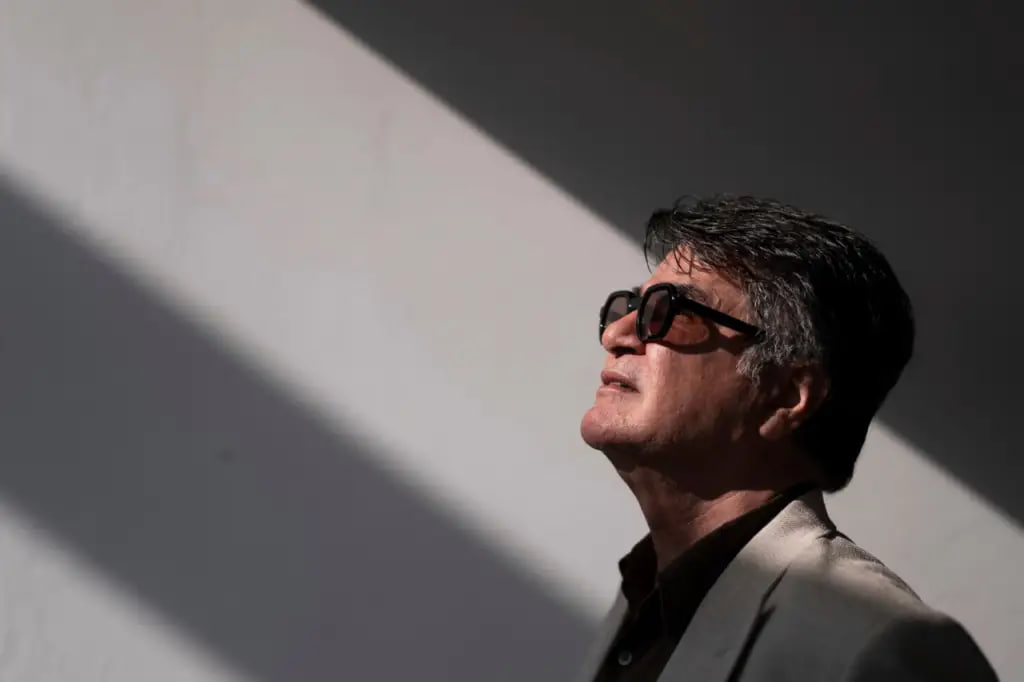
Jafar Panahi, whose cinematic achievements have even surpassed those of Abbas Kiarostami, is not only the most decorated Iranian filmmaker but also the fourth director in the history of cinema to have won four major international film awards. He received the Palme d’Or at the Cannes Film Festival for his latest film A Simple Accident in 2025, the Golden Lion at the Venice Film Festival for The Circle in 2000, the Golden Bear at the Berlin Film Festival for Taxi in 2015, and the Golden Leopard at the Locarno Film Festival for The Mirror in 1997. Today, he is not only the most acclaimed Iranian filmmaker but also the symbol of Iran’s independent cinema—an alternative force that gained momentum following the “Woman, Life, Freedom” movement and has emerged as a legitimate and rightful representative of non-governmental, independent, and arguably grassroots Iranian cinema, in stark contrast to the state-sanctioned cinema that often aligns with the Islamic Republic’s narrative.
Panahi had sparked a revolution in Iranian cinema long before the outbreak of the Jinā (Mahsa Amini) uprising. With his realist lens on the hidden truths of Iranian society, blended with a unique visual and narrative language—often poetic—and his outspoken political stance against Iran’s authoritarian regime, he set a new standard. He paved the way for a form of underground filmmaking that would eventually give rise to a new generation of Iranian filmmakers who would create unlicensed films within Iran and garner global acclaim.
After establishing his distinctive cinematic voice with The White Balloon, Panahi tackled taboo subjects—most notably, the rights and realities of women in a system whose laws are not only unequal but outright anti-women. In The Circle, he portrayed imprisoned women: fugitives, offenders, political prisoners, and those who underwent abortions or committed suicide—all highlighting the pervasive insecurity faced by women in Iran. These were issues deemed off-limits by the Islamic government. In this film, Panahi broke multiple taboos and crossed several red lines. One striking example: women released from prison cannot even buy a bus ticket to another city—a detail that most wouldn’t notice, but Panahi zeroed in on it. This was in 2000, at a time when Iranian cinema rarely acknowledged independent or vulnerable women or those facing domestic and societal violence. The Circle was immediately banned and never received public screening in Iran.
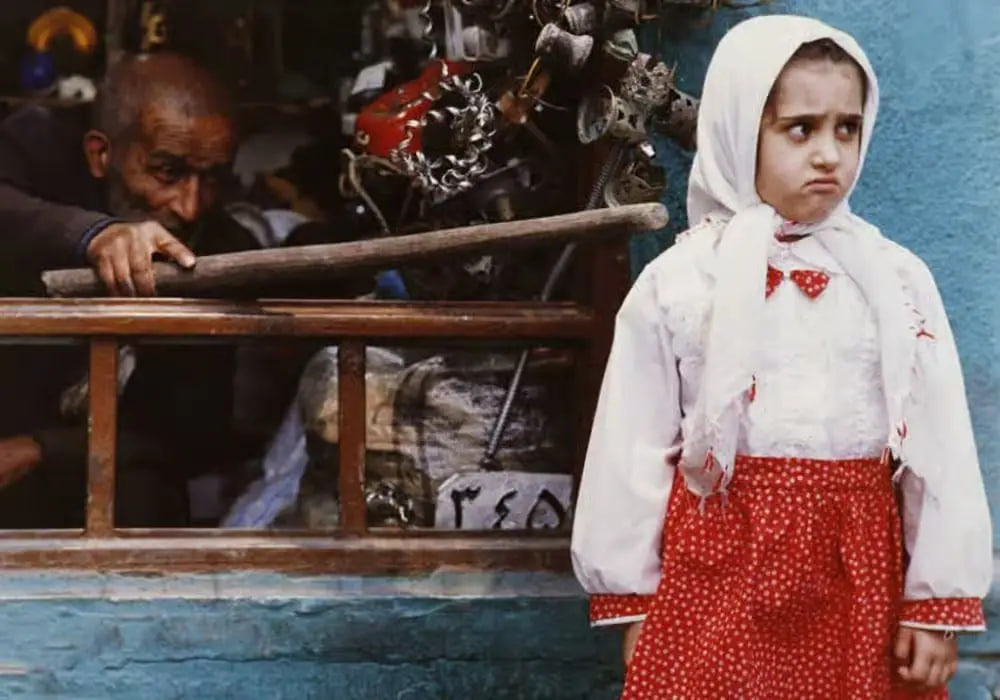
His next two films, Crimson Gold (2003) and Offside (2006), also faced bans and were denied theatrical release in Iran, despite being lauded at major international film festivals and earning Panahi prestigious awards.
In 2009, following his support for the Green Movement protests, Panahi was arrested and sentenced to six years in prison, a 20-year ban on filmmaking, a 20-year ban on traveling abroad, and a 20-year ban on giving interviews to media outlets. From then until 2022—when he voiced support for the “Woman, Life, Freedom” movement—he was repeatedly arrested, interrogated, and imprisoned. Yet none of this stopped him. For an artist deeply committed to his society and whose heart beats for cinema, bans, threats, and suppression could never stifle his creativity.
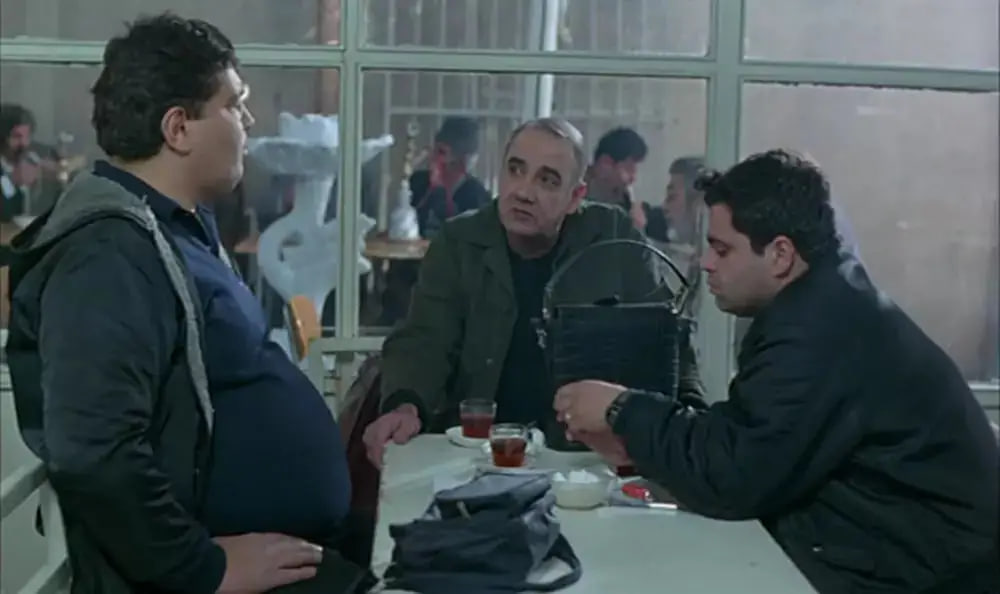
In 2011, Panahi made his first underground and independent film: This Is Not a Film, co-directed with Mojtaba Mirtahmasb, who was also banned from working. The film portrays a single day in Panahi’s home, where he tries to “direct” a script through words and gestures. Made with limited resources, no official funding, and only the support of friends, the film sought to turn spoken language into cinematic experience. It was shortlisted for the Best Documentary category at the 2013 Academy Awards and named one of the year’s top documentaries by The New Yorker.
From that point on, Panahi found his own path for filmmaking—without permits, censorship, or the “butchering” of his work. Despite having to work secretly and independently, he continued creating, and each film gained recognition on the global stage.
In 2012, with co-director Kambuzia Partovi, he made Closed Curtain at a beach house in northern Iran, starring himself, Partovi, and Maryam Moghadam. The story follows an artist who retreats into isolation after one of his dogs is killed. Shot entirely on mobile phones, the film becomes a meta-dialogue between Panahi and different facets of his own psyche—fear, despair, rage, helplessness, suicidal thoughts, and ultimately, a thirst for life. The film offers a harrowing view of a creative mind living under oppression, yet concludes with a message of resistance and survival. Closed Curtain won the Silver Bear for Best Script at the Berlin Film Festival.
In 2015, Panahi returned to Berlin with Taxi, and this time won the festival’s top prize—the Golden Bear. Unable to attend the festival due to travel restrictions, Panahi nonetheless received global praise. In the docu-fiction, Panahi himself plays a taxi driver in Tehran, engaging in spontaneous conversations with passengers unaware of hidden cameras—much like Abbas Kiarostami’s technique in Ten. The dialogues reflect the daily struggles of Iranians, shared between artist and people: dictatorship, lack of freedom, and suffocating repression. Yet the film never succumbs to hopelessness. As jury president Darren Aronofsky stated:
“Instead of breaking or giving in, instead of letting rage or despair consume him, Jafar Panahi has created a love letter to cinema. His film is filled with love—for art, for his society, for his country, and for his audience.” The film grossed over $10 million worldwide.
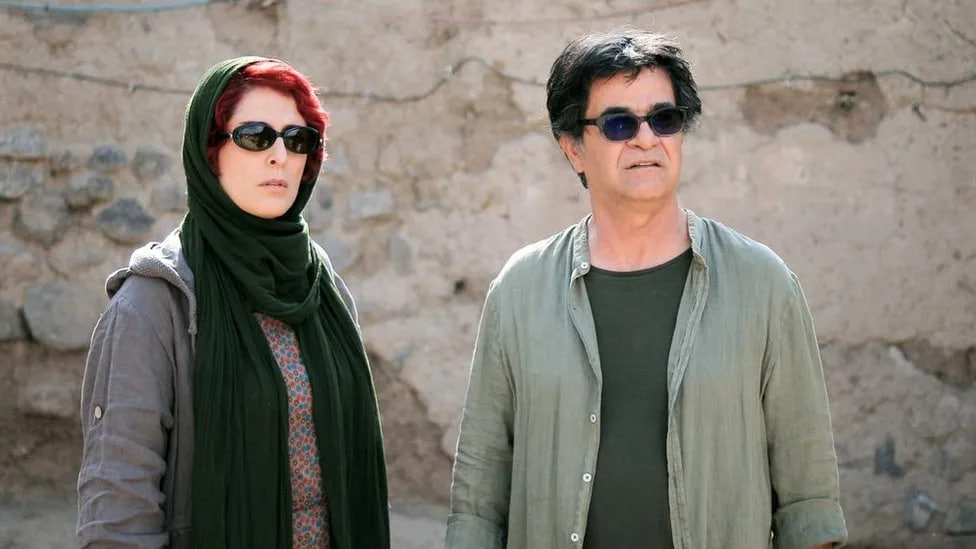
In 2018, Panahi made 3 Faces, again in secret and with limited resources. This time, the story wasn’t about himself. A girl from a remote Turkish-speaking village sends a video message to actress Behnaz Jafari, threatening suicide because her brother won’t allow her to study acting in Tehran. Behnaz and Panahi embark on a road trip to find her. When they reach the village, they discover that legendary pre-revolution actress and poet Shahrzad (Kobra Saeedi) also lives there, exiled and shunned by her community. Despite the villagers’ kindness, the film exposes the painful reality: women are trapped by outdated traditions that disregard their dignity. The film reflects on three generations of Iranian women in cinema—Shahrzad (past), Behnaz (present), and the village girl (future). 3 Faces won Best Screenplay at the Cannes Film Festival and received widespread international acclaim. The influence of Kiarostami’s road-movie style is evident throughout.
Panahi’s next film, No Bears (2022), features himself once again as a filmmaker. Shot in a border village near Turkey, the film intertwines the story of a couple attempting to flee Iran with forged passports and the villagers’ attempts to prevent “sin.” The film reflects the emotional and moral complexities of those torn between leaving and staying. In an eerie twist, Panahi seems to foresee his own re-arrest. Actress Mina Kavani delivers a powerful performance with her expressions alone.
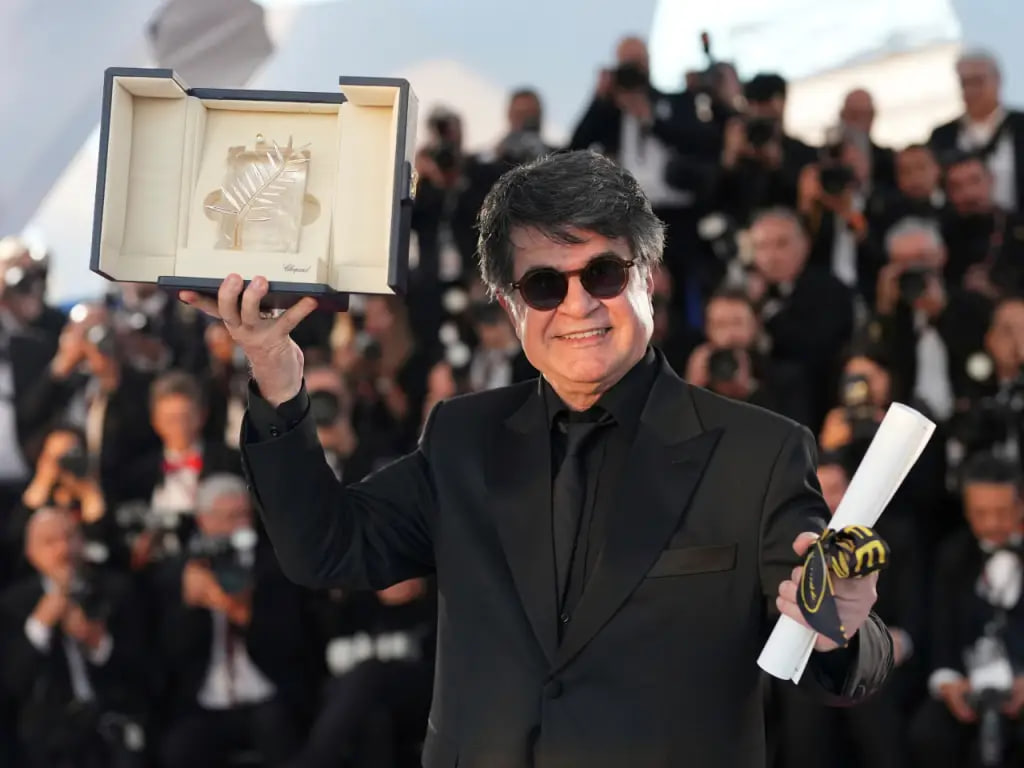
In 2025, Jafar Panahi won the Palme d’Or at Cannes for A Simple Accident, co-written with prominent screenwriter Shadmehr Rastin. Against all odds, after years of travel bans, Panahi attended the festival in person. Upon receiving the award, he said:
“I call on all groups, regardless of ideology, to unite for Iran’s freedom.”
Freedom—the central pursuit that has driven his entire cinematic career with every fiber of his being.