



One of the most memorable moments of visiting the Vatican Museum is seeing the famous fresco The School of Athens. This masterpiece, created by Raphael, is considered a symbol of the classical spirit of the golden age of the Italian Renaissance.

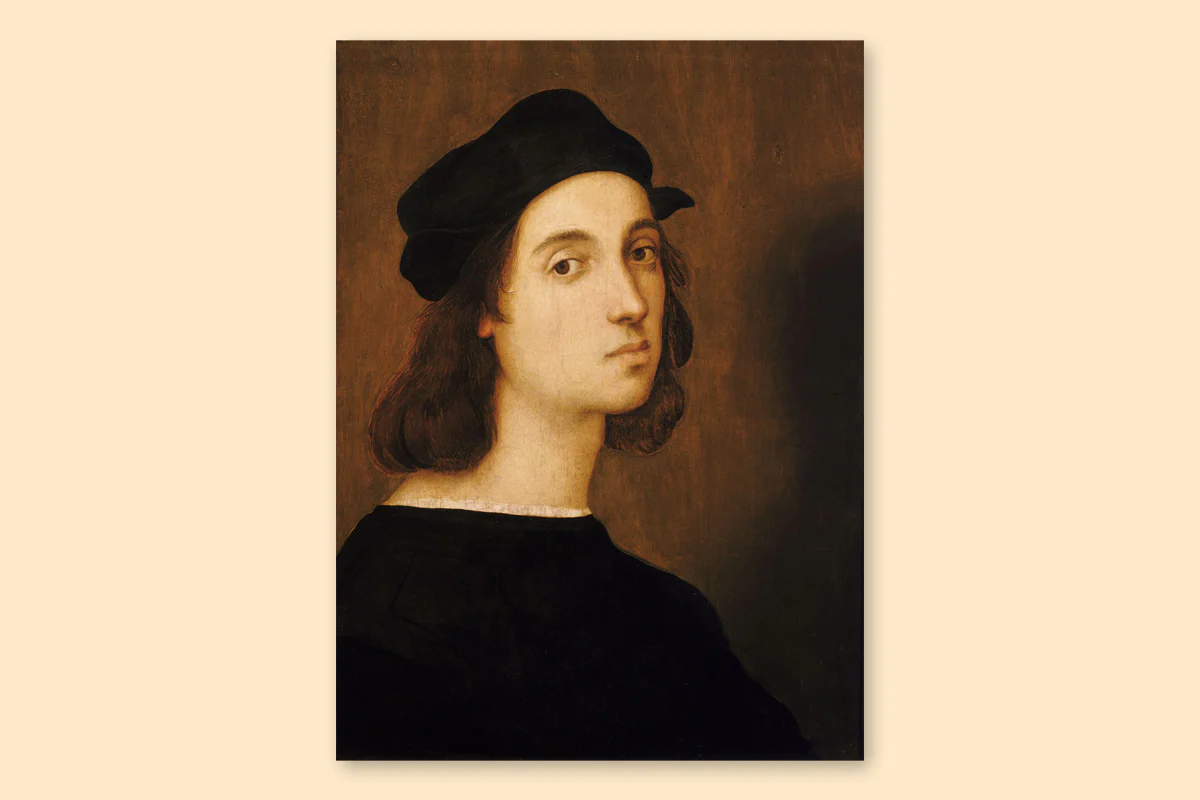
In this painting, which can be regarded as the first “artistic selfie” in history, the faces of many great philosophers from ancient times are depicted, including thinkers such as Plato, Aristotle, Socrates, Alcibiades, Diogenes the Cynic, Ibn Rushd (Averroes), and Zoroaster.
According to Giorgio Vasari’s Lives of the Artists, written in the mid-16th century, Raphael is standing next to Zoroaster, gazing at him with a penetrating look. Zoroaster is holding a celestial orb in his hand, wearing a white robe.

Raphael depicted many of his contemporaries in The School of Athens to portray the philosophers, including Michelangelo as Heraclitus and Leonardo da Vinci as Plato. The School of Athens resembles a group photo of Renaissance luminaries.

In my view, this painting beautifully divides the world of philosophy into two sections. In the center of the painting, we find Plato and Aristotle. These two philosophers had different aims; Plato dealt with concepts like truth, beauty, and justice, while Aristotle focused on the realities of the material world. This difference is visible in the painting: Plato, on the left, points to the sky and holds a copy of his Timaeus, while Aristotle points to the earth and holds his Nicomachean Ethics. Plato, pointing to the heavens, symbolizes metaphysical philosophy, while Aristotle, pointing to the ground, represents realistic philosophy.

Euclid, with a bald head and deeply focused on drawing geometric shapes on a blackboard, is surrounded by his students. Here, Bramante is depicted as Euclid. Bramante was the one who introduced Renaissance architecture to Milan and brought late Renaissance to Rome. Raphael was invited to Rome by Pope Julius II at the suggestion of Bramante. At the time, Raphael wasn’t well-known in Rome, but this young artist soon made a great impact on Pope Julius II and the papal court, and his reputation as a master grew daily.

Heraclitus, famous for his thoughts on the constant change of the world, famously said, “You cannot step into the same river twice.” In this image, he seems to be inspired by a portrait of Michelangelo, as he sits on a marble bench writing. At that time, Michelangelo was working on the ceiling of the Sistine Chapel.
One of my favorite characters in this fresco is Diogenes the Cynic, also known as the “dog” and beggar. He is sitting on the steps, deeply absorbed in studying the text in his hand. Diogenes’ only possession was the cloak he wore. Although he was the son of a banker, he lived in a wooden barrel. It is said that one day Alexander the Great told him that he would give him anything he wished. Diogenes responded, “I only have one wish, please move your horse aside so that the sun can shine on me.” The famous poet Rumi also wrote one of his most famous ghazals about Diogenes:

“The old man was searching with a lantern around the city,
Tired of demons and beasts, he desired a human.”
Raphael passed away at the age of thirty-seven after a night full of passionate love in the arms of his mistress, Margarita Luti, who was the subject of his portrait La Fornarina. Raphael’s funeral was very grand, with a large crowd attending. It is said that four cardinals, dressed in purple, carried his coffin, and the Pope kissed his hand. On his marble tomb, there is an epitaph written by Cardinal Pietro Bembo:
“Here lies the famous Raphael, who, during his lifetime, made nature fear defeat and, when he died, even nature feared death.”