



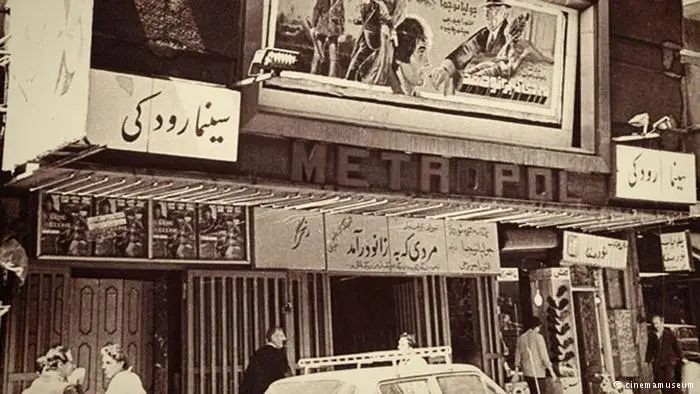
Cinema is more than a theater, just as a film is more than a collection of moving images projected onto a screen. Before it is a building or an industry, cinema is part of the lived experience of modern life: a place where we enter the darkness, watch another world unfold, and experience emotions that may have no opportunity to surface in everyday life. That is why when an old cinema closes, is sold, repurposed, or disappears beneath the blows of bulldozers, it is not merely a property leaving one phase of a city’s economic cycle and entering another. A part of the city’s memory is erased as well.
These days, the fate of old cinemas has once again become a serious subject of discussion: from the sale of cinemas that were once an integral part of a city’s cultural life to theaters that have remained closed for years or have been converted from cinemas into shops, shopping centers, warehouses, and commercial spaces. But the important question is this: Is an old cinema merely a dilapidated building whose future should be decided according to the logic of profitability? Or do these buildings possess a value beyond their economic worth—a value connected to the cultural, social, and even emotional history of the people who live in the city?
Perhaps the answer can be found in a simple memory. For many of us, going to the cinema for the first time was not simply a matter of “watching a film.” Perhaps a father or mother took us by the hand and led us into a theater. Perhaps the first film we ever saw on the big screen is still alive in our memory. Perhaps we once stood in line for a ticket and, right there, saw someone who would later become a friend or even the love of our life. Perhaps one Friday afternoon, we left school or university with our friends and made our way to a cinema in the city center. We may not even remember the film, but we still remember the corridors, the smell of the theater, the sound of the projector, the light falling across the screen, or the cinema marquee.
These may seem like minor details, but collective memory is built precisely from such small details.
When a Place Becomes Part of Collective Memory
Old cinemas are, in fact, “sites of memory.” They have not merely been places where films were screened; they have been part of the emotional geography of the city. Every neighborhood was known by its cinemas, and every cinema carried a different meaning for different generations.
The old cinemas of Tehran and other Iranian cities contain a part of the country’s social and cultural history: places people visited not only to watch films, but also to socialize, meet one another, spend time, and experience something collectively. Under such circumstances, the conversion of a cinema into another kind of property cannot be explained simply by invoking “economic necessity.”
Of course, we have to be realistic. Running a cinema today is fundamentally different from what it was several decades ago. Old single-screen theaters often face technical problems, deteriorating buildings, high maintenance costs, and changing patterns of cultural consumption. Today’s audiences are more inclined toward multiplexes offering several screens, amenities, parking, restaurants, and a choice of films. And with the rise of streaming platforms and home viewing, watching films has moved further away from the cinema than ever before.
So this is not an argument for constructing a romantic, nostalgic image of the old cinema and claiming that every building that was once a theater must remain exactly as it was forever, regardless of its economic or technical circumstances. The issue lies elsewhere.
The question is whether demolition is really the only way to deal with an old and cherished building. Can’t old cinemas be restored? Can’t their cultural functions be expanded? Can’t an old theater simultaneously accommodate film screenings, theater, music, cultural discussions, exhibitions, and other artistic activities? Instead of completely erasing the past, can’t we establish some kind of dialogue between the past and the needs of the present?
Deterioration Is Not a Demolition Permit
In many cities around the world, old buildings are preserved not as obstacles to development but as part of the city’s cultural and historical capital. Sometimes the building is transformed while its historical character and defining features remain. Sometimes a small cinema becomes a cultural center; sometimes its old architecture is revitalized through new technologies. Why must we always choose between “preserving the past” and “development”? The two are not necessarily opposed.
The greater problem begins when an old cinema is demolished and something more than brick and concrete disappears with it. A piece of the city’s geography vanishes as well. A generation that wants to understand the city’s past can no longer find that place. A younger generation may know that a cinema once stood there, but it can no longer experience its own relationship to that physical site. A city is not merely its streets and buildings. A city is a collection of memories.
If we calculate every old building solely according to the value of its land, we may eventually end up with a city that is more modern and more expensive, but has no past left to tell. The city becomes a collection of new, anonymous buildings that could exist anywhere else in the world.
This danger is even more serious when it comes to cinemas, because cinema is, fundamentally, an art of memory. Films become intertwined in our minds with the places where we saw them. A film may remind one person of their childhood home and another of a particular cinema. A cinematic memory, therefore, is not stored in the film alone; part of it remains in the theater, the street, the ticket, the queue, the seat, and even the people sitting beside us at that particular moment.
That is why closing an old cinema cannot be compared with closing a shop or an office. A cinema is a “social space”: one of the few places where people from different social classes and groups could sit alongside one another and share an experience. In the darkness of the theater, the screen placed people, at least for a few hours, in a common situation. And that shared experience helped create collective memory.
Economics vs. Memory: A Two-Sided Problem
Now that watching films has moved into our homes and onto our personal screens more than ever before, the importance of such places may actually be greater. Perhaps one reason the closure of old cinemas feels like such a loss is that we are losing one of the few remaining collective spaces in which art can be experienced together.
At the same time, we need to distinguish between an “aging cinema” and a “cinema without value.” The deterioration of a building does not necessarily mean that it has no historical or cultural value. On the contrary, if a building requires technical renovation, the question should be how to save it—not whether the first response should be to sell the land and change its use.
Of course, a private owner has the right to make decisions about their property, and economic realities cannot simply be ignored. Maintaining an old cinema costs money, and it is unreasonable to expect the private sector to shoulder the entire burden of preserving cultural heritage on its own.
If society, the state, and cultural institutions believe that certain cinemas constitute part of a city’s cultural heritage, then genuine economic mechanisms for preserving them must also be established. One side cannot speak of “historical value” while the other leaves the owner alone to deal with enormous costs and negligible income. Preserving old cinemas requires policy, not merely statements and expressions of regret after a building has been demolished.
For cinemas with historical value, restoration subsidies could be provided. Owners could be allowed to operate parts of the building through complementary cultural and commercial uses without destroying the building’s essential identity. Abandoned cinemas could be transformed into multipurpose cultural centers. Municipalities, private businesses, cinema institutions, and cultural investors could all contribute to their revitalization.
The important thing is to ask ourselves, before issuing a death sentence to a cinema: What is going to replace it? If the answer is yet another shopping center, another commercial building, or another anonymous property, what have we really added to the city?
Let Us Not Build Cities Without Memory
Perhaps it is more valuable to keep an old cinema alive on a densely built urban street so that future generations can understand how people went to the movies decades ago, what films they watched, and how they spent part of their social lives inside dark theaters.
Asr-e Jadid and many other old cinemas are telling examples of this condition: theaters that, beyond their historical significance, have carried cultural and emotional meaning for generations of film lovers.
The contradiction here needs to be taken seriously: on one side, the owner is confronted with economic reality; on the other, society is confronted with the value of memory and cultural heritage. The solution is not to deny either.
Perhaps we need to change the way we think about old cinemas—from “property” to “heritage.” This does not mean expropriating them or disregarding the rights of their owners. It means acknowledging that certain buildings can acquire a public value even when privately owned. Just as an old house can acquire historical significance for a neighborhood, a cinema can preserve a part of a city’s cultural history.
We should not allow nostalgia to replace rationality. But neither should we allow economic rationality to completely swallow nostalgia and memory. The real tragedy is not that a cinema closes. The tragedy is that after it closes, no effort is made to preserve its traces. The cinema sign comes down, the façade is demolished, the seats are thrown away, the screen is taken down, and then a new building rises in its place—a building that may be profitable, but has no story to tell.
We need cities that are not merely places to live, but places to remember. Old cinemas are some of those places of remembrance. Perhaps one day a child will walk past a building and ask their father, “What used to be here?” And the father will be able to say, “There used to be a cinema here. I saw my first film here.”
If the building is still standing, the child will not merely hear a story; they will be able to see a part of that past. But if everything has been demolished, the past becomes a legend preserved only in the memories of older generations. And a memory that loses its places will sooner or later lose its story as well.
Old cinemas may no longer be as profitable as they once were, but not every form of value can be measured in financial gain and loss. Some places are part of a society’s cultural capital—capital that, once destroyed, cannot be precisely reconstructed with any amount of money.
The screen can be installed again. The seats can be replaced. The projector can be upgraded. But the memory of a city cannot be rebuilt. Perhaps, before the last old cinemas are sold, repurposed, or buried beneath the rubble, we should ask ourselves one simple question: Do we really want a city that has lost its cinemas but preserved its shopping centers? If the answer is no, then it is time to start thinking about these “houses of memory”—before the final curtain falls.
© 2026. Phoenix Review