



“Let’s hope they don’t hit Veresk.”
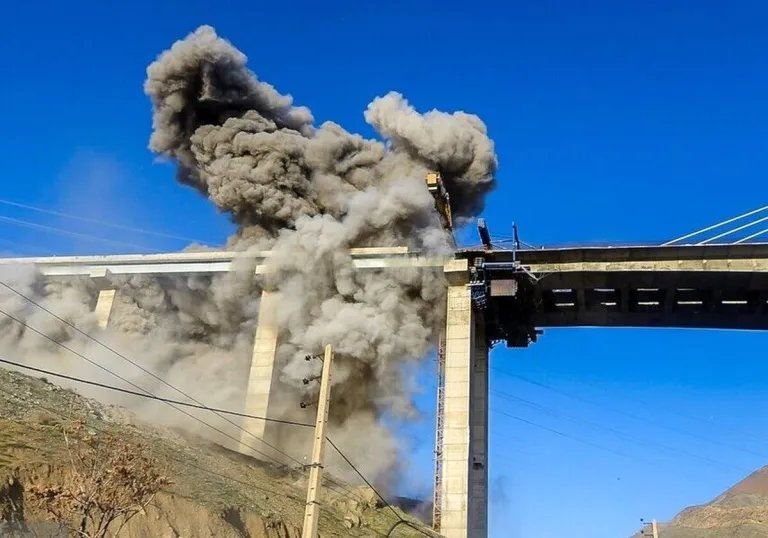
That was his first reaction when he heard about the attack on the B1 Bridge. He did not ask where B1 was, nor what exactly had happened to it. Instead, he worried about Veresk—a bridge I am certain he had never seen in person. But then again, how many of us have actually seen the Veresk Bridge up close? And yet many of us know it. It is as if Veresk, long before being a bridge, became part of the image we have constructed of this country in our minds.
B1, however, was not like that for me. The day of the attack was the first time I had ever heard its name. I did not know exactly where it was, what it looked like, or why it was being built. I heard the news, saw the images, and simply wondered how a bridge under construction only a few kilometers from my home could exist without my knowing almost anything about it.
At that moment, I thought of Slavenka Drakulić. Years ago, she wrote an elegy for the Mostar Bridge—a bridge she had never seen in person and knew only through a postcard her father had brought her. Yet when Mostar was destroyed, she felt that something far greater than a structure had been lost. I, on the other hand, felt nothing for a bridge being built near where I lived.
Where does this difference come from?
Perhaps the answer lies not in the bridges themselves, but in memory. Some structures occupy a place in a society’s narratives long before they become part of its physical landscape. They live in photographs, films, stories, and memories. Their names enter everyday language and gradually they become something more than physical objects. This is how they enter collective memory. Veresk belongs to this category. Even those who have never set foot on it recognize it.
B1, however, had not yet reached that stage. Even its name sounded more like a technical code than a place. When I first heard it, my mind went to American bombers, not a bridge near Karaj. It did not even have a single established name: B1, Bilqan. Two names, neither of which had yet found a place in the everyday vocabulary of most people. No one arranged to meet there. It existed in no personal memories. It was present on engineering maps, but absent from mental ones.
Urban planners often speak of landmarks—elements that help people remember and navigate a city. Yet not every large structure becomes a landmark. B1, at a height of 132 meters, was intended to be the tallest bridge in the Middle East. But physical magnitude alone does not generate memory. Memory requires time; it requires experience, repetition, and narrative.
B1 was meant to be a bridge of connection—a link in Karaj’s northern beltway designed to ease traffic and connect the two sides of a valley. Yet even before its completion, the project became known more for controversy than for function. Environmental activists warned about damage to the region’s natural landscape and ecosystem. Urban critics questioned its necessity. The project was halted and resumed multiple times. It seemed that before serving as a connector, B1 had already become a point of division between competing visions of development.
On Sizdah Bedar, people were gathered beneath the bridge in the natural surroundings of Bilqan. A place that existed in collective memory as a recreational landscape suddenly became the scene of an explosion involving an unfinished piece of infrastructure, acquiring an entirely new meaning. This coincidence fractured Bilqan’s image in the public imagination. A structure intended one day to carry vehicles across the valley imposed itself upon the lives of people who had played no role in its design, construction, or eventual use. The bridge did not yet belong to the city’s inhabitants, but its consequences had already reached them.
Perhaps that is why the news of damage to B1 felt less like the loss of a place and more like the disruption of a project. A project that had not yet opened, had not yet entered anyone’s daily life, and had not yet established an emotional connection with the city.
And yet the explosion accomplished what years of construction had failed to do: it brought B1 into public conversation. For the first time, the name B1 circulated widely. People who had never heard of it suddenly saw images of it. They learned where it was located. For the first time, it entered a shared public narrative. The bridge became visible through the very event that had partially destroyed it.
Perhaps B1 is becoming a kind of negative landmark—a place that enters public consciousness not through everyday experience but through a catastrophic event.
This is what I keep thinking about. There is a difference between remembering a place and remembering a news story. We remember Veresk because it carries a collection of narratives, images, and meanings. B1, however, is currently associated in our minds with a single image: the image of an explosion.
It is possible that what remains in our memory is not the bridge itself but the moment of its damage. Much as we sometimes remember a building not for the life that unfolded within it, but solely for the moment it collapsed.
Even so, B1’s story is not yet over. One day it may be repaired and completed, eventually becoming part of the city’s lived experience. Yet there is a crucial difference between B1 and Mostar. Mostar was destroyed after centuries of accumulated narratives. B1 was damaged before it had even become part of collective memory.
Perhaps the explosion is this bridge’s first real narrative.
But can every narrative become memory? Or must B1 find another story for itself—a story capable of moving beyond a headline and becoming part of the city’s collective memory?
© 2026. Phoenix Review