



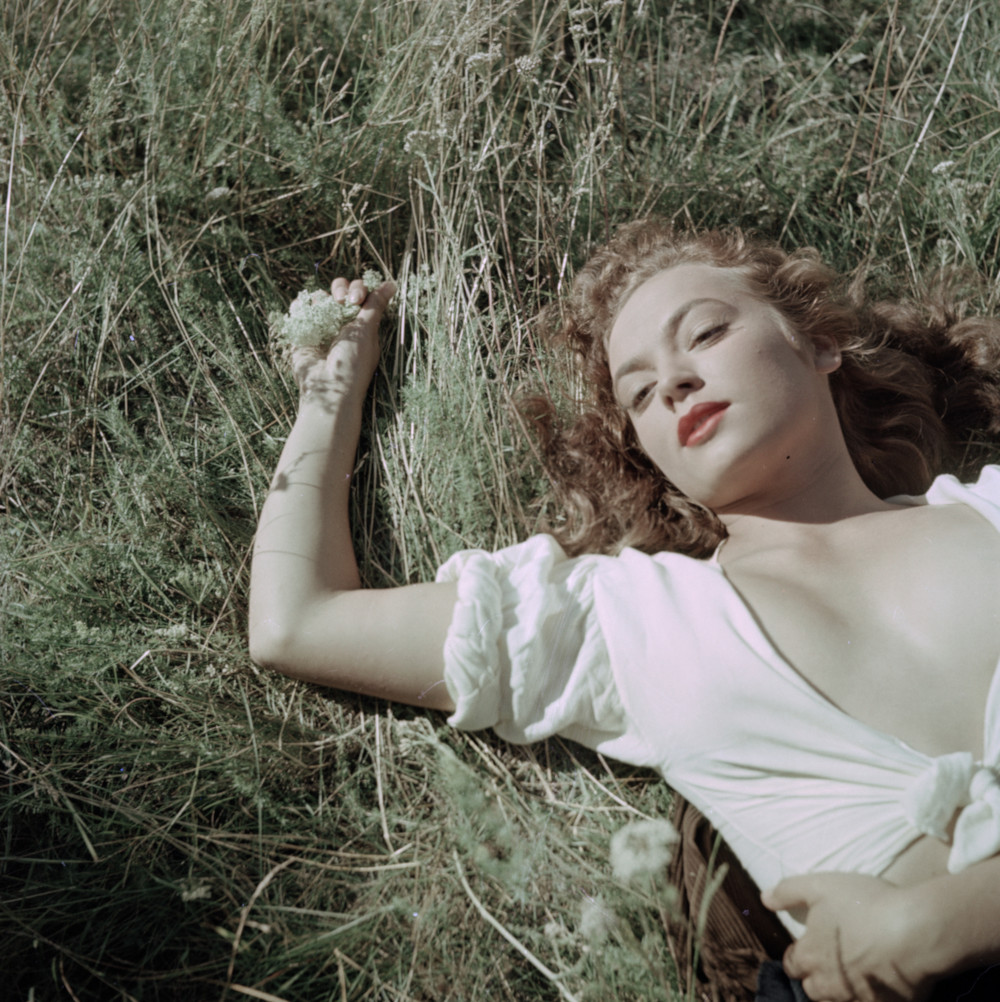
Spring in Finland is not merely a simple change of season; it is a sensory and psychological resurrection. After months of absolute darkness and bone-chilling winter cold, the emergence of the first signs of spring carries a taste of hope and survival for the Finnish people. Spring in Finland signifies the victory of life over stasis, and the cinema of this land captures this moment with a combination of cautious joy and deep reverence for nature. In Hollywood cinema, spring means flowers and birdsong. But in Finnish cinema, spring means a “hard-won victory.”
Visual Characteristics and Symbolism of Spring in the Cinematic Frame
In Finnish films, spring is defined by the return of light, and filmmakers use the transition from winter to spring to illustrate the internal changes within characters:
Silver Light: Unlike summer, which possesses a golden light, spring is depicted with a crisp, cold, and silvery light that signifies a gradual awakening.
Melting Ice: The scene of ice breaking on lakes is a classic metaphor for the collapsing emotional walls of isolated characters.
Gritty Realism: Spring is not always beautiful; the depiction of slush and mud resulting from melting snow represents Finnish realism and the arduous path toward reaching beauty.
The manifestation of spring in Finnish cinema is formed through a deep bond between form and meaning, such that birdsong — as the first auditory resonance in the film’s texture — bears the dramatic duty of shattering the heavy, frozen silence of winter. In the visual realm, the emergence of fresh buds in bright green — beyond a simple color change — becomes a metaphor for the rawness, vulnerability, and renewed innocence of the characters.
However, perhaps the most striking distinction of this cinema lies in the employment of “The Merciless Light” — a technique in which the filmmaker uses overexposure to deploy the brilliance of spring not as a merely decorative element, but as a tool for the naked exposure of loneliness and deep emotional fissures that had, until then, remained hidden beneath the refuge of winter’s long darkness.
Spring in the Works of Aki Kaurismäki
Aki Kaurismäki, Finland’s most renowned director, rarely portrays spring in a postcard-perfect manner. In his world, spring signifies a fresh start for the working class. The soft spring light in films such as The Man Without a Past creates an atmosphere of “melancholic hope” — a space where the protagonist, despite all hardships, rises again like buds pushing through the snow.
Modern Cinema and “Spring Fever”
In contemporary Finnish dramas, spring sometimes takes on a high-tension quality. The contrast between the beauty of awakening nature and the lingering winter depression within the characters’ psyches creates powerful drama. The phenomenon of “Kevätväsymys” (Spring Fatigue) is occasionally depicted as a psychological challenge, in which characters must synchronize themselves with the rapid pace of environmental change.
To gain a comprehensive picture of “spring” in Finnish cinema, we examine four key eras — from classic to modern — to trace the evolution of this season across various perspectives, from nationalism to modern absurdity. Each era showcases a unique aspect of the season and its diverse styles. By reviewing these periods, we will see how “spring light” — both visually and symbolically — has transformed from a nationalistic element in the 1940s into a philosophical tool in Kaurismäki’s work, and ultimately into a psychological landscape in today’s cinema.
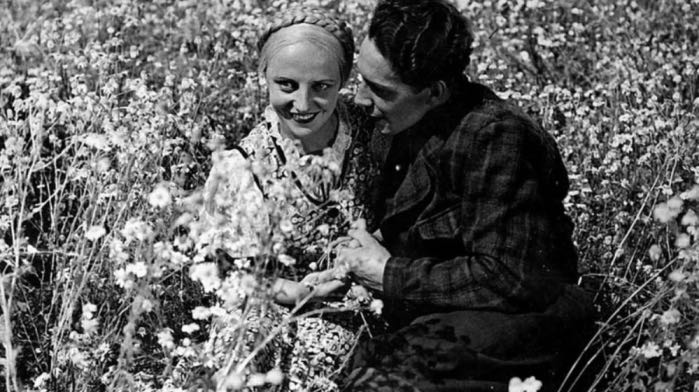
Laulu tulipunaisesta kukasta
The Golden Age and Rural Romanticism (1930s – 1950s)
In the works of this period, a striking Romantic Naturalism is present, in which the spring season is employed not merely as a timeframe, but as a catalyst for the eruption of emotions and the manifestation of human experience. The landmark film of this era, The Song of the Scarlet Flower (Laulu tulipunaisesta kukasta, 1938), is one of the preeminent works of Finnish cinema in the Romantic Naturalist style, beautifully portraying the deep bond between human love and the blossoming of nature.
The film’s central theme is built upon the idea that as the earth awakens, human emotions flourish as well, and the destiny of the characters is shaped within these seasonal transitions. In terms of symbolism and visual features, spring in this film is a “loud” and “dynamic” phenomenon, characterized by rushing rivers and logs driving downstream. These images serve as direct symbols of youthful passion, vitality, and human resilience in overcoming life’s difficult obstacles. By utilizing wide shots of vast plains, birch trees, and depicting folk dances in the open air, the director creates an atmosphere brimming with energy and a sense of continuity between humanity and the Finnish ecosystem — a reflection of the nationalistic and classical spirit of that era.

Hilja maitotyttö
Classical and Naturalistic Works
In these works, the spring season is primarily romantic and nationalistic in nature. Often classified under the styles of Romantic Drama or Rural Naturalism, these films focus on themes such as the eruption of instinct and the conflict between purity and sin within the context of nature. In these films, spring is recognized by distinct visual features such as rushing rivers, logs floating on the water, and wide shots of vast plains and birch trees — all of which symbolize passion, youthful excitement, and the overcoming of life’s obstacles. In these frames, spring is portrayed not as a passive season, but as a “loud” and “dynamic” phenomenon.
A landmark film of this movement is The Milkmaid (Hilja maitotyttö, 1953), directed by Toivo Särkkä, one of the most prolific figures of the Golden Age of Finnish cinema. Based on a story by the great Finnish writer Johannes Linnankoski, it tells the life of a girl named Hilja who works on a large farm. She finds herself torn between the love of a student — representing modernity and gentleness — and a harsh rural man — representing tradition and power. In this film, the melting of ice and the blossoming of nature are perfectly aligned with the awakening of the character’s emotional desires; spring serves as a symbol for the liberation of suppressed forces and forbidden loves within the traditional atmosphere of that time.
In terms of style, the naturalism in this film ensures that nature is not merely a simple background but plays a role like a living character in advancing the story. Hilja’s fate is deeply tied to the seasonal changes; she is like a flower that blooms in spring and faces turmoil at the peak of summer’s heat. Unlike the harsh lights found in more modern Finnish cinema, the spring sunlight here serves as a dramatic element, celebrating the grandeur of the fields and the beauty of the human body. This work became controversial yet highly popular upon its release, due to its boldness in displaying visual beauty and its raw proximity to nature. The film’s visual importance begins with the awakening of nature; brilliant framing of green fields, blossoms, and the reflection of light on lake surfaces are used directly to show the emotional awakening of the protagonist. This aesthetic approach allowed the film to achieve significant fame across Europe as well as in Finland.
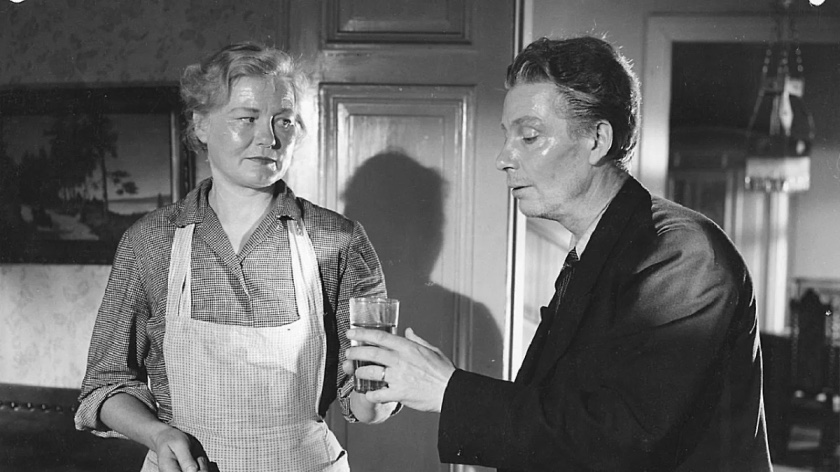
Elokuu
Another landmark film of this period is The Harvest Month (Elokuu, 1956), directed by Matti Kassila. It is one of the masterpieces of classical Finnish cinema, based on a novel by Frans Eemil Sillanpää, a Nobel Prize laureate in Literature. This work, in the style of naturalistic drama and poetic realism, addresses themes of decay, regret, and the bitter confrontation with the passage of time. Although the film’s title refers to late summer, dramatically it functions as the endpoint of a path that began with spring’s fervor; the entire subtext of the film is, in fact, about the cycle of seasons and the dark, weary counterpart of the same feeling that first sprouts in spring.
From a visual and atmospheric perspective, unlike works such as The Milkmaid — which are full of light and energy — this film carries a heavy, stifling, and expressionistic atmosphere. The use of dense chiaroscuro and a focus on haggard faces tells the story of an alcoholic canal keeper who has reached a dead end on the threshold of old age. Here, the film functions as an “anti-thesis” or an “anti-spring”; spring is no longer a present season but has become a distant, painful, and lost memory. The protagonist constantly thinks of his youth as the “spring of life” — a time when everything was possible — but now, in the suffocating heat of August, everything has come to an end.
The film’s title is a profound metaphor for the “reaping” of human actions. August is the season in which everyone must harvest what they have sown. The protagonist realizes, during this harvest season, that he sowed nothing but wind in the spring of his life, and now only loneliness and alcohol remain. Unlike many Finnish films that depict fatigue as a temporary and seasonal phenomenon, here we are faced with a chronic “existential fatigue,” indicating a shift in the atmosphere of Finnish cinema from the passion of the 1940s to the despair of the 1950s. This film holds a special place on the border between classical and modern Finnish cinema. On one hand, classical elements such as the presence of nature, lakes, and forests are preserved; on the other, the romantic and joyful view of nature has completely vanished, replaced by a psychological, bitter perspective reminiscent of New Wave cinema. If Hilja was the sound of spring’s beginning and hope, The Harvest Month is the sound of summer’s end and exhaustion — a warning that if “spring fatigue” is left untreated, it can harden into a permanent burnout across all seasons of life.
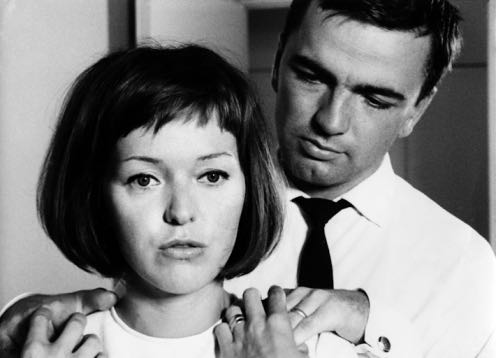
Työmiehen päiväkirja
New Wave and Social Realism (1960s – 1970s)
With the structural transformation of Finnish society from rural living to urbanization, filmmakers’ perception of spring underwent a fundamental shift. During this era, spring was no longer merely a season for displaying visual beauty; instead, it became a tool for revealing class conflicts and social inequalities beneath its intense and exposing light. Rooted in modernism and critical realism, this approach views spring as a season that highlights human loneliness in urban spaces and the collapse of old dreams more acutely than ever before.
The film The Worker’s Diary (Työmiehen päiväkirja, 1967), directed by Risto Jarva (with a screenplay by Erno Paasilinna), is a brilliant example of this divergent perspective. In this work, spring does not necessarily carry a message of happiness or rebirth; rather, it is a light that shines mercilessly on grey factory walls, exposing the chronic fatigue of the workers. In this modern and industrial setting, spring takes on a “naked” and “ruthless” nature that, rather than celebrating the glory of nature, emphasizes individual isolation and social dead-ends.
A seminal work of this era is ‘The Earth is a Sinful Song’ (Maa on syntinen laulu, 1973), directed by Rauni Mollberg. Utilizing raw naturalistic techniques, the film explores the hidden layers of human instinct against the backdrop of seasonal transition. Produced during Finland’s shift from deep-rooted tradition to modernity, the narrative centers on emotional awakening and internal tensions in the harsh, brittle atmosphere of the Lapland spring. Mollberg distances himself from idealized folklore, using a visceral approach to depict the fragility of relationships and the restless spirit of the younger generation. In this film, spring signifies not just blossoming, but a metaphor for ‘stripping bare’ and the revelation of truth; just as melting snow reveals the muddy ground beneath, the characters shed their masks to face bitter realities.

Tyttö nimeltä Varpu
Modern Works and Psychological Dramas
In modern Finnish cinema, the perspective on spring distanced itself from cheerful clichés, becoming a tool to showcase the internal conflicts of the contemporary soul. A pivotal work in this transition is ‘The Worthless’ (Arvottomat, 1982), directed by Mika Kaurismäki. More than a traditional narrative, this is an atmospheric road movie that captures the phenomenon of ‘Spring Restlessness’—the unease caused by the sudden return of light after months of polar darkness. The central theme rests on the contrast between the blooming of nature and human displacement; the intense spring light acts as a ruthless spotlight that reveals emotional fissures that had remained hidden under snow and darkness during winter. This visual style portrays the existential fatigue of characters who struggle to synchronize with the ‘mandatory joy’ imposed by the changing season.
Little Wing (Tyttö nimeltä Varpu, 2016), directed by Selma Vilhunen, is a prominent example of modern Finnish cinema that uses a realistic and intimate approach to move away from classical clichés. The story follows a twelve-year-old girl named Varpu who embarks on a journey to find her father and her identity — a journey that serves as a metaphor for premature maturity and the awakening of reality in a child’s mind. Unlike the bitter minimalism of previous decades, this film uses a handheld, close-up camera to capture the insecurity and curiosity of its young protagonist in a world rendered in a warmer, more human color palette.
In this work, Varpu’s journey signifies a “psychological spring” and a transition from stasis to movement. While her mother embodies chronic mental fatigue and passivity — a condition frequently seen in older Finnish cinema — Varpu represents a new generation deciding to break out of this cocoon. Her drive to find the father she never knew is like the thawing of her life’s ice, signifying a move from seasonal lethargy toward budding and rebirth. Here, nature is no longer a decorative postcard; rather, the roads and landscapes reflect a turbulent inner world moving toward acceptance and peace. Ultimately, Little Wing redefines spring as the courage to change despite old wounds.
The Year of the Hare’ (Jäniksen vuosi, 1977), directed by Risto Jarva, is another landmark work that addresses the psychological crisis caused by the suffocating pace of modern life and urban alienation. This realistic drama depicts the anxiety of a generation that views the onset of spring not as freedom, but as the acceleration of societal pressures and work cycles. In a symbolic turn, the protagonist escapes the ‘rush’ (Kiire) of the city to find sanctuary in the Finnish wilderness during spring, attempting to reconnect with his biological roots. If the film Hilja (1953) represented the ‘birth of energy’ in the rural landscape, The Year of the Hare represents the ‘reclamation of that energy’ from the industrial machine, serving as a bridge toward the minimalist introspection of later decades.
Varjoja paratiisissa
The Kaurismäki Era and Minimalism (1980s – 2010)
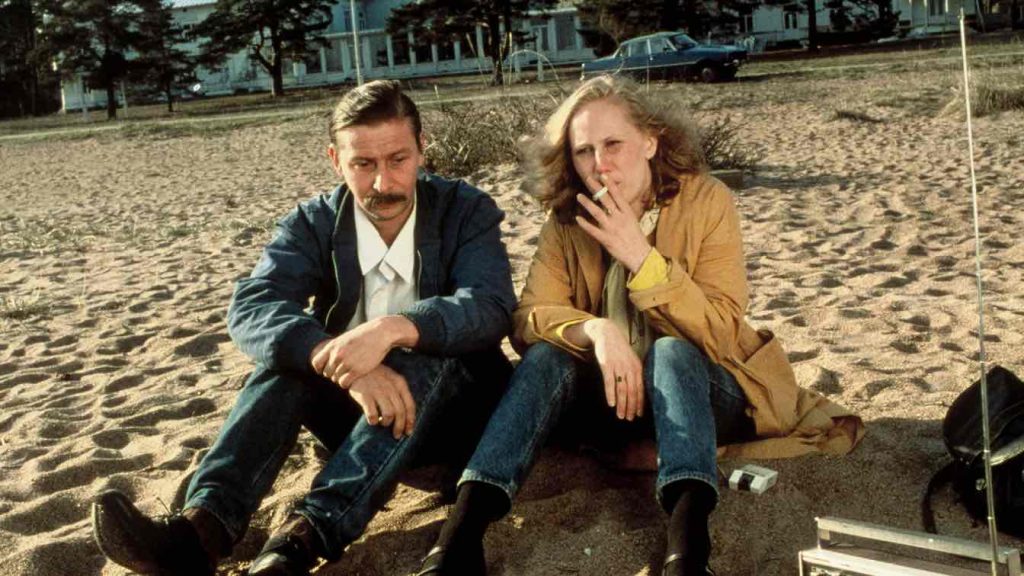
Aki Kaurismäki and his brother Mika established a new language in Finnish cinema, founding a style known as laconic or “deadpan” minimalism. In their cinematic world, spring is portrayed not through the grandeur of nature, but with a sense of dark humor and a kind of “stubborn hope.” Kaurismäki’s characters are often marginalized individuals fighting for human survival in a cold world; in this context, spring is a light that shines not on vast plains, but on trash, old shipping containers, and the industrial ports of Helsinki. This distinct perspective creates a “noble melancholy” where the silence of the characters and the act of watching a spring sunset from the window of a small apartment carry the thematic weight of the entire film.
In works such as Shadows in Paradise (Varjoja paratiisissa, 1986), the budding love between a garbage truck driver and a supermarket cashier — set against a grey environment — signifies the awakening of emotion beneath a gentle spring light. Similarly, in Ariel (1988), the protagonist’s journey from the frozen North to the South during spring serves as a symbol of a realistic and “cold” escape. Here, spring is not a celebration, but a cold, neutral light shining upon economic and social realities. Using a specific color palette and static framing, Kaurismäki depicts spring as an opportunity for the liberation of the working class, where nature is not in conflict with industry, but exists in a strange, poetic bond with it.
The pinnacle of this vision manifests in his masterpiece, The Man Without a Past (Mies vailla menneisyyttä, 2002). The story begins in harsh cold, but as hope returns to the life of a man who has lost his memory, gentle spring blossoms appear alongside weathered containers. Spring here is a metaphor for the rebirth of identity and a second chance for an outcast. The key point in his work is that spring never represents the resolution of all problems; rather, it is merely the light that allows characters to continue their lives with dignity and resilience amid the gears of modern existence.
Contemporary Cinema and Genre Diversity (2010 to Present)
Today, Finnish filmmakers use the spring season as a canvas for diverse genre experiments, ranging from horror and science fiction to psychological dramas and biopics. In these works, spring is no longer merely a calendrical phenomenon; it is a tool for exploring identity crises, environmental concerns, and character psychoanalysis through postmodern and neo-expressionist styles. Unlike classical works, contemporary Finnish cinema sometimes portrays spring as a “false perfection” or a sterile space, in order to highlight the contrast between the polished exterior of modern life and the internal collapse of individuals. A prime example of this approach is seen in the horror film Hatching (2022), which uses the intrusive brightness of spring to reveal the hidden horrors within a seemingly perfect family.
In contrast to these darker perspectives, Tove (2020), directed by Zaida Bergroth, redefines spring as an “explosion of energy” and artistic liberation in the aftermath of World War II. Focusing on the life of Tove Jansson — the creator of the Moomins — this work reflects the rebellious and bohemian spirit of an artist who revolts against her father’s frozen traditions within her chaotic and creative studio. In this historical context, the spring of 1945 serves as a rebirth for Finland, rising from the ashes of war; even the “Moomin” characters — creatures who awaken with the spring — become a sanctuary for overcoming post-war depression and mental exhaustion.
The works of Aku Louhimies, such as The Wait (2021) and Frozen City (Valkoinen kaupunki, 2006), showcase two different faces of the Finnish spring. In The Wait, the awakening of nature in the Finnish archipelago is a poetic metaphor for the awakening of emotional needs and feminine instincts in rural isolation. Conversely, in Frozen City, spring is depicted with a harsher, grittier face — grey and covered in urban slush — to illustrate the psychological pressure and collapse of a family during a season in which everyone expects happiness. This contrast challenges cold Finnish realism, demonstrating that the truth of life is not always aligned with the blooming of nature.
Veden vartija
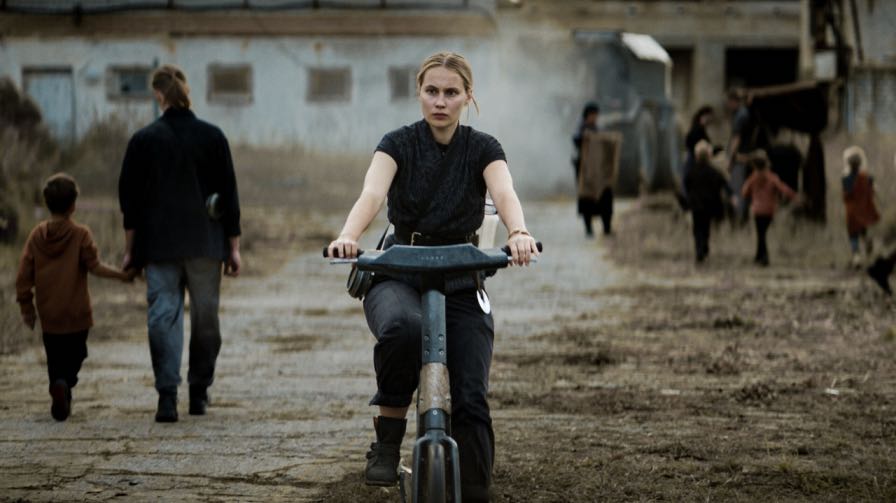
Ultimately, modern Finnish cinema also views this season through dystopian and mythological lenses. In the science fiction film Memory of Water (2022), spring has become a symbol of longing for a lost nature in a water-scarce future, while the documentary-drama Tale of a Lake (Järven tarina, 2016) records the season as a cosmic and mythological event rendered with stunning visual grandeur. A common feature of all these works is the deliberate use of silence and environmental sounds — such as dripping water and the sound of wind — in place of dialogue, alongside a color palette of light blue and grey that gradually shifts toward pale green. These techniques remind us of the fragility and profound value of spring within the psychology of the Northern person.
The Evolution of the Concept of “Spring”
Now that we have traversed this path, we can see how Finnish cinema has evolved from Hilja (1953), which viewed spring through the lens of rural romanticism, to Tove (2020), which regards spring as an internal and artistic revolution. In the classics, spring was external to the human experience — situated in nature. In modern works such as Little Wing and Tove, spring resides within the human being, representing the power of transformation.
| Cinematic Era | Key Concept & View of Spring | Dominant Sentiment | Primary Locations | Timeframe |
| Classic (Golden Age) | Nationalism & Romanticism: Spring as a symbol of national rebirth and the eruption of instinct. | Passion and Enthusiasm | Villages, farms, and pristine nature | 1930 – 1950 |
| New Wave (Momentum of Change) | Tradition vs. Modernity: Spring as anxiety, the pressure of change, and the flight from urban haste (The Year of the Hare). | Nostalgia and Doubt | Industrial areas and urban spaces | 1960 – 1970 |
| Minimalism (Stagnation) | Melancholy & Kevätväsymys: Spring as a lifeless, lethargic, and marginal light. | Shaky Hope | Ports, bars, and low-cost housing | 1980 – 2010 |
| Modern (The Return) | Psychological & Documentarian: Spring as a reconnection with roots and liberation. | Anxiety or Liberation | Dense forests and modern homes | 2010 – Present |
The evolution of the concept of “spring” in Finnish cinema over the past century serves as a mirror to the fundamental changes in the country’s social psychology. During the Classic era, or Golden Age (1930–1950), the view of this season was shaped by nationalism and romanticism; spring was a symbol of national resurgence and the eruption of human instincts in rural locations, farms, and untouched nature, conveying a sense of vibrant passion.
With the arrival of the New Wave and Social Realism (1960–1970s), this perspective gave way to the conflict between tradition and modernity. Spring was redefined as an element of anxiety and the pressure of industrialization. This era captured the tension of urban haste (Kiire), where the seasonal awakening felt more like a frantic demand of modern life than a natural rebirth—a sentiment personified in the cinematic escape from urban burnout seen in works like The Year of the Hare.
During the Minimalist era (1980–2010), characterized by a certain semantic stagnation, concepts of melancholy and “spring fatigue” (Kevätväsymys) prevailed. In this period, spring was a lifeless and lethargic light reflecting only faint flickers of a shaky hope within ports, bars, and cheap apartments.
Finally, in Modern cinema (2010–present), we witness a return to roots through psychological and documentarian approaches. Here, spring — situated between dense forests and modern architecture — fluctuates between the anxiety of confronting the truth and the liberation found in reconnecting with nature.