



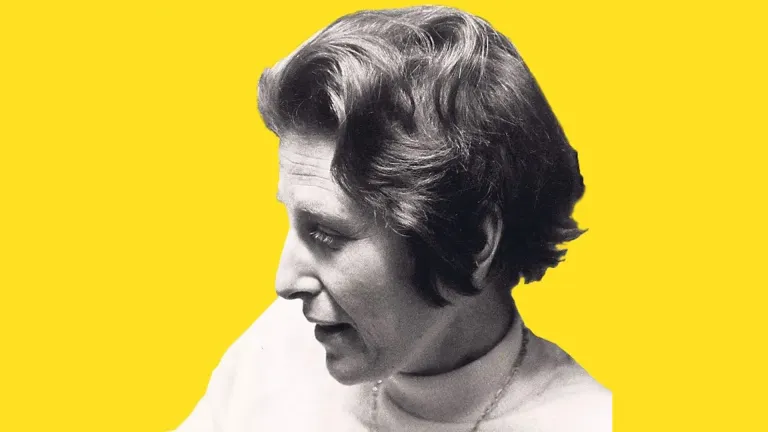
Judith Shklar was no prophet; she distrusted prophets. But after the catastrophes of the twentieth century, she understood—more clearly than most—what is essential for the survival of liberalism. She neither built utopias nor withdrew from politics. Instead, she offered a form of political wisdom that was sober, realistic, and precise. It is exactly this wisdom we ignored for years—and exactly what we now need most to defend liberalism against the rising tide of authoritarianism.
When Shklar, the first woman to hold a full professorship in Harvard’s Department of Government, died in 1992 at the age of sixty-three, a quiet shadow fell over her intellectual legacy. Despite her undeniable stature, she never achieved the fame of earlier giants such as Hannah Arendt and Isaiah Berlin—figures who, like her, were Jewish and knew the bitterness of exile from fascist Europe.
Shklar’s relative obscurity, however, was not accidental. It stemmed from two deliberate choices: first, she never sought to build a school of disciples; and second, she kept her distance from the noise of daily politics. Perhaps the deeper reason was that her philosophy—shaped directly by the brutalities of the twentieth century—did not align with the spirit of the era that followed her death, an era intoxicated by the belief that the liberal West could remake the world, even by the sword if necessary.
In her startling essay “The Liberalism of Fear,” Shklar declared with brilliant audacity: “To live is to be afraid.” Since her death, this brief text has become one of the foundational works of modern political theory and has placed her name at the center of contemporary debates. Yet her reputation rests above all on her steadfast defense of the American political tradition—a tradition she believed must be protected against the storms of extremism, left and right alike, not with grand slogans but with cautious, clear-eyed judgment.
Shklar wrote the essay to rescue the word “liberalism.” At the time, the term had grown hollow. It had come to signify rule by out-of-touch elites who claimed to represent the people while quietly fearing them. “Liberal” had become an insult—from both right and left. A liberal was someone weak, hesitant, unsure of everything. Robert Frost joked that a liberal was someone who refused to take his own side in a fight. In this climate, Shklar tried to remind readers what liberalism truly meant—what it must mean.
She believed that philosophical and legal liberalism—rooted in rights and justice, associated with Immanuel Kant and John Rawls—and the idealistic liberalism of John Stuart Mill had both ultimately strayed from the most urgent political duty tied to freedom: restraining the violence of the state.
Here lies Shklar’s decisive break from the generation before her, including Rawls. For Rawls, liberalism has moral authority only when grounded in a coherent theory of justice. Shklar inverted the logic. The starting point, she argued, must not be an ideal theory but the lived experience of injustice—something that carries its own moral weight. For her, the “sense of injustice” is more fundamental than Rawls’s “sense of justice,” because human beings encounter suffering and cruelty first, directly, viscerally. Politics must begin there, not in abstract models.
Shklar’s liberalism does not seek to create heaven or a highest good. Its purpose is to avoid hell—a condition of absolute evil. She insisted that liberalism’s focus on limiting power must arise from an elemental fear of state cruelty. This, she argued, is the only way for liberalism to be truly “anti-statist”: vigilant toward the most dangerous aspects of state authority while recognizing that only state power can prevent cruelty among individuals in society.
Among the major thinkers of his time, perhaps none was as indebted to Shklar as Richard Rorty. He embraced one simple, powerful line from her work and made it the moral compass of his political philosophy: “Liberals are people who think that cruelty is the worst thing we do… Those who hope that suffering will be diminished and the humiliation of human beings by one another will come to an end.” For Rorty, this definition was the beating heart of liberal ethics.
In her remarkable book Ordinary Vices, published five years before The Liberalism of Fear, Shklar argued that danger does not come only from the police, the state, or physical force. It can arise from those who loudly proclaim their hatred of injustice. She warned that “moral cruelty”—the policing of virtue, the judgment and exclusion of others—can be more destructive than formal repression.
Her conclusion was stark: the central enemy is cruelty—the infliction of suffering on human beings. And the only safeguard against state cruelty is vigilant citizens: alert, resistant, willing to speak and protest, ready to stand against the abuse of power. Such vigilance demands confidence and courage. Ultimately, she warned that the real danger is not fear itself but a society built from frightened people. “We must not fear those who are afraid; we must fear a society made of the fearful.”
Shklar was born in Riga, the capital of Latvia, to a Jewish family. During the Second World War her family fled Europe, making a long journey through Japan before settling in Canada. Her Jewish identity—especially her experience as a wartime refugee—shaped her political thought profoundly. Having escaped persecution and exile, she had lived the realities of vulnerability, fear, and cruelty, and these themes permeate her work.
She did not treat the past as a sterile historical lesson; she had lived inside its darkness. For her, cruelty was not an academic idea but a tangible memory: the Holocaust, Stalinism, and a century so violent that it earned the name “the age of mass killing.” These were the forces that built the pillars of her “liberalism of fear”—a philosophy born from terrors she had personally fled. Yet the brilliance of her perspective was that she never confined cruelty to Europe or the twentieth century. She understood it as a perpetual human possibility: ever-present, recurring, universal.