



Katatonia is considered one of the established bands in the rock/metal scene, having undergone significant stylistic evolution over three decades. The Swedish group began its journey in the early 1990s with works rooted in death/doom metal, gradually moving toward a more melodic and atmospheric sound by toning down the harshness of their early vocals. This gradual evolution resulted in a unique sound immersed in melancholy and depression, establishing Katatonia as pioneers of melodic metal. Key albums such as The Great Cold Distance (2006) and Dead End Kings (2012) demonstrated the band’s ability to balance metal heaviness with gothic-progressive subtlety. Later albums, including City Burials (2020) and Sky Void of Stars (2023), explored more modern textures, incorporating electronic elements while emphasizing the band’s atmospheric and gothic-metal side.
With such a background, expectations for Katatonia’s new album were high, especially since it is the first release after the departure of one of the founding members, Anders Nyström (guitarist and principal songwriter), who left the band in 2024 due to artistic differences. Nyström wanted a return to the band’s heavier, more aggressive roots, whereas Jonas Renkse (lead vocalist and main lyricist) preferred to continue the dark, gothic direction of recent years. This key departure raised questions among fans: Could Katatonia maintain its signature magic without Nyström? Would the presence of two new guitarists significantly alter the band’s sound and direction? Pre-release singles like “Lilac” and “Wind of No Change” offered partial answers and an initial glimpse of the album.
Conceptual and Musical Landscape of Nightmares as Extensions of the Waking State
The album Nightmares as Extensions of the Waking State conceptually navigates the boundary between waking reality and the hidden nightmares of the human mind. The title suggests a space where unconscious fears and darkness are a natural extension of the waking world. According to Jonas Renkse, the songs on this album are “stories that live in the corner of the eye—hidden in the light, yet ready to take shape in the twilight of our diseased existence.” This perspective promises a dark, eerie, and deeply emotional atmosphere that permeates the entire album.
Musically, Nightmares… continues the evolutionary path Katatonia has followed in the past decade while adding fresh elements to the band’s sonic palette. The album was produced by Renkse himself and achieved high-quality sound through the work of renowned engineers (Adam Noble on mixing and Robin Schmidt on mastering). As described by the label, Katatonia once again walks the fine line between “nocturnal darkness and Scandinavian despair” while simultaneously casting the gentlest melodies like light within the gloom. The result is an album rich in tension, drawing on the contrast between heavy guitar riffs, delicate harmonies, lush synthesizer textures, and atmospheric layering.
As the central vocalist and composer, Renkse remains the beating heart of Katatonia’s musical world. His voice on this album shines with familiar sorrow and subtlety, acting as a skilled guide through the intricate paths of the songs. Renkse’s vocal range—from whispers to impassioned runs—serves as the primary vehicle for conveying the emotions of the lyrics, which explore themes such as grief, solitude, repressed memories, and confrontation with inner darkness. The combination of Renkse’s melancholic voice with the album’s layered instrumentation creates a distinctive atmosphere that gradually seeps into the listener’s consciousness. Many tracks may initially feel unfamiliar or even monotonous, but Katatonia’s works are known to unfold over time, gradually immersing the listener in their emotional depths—a characteristic that holds true for this album as well.
One of the highlights of Nightmares… is the presence of two new guitarists: Nico Elgstrand (from Entombed A.D.) and Sebastian Åsblad (from In Mourning/Pain), who replaced Nyström. Their arrival was expected to impact the band’s sonic character, and it indeed has: the new album appears slightly more riff-driven compared to Katatonia’s immediate previous works, with shorter guitar solos punctuating many tracks. Guitars take a more prominent role in numerous songs, and Renkse skillfully leverages the new members’ abilities. Nevertheless, the core songwriting framework remains intact, with Renkse’s signature stylistic and thematic imprint clearly evident. Consequently, Nightmares… can be seen as an album that preserves Katatonia’s familiar sonic identity—atmospheric melancholy and mournful melodies—while injecting a refreshing vitality thanks to the new blood within the band.
As noted, the album revolves around the interplay of nightmares and reality. The lyrics create a mysterious, multi-layered space, occasionally introducing unusual motifs that may be novel for Katatonia, including ritualistic or even demonic references—elements less prominent in the band’s earlier work. Despite these new touches, the overall lyrical essence remains faithful to Katatonia’s familiar universe: a world of painful memories, guilt, attachment to sorrow, and tragic beauty.
Next, the review continues with a track-by-track analysis of the album’s ten songs.
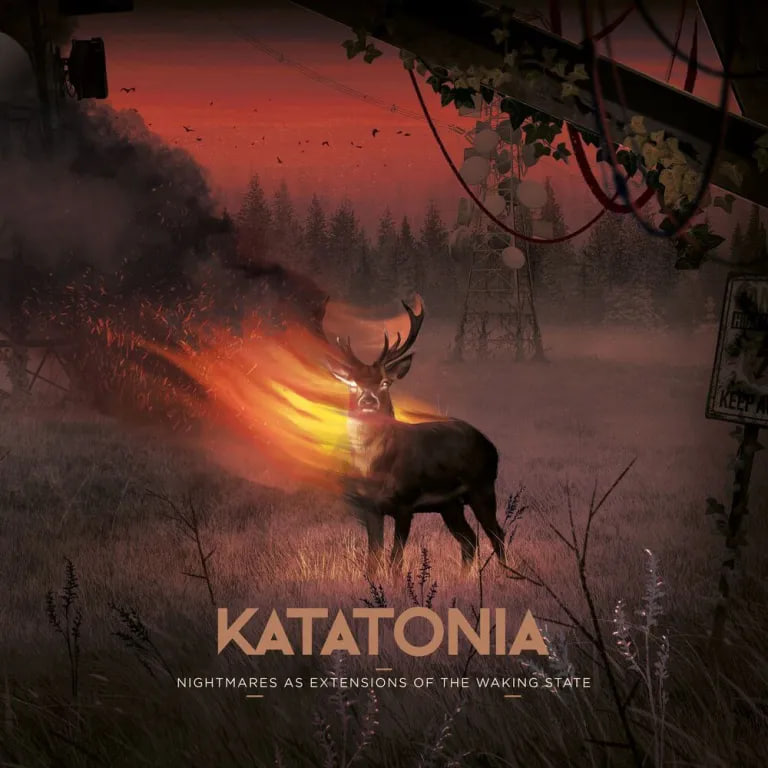
1. Thrice: The album opens with this explosive track, marking one of the heaviest beginnings Katatonia has delivered in recent years. “Thrice” kicks off with pounding guitar riffs and an energetic rhythm that immediately announces the presence of the new guitarists. The song then retreats slightly into a more melodic and gothic atmosphere, where Jonas Renkse’s mournful voice shines over cold guitar arpeggios. The contrast between the aggressive opening and the quieter midsections doubles the track’s appeal. The chorus arrives with full force, becoming one of the album’s emotional high points, where Renkse passionately sings “break free from the chains of captivity,” possibly an introspective reference to liberating oneself from the grip of nightmares. Later, a long, gradual breakdown emerges, more cinematic and atmospheric than heavy or headbanging. This unconventional ending for a heavy track leaves the listener in suspense while serving as a fitting introduction to the album’s world.
2. The Liquid Eye: The second track continues in the same mood as “Thrice” and can be seen as its sibling. The song opens with a mysterious, eerie atmosphere; the electric guitar line, muted by effects, is accompanied by the bassline, as if an eye slowly opens and draws us inward. This track is slightly gentler than the opener, yet retains a “melodic and epic” quality. The tempo is steadier, but when the chorus hits, an explosion of melody occurs—a powerful, captivating chorus that stays in the listener’s mind from the first play. The combination of vocal melody and unique guitar riffs conveys a sense of elevation. The song then recedes into the verse again, preparing the listener for the next round with progressive atmospherics. A relatively short but effective guitar solo bridges the midsection and the final chorus; while not the most emotionally complex solo Katatonia has produced, it integrates seamlessly with the vocal melody. “The Liquid Eye” continues the themes of solitude and introspection; the metaphor of the “liquid eye” may hint at a hidden self-surveillance or a flood of bitter memories. Overall, despite its relative simplicity, the track is effective and pleasant, positioning the listener deeper into the album after the initial roar of “Thrice.”
3. Wind of No Change: The third track may be the most surprising piece in Katatonia’s recent repertoire. The song begins with a somewhat familiar, eerie ambience; bass and guitars create a haunting background, while the verse and lyrics evoke shades of Dead End Kings. But when the chorus arrives, the song shifts dramatically: multi-layered choral vocals echo in the background, evoking a quasi-ritualistic or even satanic hymn. The lyrics explicitly include phrases like “Hail Satan,” marking the first time such direct references appear in a Katatonia track. The choir and ritualistic motifs create an atmosphere reminiscent of Therion or a darker version of Ghost. Many fans’ initial reaction to this section was likely surprise or skepticism—“Is Katatonia really praising Satan?”—but repeated listening reveals this part to be strikingly memorable and inseparable from the song. Jonas himself has jokingly noted, “the old devil has the best melodies,” and this track may be an example of that playful irony. In terms of arrangement, “Wind of No Change” is ceremonial and ritualistic, blending subtle electronic textures with Katatonia’s signature ambiguity. Interestingly, despite its title, the song represents one of the album’s biggest tonal shifts. This contradiction may be deliberate: in a world where the wind seems unchanged, hidden transformations are underway. “Wind of No Change” is one of the album’s boldest and most innovative tracks.
4. Lilac: The fourth track and the album’s first single, “Lilac” encapsulates Katatonia’s skill in balancing mournful melodies with driving rhythms. The song begins with an enticing riff that carries a hypnotic rhythm, while the keyboard creates a misty, atmospheric backdrop for Jonas’s vocals. The structure oscillates between atmospheric and emotional spaces. The verses are quieter and relatively minimal, reminiscent of the melodic and gothic side of the band’s recent works, but each chorus hits with more force, shaping a passionate, sorrowful vocal melody. This chorus is not instantly memorable but gradually permeates the listener’s emotions with its intricate delicacy. Critics have compared it to the emotional depth of tracks from Dead End Kings. While “Lilac” may not achieve the same popularity as the memorable “Lethean” from that album, it captures the prevailing spirit well. Emotionally, the song conveys a fleeting sense of longing, love, or a lost memory—the fragrance of a lilac bouquet in the dark, evoking bittersweet melancholy. Renkse’s vocal subtleties reach a peak in this track, and some of his embellishments in the chorus are truly goosebump-inducing. Notably, progressive elements appear throughout “Lilac”; multiple dynamic changes and sudden shifts from calm to storm make it particularly appealing to serious listeners.
5. Temporal: The fifth track and the second pre-released single is known primarily for its variable, unstable emotional landscape. The title, “Temporal,” suggests transience, and both the music and lyrics reflect this concept beautifully. The song opens with a calm rhythm; guitar and keyboard melodies hover like suspended droplets, with Renkse’s voice starting almost as a whisper. In this early section, a sense of melancholic detachment pervades, placing the listener in a liminal state between sleep and wakefulness. Gradually, tension builds toward the chorus; the vocals grow stronger and more penetrating, and the drums deliver heavier hits. The chorus is among the album’s most emotional moments: a combination of sorrowful shouts from Jonas and swelling background melodies depicting the fragile peaks and valleys of emotion. According to the label, the song contrasts fragility with strength; its verses, tender yet vulnerable, culminate in a grand emotional eruption in the chorus. Following this, a midsection guitar solo emerges—short but sharp—adding a sense of restrained anger. The song then returns to its quiet initial space, ending in cold silence. Lyrically, “Temporal” can be seen as a meditation on the fleeting nature of emotions; enchantments that fade, cycles of bitterness that repeat. As Renkse has noted: “When the enchantment fades and the riffs take over, nothing remains but the pleasure of the vicious cycle and the colors of the night.” Positioned mid-album, this track serves as an emotional bridge, guiding the listener from the tension and contrast of the first half to the distinct atmosphere of the second half.
6- Departure Trails: The sixth track of the album takes a slightly different path and serves as a soothing herbal tea after the initial storms. The piece begins with a slower tempo and a deeply melancholic, contemplative atmosphere; the sound of clean guitar over effects and keyboards playing sustained chords creates a cold, sparse space. From the very first notes, “Departure Trails” evokes a feeling reminiscent of certain tracks from The Fall of Hearts (2016), a space where it seems an eternal autumn prevails. The song’s structure is relatively minimal, focusing more on creating atmosphere than on momentary hooks. Jonas’ vocals here are soft and sorrowful, acting more as the narrator of an inner grief than as a melody driver. The track lacks a bombastic chorus or memorable riffs, and it may initially linger less in the listener’s mind—but this apparent simplicity can become a strength over time. Conceptually, the title refers to “paths of departure,” as if passages that lead to leaving or farewells. The lyrics hint at memories slowly fading and footprints left in snow or ash (a free interpretation of the poetic tone). These images, paired with the track’s hypnotic and uniform music, convey the feeling of walking an endless path, where the traveler knows the end will bring nothing but solitude and silence.
7- Warden: Entering the seventh track, the album gains fresh energy and raises its pulse once more. “Warden” begins with guitars playing appealing micropatterns that subtly convey tension to the listener. The opening atmosphere is mellower compared to previous tracks, carrying hints of deceptive calm. Jonas’ voice in the first verse is soft and almost whisper-like, as if telling the story of a prisoner trapped in his nightmares for years. As the song progresses, its dynamics change beautifully: the volume rises and falls at intervals, with the guitar acting as a bridge between sections. Clean guitar preludes separate each section and signal a shift in space. As the chorus approaches, the drums intensify, and the guitar riffs are played with a heavier tone, as if the song is awakening from hibernation. The chorus, though short and relatively simple, is impactful; the vocal melody feels mournful yet angry, while the slightly crunchier guitar rhythm evokes a sense of suppressed emotion. The song then subsides, repeating the dynamic cycle. Near the end, a final climax occurs, giving a momentary breath of new color through a brief guitar solo, suggesting a glimmer of hope or life within the dark song. “Warden” stands out due to its intelligent use of silence and dynamics, representing a “relatively new” sound Katatonia pursues in this album. Its theme is told from the perspective of a warden—or perhaps a lost prisoner—evoking feelings of suffocation and the struggle for freedom.
8- The Light Which I Bleed: The eighth track is dramatic and grandiose, arguably one of the most cinematic and richly orchestrated songs on the album. The song begins with a haunting guitar melody that slides softly, followed by Jonas’ calm vocal entry. Early verses combine whispered vocals with electronic/guitar arpeggios to create an ethereal space reminiscent of the dark corridors of a church or old hall. The chorus, however, is the song’s explosive peak: the main guitar riff plays with twice the power, Jonas’ voice reaches its pinnacle, delivering one of the album’s most memorable melodies. The chorus evokes a profound emotional impact, blending power and sorrow in both vocals and lyrics. For instance, one striking line reads: “I wait for the snow to fall… you wait for me to disappear,” with a pause that intensifies its effect. In the bridge, symphonic/orchestral elements are suddenly introduced—virtual strings (likely via synthesizer) overlay the guitar riff, adding epic grandeur reminiscent of symphonic metal, evoking Therion as in “Wind of No Change.” These orchestral layers enrich the late-song atmosphere, setting expectations for a majestic ending. Yet, Katatonia takes a different approach: instead of returning to the chorus with its brilliant melody, the song gradually fades out. This unexpected conclusion may disappoint some, as the chorus seems to beg for repetition. Still, it can be seen as an artistic choice that enhances the album’s unfinished, suspenseful feel. Overall, “The Light Which I Bleed” is one of the album’s most emotionally powerful tracks, amplifying its epic dimension. Some even argue it might have been better suited as the album’s closing track.
9- Efter Solen: The ninth track is unique in Katatonia’s discography as the only non-English vocal track on the album. Its title, in Swedish, means “After the Sun” or “After Sunset,” conceptually fitting the album: if the sun symbolizes light and awareness, “Efter Solen” may signify the time when darkness and nightmares arrive. The track opens with gentle piano/keyboard in a foggy atmosphere. The mood is extremely sparse and minimal; Jonas’ voice is the main focus, with other instruments providing subtle background. He sings in his native Swedish, enhancing the vulnerability of his voice. Another interesting choice is the use of a drum machine instead of acoustic drums, whose repetitive, mechanical patterns align with the ambient electronic mood. The near-six-minute linear structure, lacking a clear chorus or dramatic peaks, may challenge some listeners; however, this simplicity defines its character. “Efter Solen” is more of an atmospheric/emotional piece than a conventional “song.” Renkse’s whispering, almost soliloquy-like delivery, combined with the melancholy keyboard and ambient effects, immerses the listener in a timeless, liminal world where the sun never rises. Critics call it the “most distinct track” on the album, some suggesting it could have been a bonus track. Despite its difference, many fans praise its intimacy and raw honesty. The song slowly fades, leaving the listener in heavy silence, preparing for the album’s end.
10- In the Event of: Finally, the album’s closing track appears as the endpoint of this dark, extended journey. After the quiet solitude of “Efter Solen,” the relatively energetic opening of “In the Event of” offers a glimmer of returning life. It starts with a slightly bluesy, fractured rhythm; guitars play choral-like riffs, soon joined by drums and bass, adding weight. Jonas’ voice sounds weary but resolute, narrating a story after enduring all nightmares. The chorus is subtle, extending the song’s main theme rather than separating it as in previous tracks. The vocal melody becomes elongated and sorrowful, with guitar harmonies evoking collapse. Throughout the song, musical elements are arranged to suggest the crumbling of foundations. Ethereal keyboards drift like dust, guitars occasionally sharpen venomously, and drums achieve a dead, pounding pulse. In the final moments, all elements blend into a dense dreamlike haze that envelops the listener, gradually fading into darkness; nightmares extinguish like fading flames in the wind. Emotionally, some feel the track lacks the epic closure one might expect, and it has been suggested that “The Light Which I Bleed” could have served as a stronger ending. However, considering Katatonia’s artistic vision, ending with “In the Event of” aligns with the album’s foggy, ambiguous atmosphere. Nothing is conclusive, akin to waking abruptly from a dream. Lyrically, the title (meaning “in the event of…”) serves as a half-finished statement, inviting listeners to complete the thought themselves. Overall, it closes Nightmares as Extensions of the Waking State with the same artistically deliberate ambiguity expected.
The album, beyond the standard digital/CD edition (10 main tracks), was also released as a deluxe mediabook, containing two additional tracks. These include a cover of a classic KISS song and an electronic remix.
“A World Without Heroes” (KISS cover): This track, track 11 on the mediabook, is originally a ballad from KISS’s Music from “The Elder” (1981). At first glance, the choice may seem unexpected, as KISS’s glam/hard rock appears far from Katatonia’s dark world. However, “A World Without Heroes” is somewhat unique in KISS’s catalog—a philosophical, emotional ballad about a world without heroes. Katatonia adapts it fully to their own style: slower tempo, more minimal and atmospheric arrangement, emphasizing a sorrowful mood. Jonas’ vocal interpretation adds weariness and world-weariness, rather than 1980s glam style. Acoustic guitar and atmospheric effects bring it closer to Katatonia’s sound, making the cover feel authentic; some might not even realize it’s a cover. This can be seen as a subtle homage to classic hard rock, interpreted through a darker lens. The choice also aligns thematically with the album: a world without heroes resonates with the overarching concept.
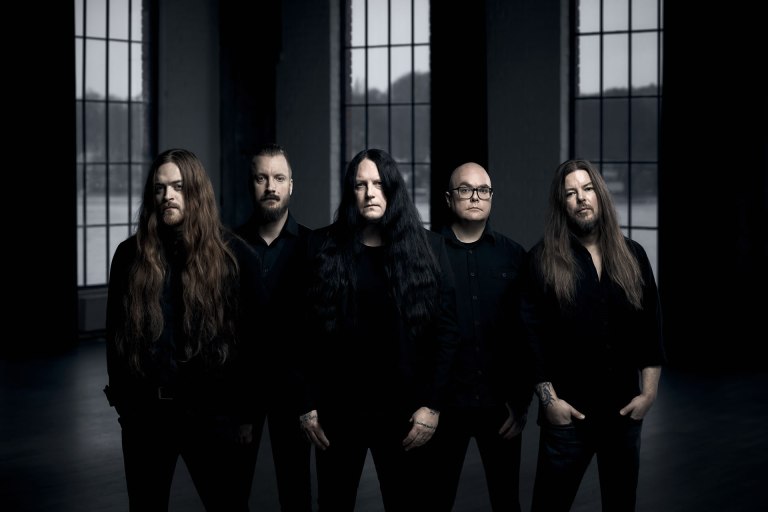
Comparison with Previous Katatonia Albums
Nightmares as Extensions of the Waking State, as the latest link in Katatonia’s chain of creations, carries both the familiar traits of the band and some subtle and obvious differences compared to their previous albums.
In terms of the overall mood, the new album is fully in line with Katatonia’s path over the past decade. Following works such as Dead End Kings, The Fall of Hearts (2016), City Burials, and Sky Void of Stars (2023), the band’s approach of combining progressive metal, alternative rock, and gothic metal with a focus on melancholic atmospheres has been well established. Nightmares… breathes in the same context: an album full of sorrowful melodies, calculated riffs, and dark atmospheres. In fact, listeners familiar with the band’s past decade of work will not feel anything strange when hearing this album—the familiar “cold and melancholic” sound, the band’s signature, remains intact. One could even say that rather than opening a new chapter, this album summarizes and condenses experiences from several recent albums: from the gentle electronic soundscapes of City Burials to the progressive drive of The Fall of Hearts, all are present in the DNA of Nightmares….
On the other hand, when we look closely at the details, some notable shifts and changes become apparent. The most significant factor is, of course, the departure of Anders Nyström from the band, marking the end of a 34-year collaboration. Nyström’s songwriting and musicianship played a major role in shaping the distinctive sounds heard in albums like The Great Cold Distance, known for its heavy riffs, relatively modern atmosphere, and memorable hits. His absence in Nightmares… makes the new album feel less challenging and more monotonous than some past works. According to some critics, the tracks “do not particularly stand out and mostly remain a dark background rather than works that lift you up.” They argue that the album stays a bit too safe in its familiar territory, lacking the inventive or surprising spark that was expected (perhaps the same spark Nyström aimed for by returning to heavier roots).
Conversely, other critics and fans believe that despite the lineup change, Nightmares… is a natural continuation of the path established by Sky Void of Stars and earlier works, seeing this consistency as a strength. They argue that now, with Renkse at the helm of creativity for years, Nyström’s departure has not caused a fundamental blow, and the band has managed to produce another high-quality, standard album relying on their tried-and-true ideas.
If we consider The Great Cold Distance as a benchmark, the noticeable difference lies in the urgency and catchiness of the songs. The 2006 album, with tracks like “Leaders,” “Deliberation,” and “My Twin,” had faster rhythms and heavier metal elements that could captivate even casual listeners. In contrast, Nightmares… mostly moves in a mid-tempo space; it is neither as heavy and fast as the band’s mid-era works (2003–2009) nor as pop-friendly and simple as some tracks from Dead End Kings or City Burials. This album should be measured more against the band’s later works than the golden era of 2006–2012. For example, Dead End Kings, one of the band’s most beloved recent albums, is famous for enduring tracks like “The Parting” and “Lethean,” melodies that easily stick in the mind. Nightmares…, in this regard, is more cautious, focusing on creating a unified listening experience rather than instant hits.
Overall, Nightmares as Extensions of the Waking State continues Katatonia’s legacy of blending sorrowful melodies with modern metal tones and aligns with the core style of their recent works. Although this album may not bring a shocking transformation to the band’s path and the shadow of beloved previous albums (each with their own devoted fans) looms over it, it maintains high quality as an independent work and shows that Katatonia, even in the “later” stage of their career, can still deliver strong music. Some may not consider this album among the band’s masterpieces and might view it as “good but not extraordinary,” yet Nightmares… is undeniably an important piece in the puzzle of the band’s evolution—a puzzle that started with doom metal and has now reached an emotionally rich progressive/gothic blend. Time will reveal how this album is remembered alongside iconic releases like The Great Cold Distance and Dead End Kings.
Nightmares as Extensions of the Waking State can be regarded as another chapter in Katatonia’s dark musical explorations; a chapter that may not hold a major surprise or radical leap but is written with subtlety and exemplary maturity. From the perspective of a longtime listener, this album shows that Katatonia, after more than three decades of activity, still has fresh breaths to breathe into their music, albeit calm and measured ones rather than the storms of youth. The departure of Nyström and the entrance of new members did not slow the band’s rhythm—they have continued along Renkse’s preferred path, a “safe and tried” route that nonetheless maintains high quality and satisfies their dedicated fans.
For the author of these lines (someone who has followed Katatonia from Brave Murder Day to today), Nightmares as Extensions of the Waking State was a satisfying experience. While one may miss the surprises and breathtaking moments of the band’s beloved past albums, this album undeniably possesses its own unique beauty: a calm beauty hidden in layers that becomes more apparent with each listen. It may not serve as a starting point for a new generation discovering Katatonia, nor immediately captivate them, but for longtime listeners, it represents an extension of waking in a nightmare—a dark dream that continues the band’s artistic life in our waking world.