



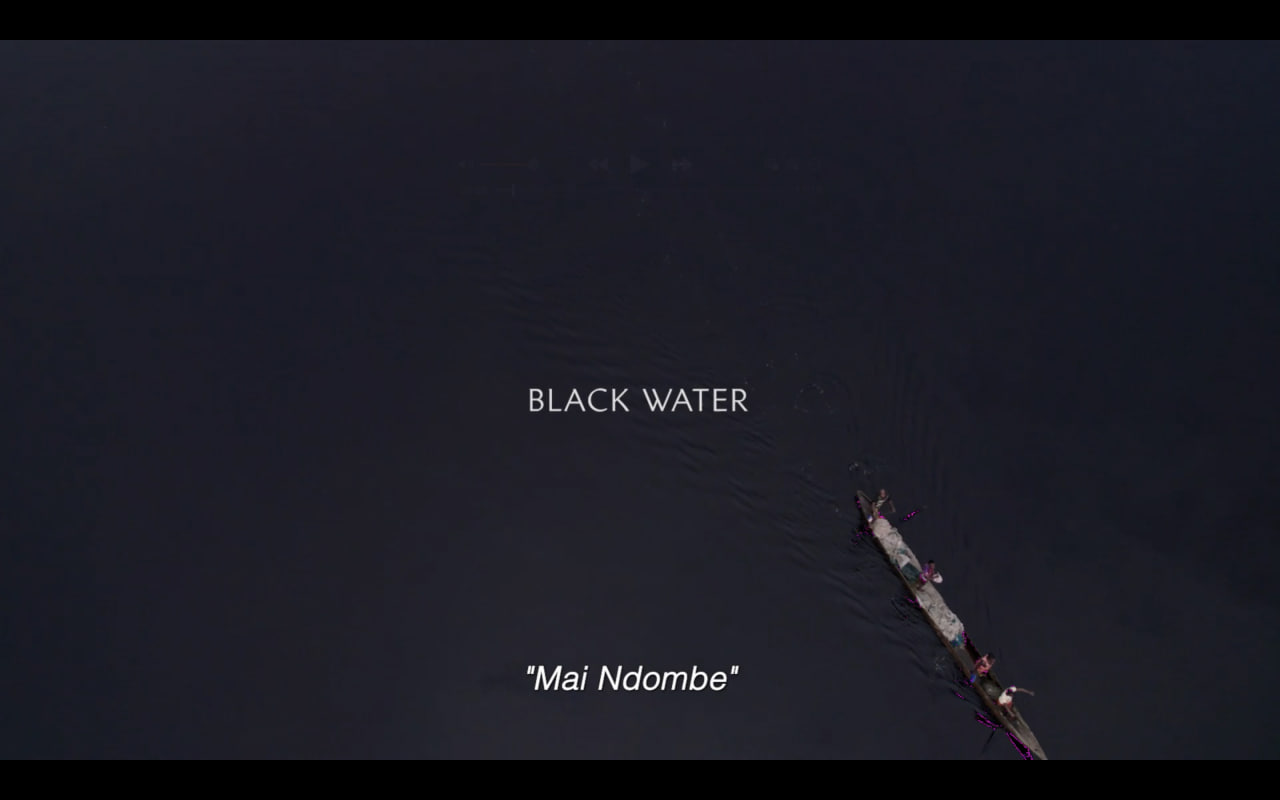
Fresh off its win at the Okland Film Festival, Black Water drops us into the jade-green forests encircling Lake Mai Ndombe and refuses to let go. At first glance the film looks like a postcard: liquid-gold dawns, dug-out canoes gliding across glassy water, children laughing in sun-drilled mist. Yet beneath the beauty, director Xavier Mputu uncovers a slow-motion ecological disaster—and the human ingenuity striving to reverse it.
The documentary’s narrative spine is deceptively simple: once-plentiful fish stocks have all but vanished, and the culprit is an unlikely villain—mosquito nets repurposed as ultra-efficient fishing gear. By scooping up fry along with the catch, these fine meshes have short-circuited the lake’s natural replenishment. Mputu lets the facts surface organically through conversations with elders, fishmongers, and teenagers who have never known the lake in full bloom. Their testimonies, delivered in Lingala and translated with unobtrusive subtitles, land with a quiet, accumulative force.
Cinematographer Awa Diarra frames every interview against the living canvas of the Congo Basin, making the setting its own character. Her lens lingers on details—a white heron lifting off startled water, the metallic flash of a solitary tilapia—as if documenting a vanishing world in real time. Sound designer Jean-Pierre Nkusi interweaves birdsong and distant storms with an understated string score, creating an aural tension between wonder and foreboding.
What elevates Black Water beyond environmental lament is its pivot toward agency. The film charts a grassroots alliance between villagers and the conservation nonprofit Wildlife Works, funded by carbon-credit revenue from forest protection. We see hands weaving bamboo into frames for new fish nurseries; we feel the palpable relief when the first fingerling flickers back into open water. Mputu avoids hagiography—the process is messy, disagreements flare—but the optimism feels earned rather than obligatory.
If the film has a weakness, it’s structural compression. The complex economics of carbon credits and the sociopolitical history of aid interventions flash by in a few on-screen graphics, leaving the uninitiated viewer wanting more context. Yet brevity is also Black Water’s strength: it plays like a dispatch from the front lines, urgent enough to inspire further reading—and perhaps action.
Ultimately, Black Water succeeds as both cautionary tale and testament to resilience. It reminds us that ecological crises seldom stem from malice alone; they often arise when well-meant solutions ignore the intricacies of place. By foregrounding community-led repair, the film offers a blueprint that feels as pragmatic as it is hopeful. In the final shot, children release a bucket of juveniles into the lake, their reflections shimmering like possibility itself—a quietly exhilarating promise that black water can run clear again.