



From Hugo Münsterberg, one of the first theorists in the history of cinema, who developed his film theory influenced by Gestalt psychology, it has been reported that in the early years of cinema’s invention, he would attend film screenings anonymously to avoid being recognized and ridiculed. At that time, cinema did not hold the status of an art form, and thinkers from various fields referred to cinema as mere entertainment for the masses. It was theorists like Münsterberg, Kanudo, and Lindsay, among the first to put their thoughts into writing about this emerging medium, who ultimately succeeded in granting cinema the title of the “seventh art.” As a result, within academic circles and among intellectuals (with exceptions such as the Frankfurt School and the followers of Theodor Adorno), perspectives on cinema changed, and it was gradually accepted as a respected form of art. Now, over a century since those days, the world of art finds itself in a similar position again. This time, in the digital age, video games have claimed the title of the “eighth art” and have made significant strides in recent years. While Christian Thomsen considered the years 1907 to 1917 as the transitional period for cinema from its primitive form to the classical form, today it seems that the video game industry has passed through its transitional period and reached a solid and presentable form of expression. Therefore, today we can talk about video games, critique them, and take a step further in identifying the potential within the language of this medium.
In the 1960s, Christian Metz, the renowned film semiotician and theorist, spoke of the codes of cinema. He divided cinematic codes into two categories: specific and non-specific. For example, he called flashbacks and chiaroscuro lighting non-specific codes because they are shared by cinema with other media such as literature and painting. He then introduced the specific codes of cinema, which are unique to this medium and cannot be imagined except through cinema. Metz considered rapid montage, which is mostly seen in impressionist films, as a specific cinematic code. By this definition, we must consider “interaction” as the specific code of video games. Video games incorporate all the characteristics of the previous seven arts and, in addition, feature “interaction” as their unique element. In a brilliant video game, “interaction” can astonishingly create a sense of sympathy between the player and the main character. In a video game, the player is not just a passive observer of a narrative; they are the main actor. Even in more modern works from newer generations of gaming, the player is free to shape the narrative however they wish, creating a completely personal and tangible experience. In fact, video games can be interpreted as the form of cinema that Eisenstein envisioned, as discussed in his book Film Form, where he said: “The viewer must retrace the artistic journey that the author took to create the final image.” In simpler terms, in video games, the player is always active, and they themselves are the creators of part of the narrative (the extent of which depends on whether the story is linear or non-linear).
We mentioned that the eighth art benefits from the features of previous arts. Among these, video games draw the most influence from cinema, and due to their shared fundamental characteristics such as image, movement, sound, music, and narrative, they share a close affinity with one another. Furthermore, both are considered the youngest and freshest of the arts, and with a significant delay compared to the earlier arts, they are still in the early stages of flourishing. All of these factors come together to create numerous influences and intertextualities between these two mediums. From visual influences, narrative borrowings, and adaptations to the involvement of cinema actors, directors, and writers in the video game industry in recent years, all these factors demonstrate the inseparable relationship between cinema and video games.

1. Adaptation
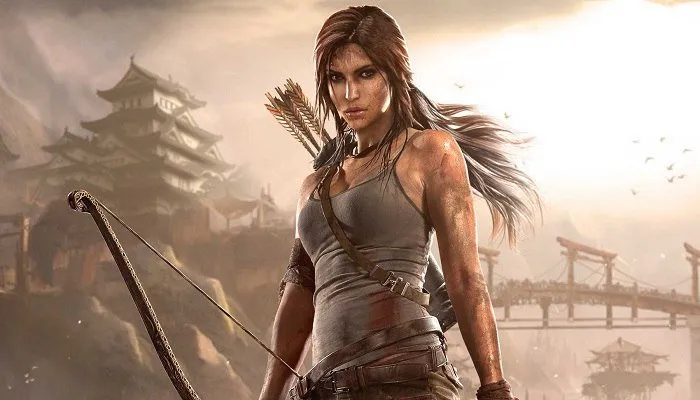
Films and TV series have often served as excellent sources for video game adaptations, and in recent years, the reverse has also occurred frequently. A recent example is the The Witcher series, which was based on one of the most popular video game franchises of all time. However, in most cases, adaptations have not been successful, and they have not fared well in the process of medium transfer. These works typically achieved great commercial success in their original medium, and as a result, the creators, eyeing the fan base, decide to remake them for a different medium. One of the earliest films adapted from a video game was Super Mario Bros., which happens to be one of the worst adaptations from one of Nintendo’s most important franchises in history. Other films such as Hitman, Far Cry, Tomb Raider, and Assassin’s Creed didn’t even come close to matching the glory of their video game counterparts, and perhaps, the only remotely watchable adaptations are the early Resident Evil and Mortal Kombat films, though with some leniency. On the other hand, the situation is slightly better in the reverse direction. Although video games like Godfather, Quantum of Solace, Dirty Harry, and many others failed to provide a successful interactive experience for their audiences, there have also been successful adaptations in recent years. For example, the Harry Potter game series, particularly the two versions of Chamber of Secrets and Order of the Phoenix, provided an outstanding experience of wandering through Hogwarts and interacting with the characters of the series. Or in recent years, especially after the release of Christopher Nolan’s Batman films, several notable versions of this franchise were created for the video game industry. Some successful franchises, even indirectly, have drawn inspiration from significant cinematic works; for example, Uncharted, the brilliant series by Naughty Dog, owes much of its world to Steven Spielberg’s Indiana Jones films. Nevertheless, it must be noted that the sources for most successful game adaptations have not been films but novels or comic books. The best conclusion we can draw from examining recent adaptations between cinema and video games is that the masterpieces of these mediums cannot be effectively translated or transferred. Fundamentally, the languages of cinema and video games are vastly different, and it seems that masterpiece works are so complete in their original medium that they suffer when adapted. This is in line with what Bla Balash, the formalist theorist, believed—that you cannot adapt great literary works into cinema, and that mediocre novels are better sources for making films.

2. Cutscene
Cutscenes can be considered the closest part of video games to cinema. Nowadays, in most modern games, a portion of the story is told through cutscenes. Game developers, when creating these cutscenes, essentially step out of the realm of video games and enter the world of cinema and animation. Some game designers, like the legendary Shinji Mikami, make the best use of the potential that cutscenes offer. For example, Mikami in Resident Evil 4, which is widely regarded as one of the most beloved games in the history of video games, successfully creates a brilliant narrative form by strategically dividing cutscenes throughout the game and arranging them in a way that seamlessly combines storytelling, character development, and gameplay. He uses the gameplay/cutscene/gameplay structure so that narration, character development, and gameplay proceed in harmony, keeping the player hooked throughout this gripping experience. However, some of the great works in the video game industry do not have cutscenes, and the story unfolds during the gameplay. For instance, Ken Levine, in crafting the masterpiece BioShock, does not use any cutscenes. The game, which also employs a first-person camera, never cuts to a cutscene, and its world always remains limited to the first-person point of view of the main character. On the other hand, many renowned filmmakers have collaborated on creating cutscenes and, in most cases, trailers for video games. For example, the trailer for Resident Evil 2 was directed by George Romero, and the trailer for Ghost Recon Wildlands was directed by John McTiernan, the director of Die Hard. In a surprising move, David Lynch even made a promotional video for Sony’s PlayStation 2, which is considered one of the most creative commercials of the past few decades.

3. Butterfly Effect
Interactive dramas, which have gained immense popularity in recent years thanks to David Cage and his brilliant works like Heavy Rain, Beyond: Two Souls, Fahrenheit, and recently Detroit, are likely a bridge between cinema and video games and can be seen as a combination of the two mediums (with the scale tipping in favor of video games). In interactive dramas, gameplay is minimized as much as possible, and gameplay is reduced to actions such as walking, making moral choices, and interacting through dialogue. These works do not feature the flashy gameplay or complex environment setup of action or shooter games, nor do they require the high-level skill of controlling and managing the main character, as in stealth-based games. In these works, the player is more of a “viewer” of cinema, seeing more and guiding less. However, this viewer is supposed to ultimately shape the characters, make pivotal choices, and alter the storyline as they see fit. In fact, these games primarily use a nonlinear narrative, where a seemingly simple choice can have a profound impact on the entire story, following the butterfly effect principle. As a result, developers must anticipate multiple endings for their storylines. However, this type of narrative had already been explored much earlier in cinema. This narrative structure was first experimented with in Blind Chance (1987) by Krzysztof Kieślowski, which used a fork-like narrative. This means that after a certain point, the story divides into three branches, with different events leading the overall narrative down one of these paths. Later, Peter Howitt used a similar narrative style in Sliding Doors (1998), where the main character’s fate diverges into two completely different outcomes based on whether or not they catch a train. In the same year, Tom Tykwer, with Run Lola Run (1998), offered another take on this narrative technique, showcasing how different choices affect human fate with a surrealistic approach.

4. Motion Capture
The digital age and the advent of new technologies and computer-generated visual effects have had a profound impact on cinema, particularly blockbuster films. Among the most influential technologies that have simultaneously transformed both cinema and video games is motion capture technology. Prior to motion capture, due to the inability to record movement, animations in both cinematic works and video games appeared unnatural and were not believable. Today, however, with the introduction of this technology, many famous film actors have entered the realm of motion capture (and voice acting) for major game projects. For example, in one of the most recent examples, actors like Norman Reedus, Léa Seydoux, and Mads Mikkelsen played roles in Death Stranding, the new game from renowned Japanese game developer Hideo Kojima. Conversely, in cinema, many film characters and iconic figures, from Gollum in The Lord of the Rings to Neytiri in Avatar, have been created using this technology. Many of today’s significant science fiction films owe their existence to the digital age and the emergence of new technologies such as motion capture.
An analysis of the factors above indicates the inseparable connection between cinema and video games in the digital age. The two mediums seem poised to further blend with each other in the coming years, borrowing elements from one another. In this context, artists must be warned about one concerning issue: that this fusion and blending occur in such a way that both mediums drift away from their original roots, to the point where, in artistic analyses, the distinction between works from each field may become blurred.