



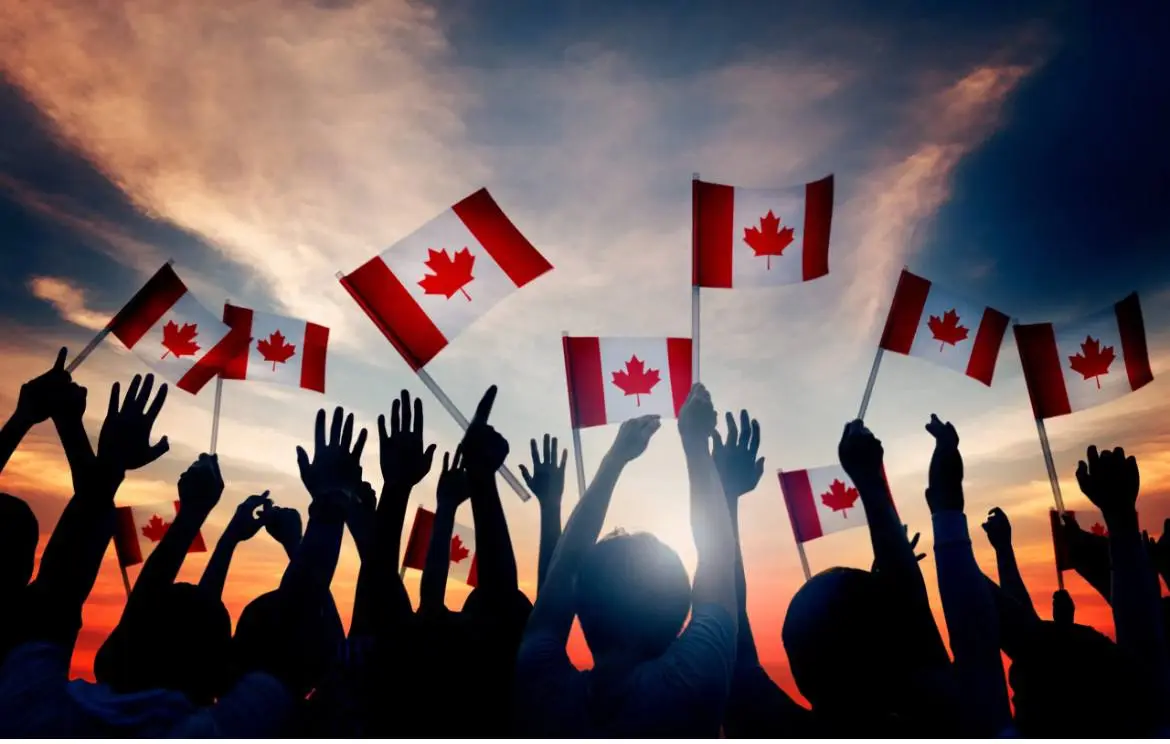
I have been living in Canada for more than twenty years, but throughout all these years, I have struggled to encounter something called “Canadian identity.” Not in its music, not in its cinema, and not in the rhythm of its everyday life have I found any trace of that shared sense that could be called “we-ness.” Yes, we have famous Canadian singers, but within Canada, they are rarely regarded as national symbols. Canadian films? Sometimes they shine at festivals, but the passion and pride that surround national works in other countries are rarely seen here. As Canadian filmmaker Denis Côté said, “Success in Canada means first being taken seriously by foreigners, and then Canadians will follow.” Culture here has always been hidden behind the mask of “multiculturalism” – without any serious effort to shape a collective identity. Except in Quebec, where people take pride in their language, history, and culture, it is hard to find such pride and enthusiasm in other provinces. Until recently, Canada seemed more like a country that existed, but with a vague and silent presence; a presence in the shadows, without a clear narrative of itself. Once, in Rome, a taxi driver from Slovenia, upon learning that I was from Canada, with a sarcastic smile, said, “There are two countries in the world that I only remember exist when human rights resolutions come up, one is Canada, the other is New Zealand.” A simple sentence, but it reflected the image that others have of us: a quiet nation, defined more by caution than by character. However, in recent weeks, something has been changing…
This new wave is also reflected in social media; hashtags like #TrueNorth or #ProudCanadian have gained more popularity. Young Canadians, who previously might not have felt much connection to national symbols, are now turning to these concepts with new motivations. Some see this trend as a response to the controversial policies of Donald Trump, whose trade threats and derogatory remarks have fueled anger and, at the same time, a sense of defense for “Canadian identity.” In other words, Trump’s remarks about turning Canada into the “51st state” were a blow to the collective pride of many Canadians, a pride that might have previously been hidden behind silence and indifference.
But the question always arises: Will the resurgence and growth of nationalism, especially in a world that has witnessed the disasters caused by extreme nationalism, ultimately be beneficial for Canada? What guarantee is there that an emphasis on “being Canadian” will lead to unity and solidarity, rather than discrimination and new tensions? Can nationalism be recreated within a non-conservative and progressive framework? In my opinion, this possibility can be realized through revisiting the thoughts of the French philosopher Simone Weil.
Simone Weil: A Philosopher in Exile, with a Fragile Identity
Simone Weil, a French philosopher and writer, had a remarkable history: she came from a Jewish family but, in her youth, gravitated toward Catholic thought; although she never officially joined the Church and always remained outside of formal religious institutions. Politically, she was inclined towards leftist movements; she sympathized with workers and, in order to better understand their pain and suffering, worked for a time in factories. She even joined the Republicans at the beginning of the Spanish Civil War to fight against fascism.
This multifaceted identity – a Jew who became a Catholic but stayed outside the Church, a leftist who lived with the working class, a fighter who was deeply pacifist – led to an inner tension in both her life and thought. These tensions reached their peak during World War II, when France was occupied, and she was forced into exile in London and New York. In this exile, she felt the condition of the rootless human being: someone who is neither fully belonging to a homeland nor free of its commitment.
In her famous book L’Enracinement (Rootedness), she argues that every human, alongside material needs, also requires a sense of rootedness in a land, history, culture, and language. Without this sense of belonging, the individual and society fall into an identity vacuum, which paves the way for external domination or the rise of extremist and dangerous ideologies. For her, rootlessness was the greatest threat to the mental, moral, and collective health of a nation. However, she never equated this rootedness with nationalistic intolerance. In her view, belonging to a community or culture could be the foundation for empathy and dialogue with others, not a tool for denying them.
For Weil, when people lose their deep connection to the land, history, language, and culture of their homeland, they enter an identity vacuum. In this vacuum, the ground is prepared for the formation of extremist ideologies, from fascism to toxic nationalisms, or the society can easily fall prey to external domination. However, she simultaneously warns that “rootedness” should never be an excuse for denying others. Unlike extremist nationalists who use rootedness as a pretext for purges and ethnic superiority, Simone Weil speaks of an open-rootedness.
In her philosophy, “open-rootedness” means that a person, or society, while deeply connected to their land, history, language, and culture, remains open to the outside world and to “the other.” She believes that lack of rootedness makes humans defenseless against external domination and extremist ideologies, but having deep roots should never be a pretext for hatred toward others. In other words, Simone Weil teaches us that we should shape our identity based on our cultural and historical heritage, but with an open mind and a spirit of empathy, engaging in intercultural dialogue.
In this perspective, “rootedness” is a source of meaning and mental-moral health, but it only becomes beneficial when it is not used for superiority or confrontation with other identities. According to Weil, the stronger our roots, the greater our responsibility to the other and our readiness for empathy and engagement with the world. This dual combination—deep attachment and an open mind—is the essence of what she calls “open-rootedness.” With this view, rootedness, while providing a specific meaning of belonging for the individual and society, can also equip them with a deeper sense of empathy and intercultural dialogue.
The Dangers of “Rootlessness” in Canada: A Connection to Simone Weil’s Thought
If we apply Simone Weil’s thoughts on “rootlessness” to the situation in Canada, we find that in recent decades, the sense of deep attachment to Canadian identity has been either forgotten or diminished. For many people, “being Canadian” has been reduced to simply “not being American” or “having a Canadian passport,” and large national projects that could unite the people around a common goal have received less attention.
This rootlessness or disregard for national roots has had several major consequences:
- Weak Collective Confidence: In the face of external threats, whether political or economic, the Canadian community often showed passive or hesitant reactions because it didn’t see the necessary cohesion to stand firm and negotiate assertively.
- Growth of Regional Disparities: When there isn’t a unifying idea of “Canadian nationhood,” regional and provincial tendencies can manifest as intense disputes. As a result, the platform for large-scale cooperation (from infrastructure development to shared welfare programs) is weakened.
- Increased Cultural and Economic Dependence on the United States: Many artists, entrepreneurs, and even political elites have relied on the American market and structures for fame and financial support, which has diminished the visibility and capacity of Canadian identity at various levels.
Can the New Sense of Nationalism in Canada Be Positive?
In response to Donald Trump’s stance and the changes in the political and economic order of the world, it seems that Canada is now witnessing a kind of awakening to national identity. This trend can be observed in the political and media spaces, in cultural festivals, among those interested in national symbols, and even in everyday conversations. The waves of this new awakening, although rooted in anger or a sense of being belittled, could become a unique opportunity to redefine “being Canadian.”
The formation of this new sense of nationalism in Canada offers a fresh horizon for decision-making at the political level. National solidarity, as the result of shared motivations and beliefs, can pave the way for large-scale projects. For instance, when the federal government wants to initiate a project like structural reforms in the healthcare system, launching high-speed intercity rail lines, or major investments to reduce greenhouse gas emissions, convincing and bringing together the people and provinces is one of the key challenges. But when the public space of society connects with the concept of “national interest,” and people see the necessity of such actions within the framework of protecting national identity or serving the future of their children, the likelihood of public support for difficult decisions significantly increases.
In countries with a federal structure, like Canada, disagreements among provinces over local interests or regional priorities can halt any large national initiative halfway. However, when the sense of “we-ness” is strengthened at the national level, provinces’ willingness to collaborate and compromise increases because political leaders and citizens, instead of focusing solely on short-term local interests, look to the “broader common good.” In such an environment, reaching agreements or distributing resources and responsibilities between provincial and federal governments becomes easier.
National symbols and shared historical narratives, such as the national anthem, cultural ceremonies, and even sports competitions where Canadian teams compete, are more than just symbolic displays or simple entertainment. These rituals remind the people of their shared history, collective achievements, and a unified vision for the future. In this reminder, citizens are more willing to cooperate, sacrifice, and even accept difficult policies – policies that might otherwise face resistance or indifference in normal circumstances.
In this regard, Yael Tamir, in her book Liberal Nationalism, reminds us that nationalism, contrary to the common misconception that it is a collectivist and anti-individual phenomenon, is actually a response to the human need to preserve individuality and difference. She argues that nationalism is not in conflict with individualism, but rather a tool for supporting it. In a world where political, cultural, and economic pressures are increasing to standardize, nations and national cultures allow individuals to express themselves within a shared identity, while remaining unique. Nationalism, from Tamir’s perspective, is a way to recognize cultural, linguistic, historical, and aesthetic differences—and this respect for difference is a prerequisite for individual growth and the realization of true freedom in a liberal society.
Thus, the social and identity capital fed by nationalism can act as a catalyst for accelerating structural and infrastructure reforms and defending individualism. From the rebuilding and development of national railway and highway systems to the use of clean energy or improving the education and healthcare systems, the “we” narrative at the heart of the national story increases collective motivation and trust.
But what kind of nationalism could benefit Canada?
There is always the danger that nationalism could veer off course and lead to supremacist attitudes. Historical experience shows that nationalism, if based on hatred of the “other,” does not end well. But if this sense of collective belonging is inspired by values like cultural diversity, social justice, commitment to indigenous communities, and global responsibility, it will not only be harmless but could become a driving force for large national projects. In this case, the sense of “we” becomes deeper, and Canada can tackle problems it has long feared due to their complexity and scale, problems related to climate and the environment, energy, national transportation infrastructure, and widespread social support.
As Simone Weil warned, if nationalism leads to racism and exclusion, it falls into the same historical disease that caused the disasters of the twentieth century. On the other hand, if nationalism is based on universal values, freedom, and respect for diversity, it can empower collective spirit and create a motive for joint efforts and movement toward higher goals.
In other words, Weil teaches us that rootedness can complement cosmopolitanism, not oppose it. Therefore, when Canada identifies itself as a multicultural, immigrant-welcoming country committed to social justice, these characteristics should be an inseparable part of the “new nationalism” and form its moral infrastructure. Any attempt to impose a single culture, eliminate the other, or deny universal values would not only be in conflict with Canada’s historical essence but would also lead the country toward extremism and internal divisions.
Conclusion: A New Model for “Being Canadian”
The final takeaway from Simone Weil’s thought is that communities, just like individuals, need a “sense of belonging” to flourish and remain healthy. But this belonging must be open and deepened in the face of human diversity and differences, rather than being based on cultural purification. What is happening in Canada today – the formation of a wave of interest in national symbols and concepts – can be the starting point to overcome the past’s relative neglect of national identity.
If this wave finds its place in national discussions and major policymaking, and proceeds in line with human, cosmopolitan, and multicultural principles, it could become the foundation for a “human and open nationalism”, a model that, while safeguarding diverse cultural roots, clears the way for building a shared future; a future where no group feels left outside this “we.” This model can make Canada more resilient against external pressures, while strengthening internal cohesion and solidarity. As a result, what began with anger and a reaction to threats could ultimately become a constructive, future-oriented, and inclusive project for all the people of this land.